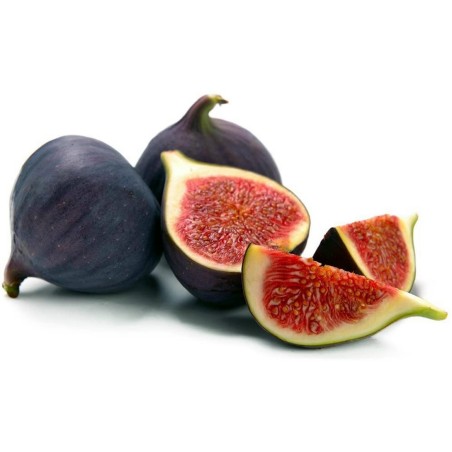
Giant Kumquats or cumquats Seeds - exotic tropical fruit
Price for Package of 3 seeds.
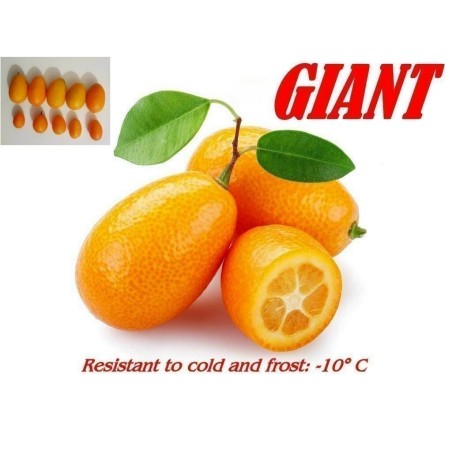
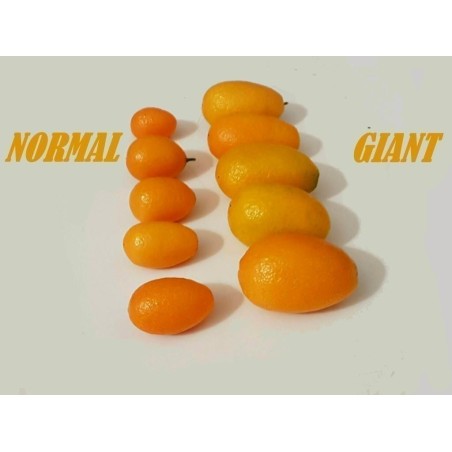
This is a gigantic kumquat, which is more than three times bigger than ordinary kumquat. Kumquats or cumquats are a group of small fruit-bearing trees in the flowering plant
Giant Kumquats or cumquats Seeds - exotic tropical fruit
Price for Package of 3 seeds.
This is a gigantic kumquat, which is more than three times bigger than ordinary kumquat.
Kumquats or cumquats are a group of small fruit-bearing trees in the flowering plant family Rutaceae, either forming the genus Fortunella, or placed within Citrus sensu lato. The edible fruit closely resembles that of the orange (Citrus sinensis), but it is much smaller and ovular, being approximately the size and shape of an olive. The English name "kumquat" derives from the Cantonese pronunciation gam1 gwat1 (given in Jyutping romanization).
They are slow-growing evergreen shrubs or short trees, from 2.5 to 4.5 meters (8 to 15 ft) tall, with dense branches, sometimes bearing small thorns. The leaves are dark glossy green, and the flowers white, similar to other citrus flowers, borne singly or clustered in the leaf-axils. Depending on size, the kumquat tree can produce hundreds or even thousands of fruits each year.[1] The tree can be hydrophytic, with the fruit often found floating on water near shore during the ripe season.[citation needed]
The plant is native to south Asia and the Asia-Pacific region. The earliest historical reference to kumquats appears in literature of China in the 12th century. They have long been cultivated in Japan, Taiwan, the Philippines, and southeast Asia. They were introduced to Europe in 1846 by Robert Fortune, collector for the London Horticultural Society, and shortly thereafter into North America.
Classification
Carl Peter Thunberg originally classified the kumquats as Citrus japonica in his 1784 book Flora Japonica. In 1915, Walter T. Swingle reclassified them in a segregate genus, Fortunella, named in honor of Robert Fortune. Seven species of Fortunella have generally been recognized—F. japonica, F. margarita, F. crassifolia, F. hindsii, F. obovata and F. polyandra, as well as the recently described F. bawangica . The Flora of China returns the kumquat to Citrus and combines the species into the single species as Citrus japonica.[2]
Varieties :
Round kumquat
The round kumquat (also Marumi kumquat or Morgani kumquat) is an evergreen tree, producing edible golden-yellow colored fruit. The fruit is small and usually round but can be oval shaped. The peel has a sweet flavor but the fruit has a sour center. The fruit can be eaten cooked but is mainly used to make marmalade and jelly. It is grown as an ornamental plant and can be used in bonsai. This plant symbolizes good luck in China and other Asian countries, where it is sometimes given as a gift during the Lunar New Year. It's more commonly cultivated than most other kumquats as it is cold tolerant. It can be kept as a houseplant.
When the kumquats are divided into multiple species the name Fortunella japonica (Citrus japonica) is retained by this group.
Oval kumquat
Fortunella margarita, also known as the oval kumquat or the Nagami kumquat, is a close relative to Citrus species. It is a small evergreen tree, that can reach more than 12 ft (4 m) high and 9 ft (3 m) large. It is native to southeastern Asia, and more precisely to China. The oval kumquat has very fragrant citrus-like white flowers, and small edible oval orange fruits. The oval kumquat is an ornamental little tree, with showy foliage, flowers and fruits. It is also fairly frost-hardy, and will withstand negative temperatures such as 14 °F (-10 °C), and even a little lower for very brief periods. It can be grown in USDA hardiness zones 9 and warmer, but can also be tried in sheltered places, in USDA hardiness zone 8. Unlike most citrus species, the oval kumquat has a shorter growth period, and goes into dormancy fairly earlier in autumn. This partly explains its better frost hardiness.
Characteristics
The evergreen leaves of oval kumquats are deep-green and relatively small. They can reach up to 3 in (7 cm) long and 1.5 in (3.5 cm) wide. The white flowers of the oval kumquat are similar to the citrus flowers. They are strongly perfumed, and they appear relatively late in the growing season, generally late spring.
The oval kumquat is a fruit that looks like any citrus fruit, with an orange rind. The fruits are oblong, up to 2 in (5 cm) long. Unlike the common citrus, which have a rind which is inedible raw, oval kumquats have an edible sweet rind. The flesh, however, is not as sweet as the rind, and the juice is quite acidic and sour, with a lemon-like flavor. This fruit is generally eaten fresh, with its rind. It can also be processed into preserves, jams, and other products.
Cultivation
The oval kumquat needs a well-drained and fertile ground. It dislikes alkaline soils. The oval kumquat is susceptible to common citrus pests and diseases.
Jiangsu kumquat
The Jiangsu kumquat or Fukushu kumquat bears edible fruit that can be eaten raw. The fruit can be made into jelly and marmalade. The fruit can be round or bell shaped; it is bright orange when fully ripe. It may also be distinguished from other kumquats by its round leaves that make this species unique within the genus. It is grown for its edible fruit and as an ornamental plant. It cannot withstand frost.
When the kumquats are divided into multiple species the name Fortunella obovata (Citrus obovata) is used for this group.
Cultivation and uses
Kumquats are cultivated in China, South Korea, North Korea, Taiwan, Southeast Asia, Japan, the Middle East, Europe (notably Corfu, Greece), southern Pakistan, and the southern United States (notably Florida, Louisiana, Alabama) and California.
They are much hardier than other citrus plants such as oranges. The 'Nagami' kumquat requires a hot summer, ranging from 25 °C to 38 °C (77 °F to 100 °F), but can withstand frost down to about −10 °C (14 °F) without injury. They grow in the tea hills of Hunan, China, where the climate is too cold for other citrus fruits, even the Mikan (also known as the Satsuma) orange. The trees differ also from other citrus species in that they enter into a period of winter dormancy so profound that they will remain in it through several weeks of subsequent warm weather without putting out new shoots or blossoms. Despite their ability to survive low temperatures, kumquat trees grow better and produce larger and sweeter fruits in warmer regions.
Uses
Kumquats are often eaten raw. As the rind is sweet and the juicy center is sour, the raw fruit is usually consumed either whole—to savor the contrast—or only the rind is eaten. The fruit is considered ripe when it reaches a yellowish-orange stage and has just shed the last tint of green.
Culinary uses include candying and kumquat preserves, marmalade, and jelly. Kumquats can also be sliced and added to salads. In recent years kumquats have gained popularity as a garnish for cocktail beverages, including the martini as a replacement for the more familiar olive. A kumquat liqueur mixes the fruit with vodka or other clear spirit. Kumquats are also being used by chefs to create a niche for their desserts and are common in European countries.
The Cantonese often preserve kumquats in salt or sugar. A batch of the fruit is buried in dry salt inside a glass jar. Over time, all the juice from the fruit is diffused into the salt. The fruit in the jar becomes shrunken, wrinkled, and dark brown in color, and the salt combines with the juice to become a dark brown brine. A few salted kumquats with a few teaspoons of the brine/juice may be mixed with hot water to make a remedy for sore throats.[citation needed] A jar of such preserved kumquats can last several years and still keep its flavor.[citation needed]
In the Philippines and Taiwan, kumquats are a popular addition to green tea and black tea, either hot or iced.
In Vietnam, kumquat bonsai trees (round kumquat plant) are used as a decoration for the Tết (Lunar New Year) holiday. Kumquat fruits are also boiled or dried to make a candied snack called mứt quất.
Are you sure that you want to report this comment?
Report sent
Your report has been submitted and will be considered by a moderator.
Your report cannot be sent
Review sent
Your comment has been submitted and will be available once approved by a moderator.
Your review cannot be sent
🌍 Worldwide Shipping from the EU
We ship worldwide from the European Union using registered air mail with signature confirmation upon delivery.
📦 Tracking Your Order Log in to your account and navigate to Order History > Details to find your tracking number.
You will receive email notifications for each stage of your order. If you don’t see these messages, please check your Spam/Junk folder or contact your email provider. Alternatively, search online for how to unblock sender emails.
OUR EMAIL SERVICE IS WORKING
You will receive email notifications for each stage of your order. If you don’t see these messages, please check your Spam/Junk folder or contact your email provider.
📧 How to Ensure Emails from Our Online Shop Always Land in Your Gmail or any other email provider'sInbox and Aren't Marked as Spam or Blocked:
Add the Sender to your Google or any other email provider's contacts. We can't help you if your settings are not like this. Contact your email provider for help.
Step 1: Open Gmail and find an email from us xxxxxxxxxxxx@xxx.com Do not try to send us an email directly to this address; we will not receive it. Every contact is exclusively through the contact form in our online shop! If you can’t find our email, it might have been blocked. In that case, proceed with Step 4 below.
Step 2: Hover over the sender’s name or email address at the top of the email.
Step 3: Click the "Add to Contacts" icon (the little person icon).
This will help Gmail recognize us as a trusted sender, ensuring our emails go straight to your inbox and not to spam.
Create a Filter to Prevent Emails from Being Marked as Spam or Blocked
Step 1: Open Gmail and click on the gear icon in the top-right corner, then select "See all settings".
Step 2: Go to the "Filters and Blocked Addresses" tab.
Step 3: Click "Create a new filter".
Step 4: In the "From" field, enter the email address you want to whitelist (e.g., our shop’s email).
Step 5: Click "Create filter".
Step 6: In the next window, check the box labeled "Never send it to Spam".
Step 7: Click "Create filter" to save.
This will ensure our emails always land in your inbox and won’t get marked as spam or blocked by mistake.
Track your package via:
Aftership
17Track
Posta.hr (for tracking numbers like RGxxxxxxHR)
⚠️ Important Notices
Cash on delivery is NOT available.
Always provide a valid mobile number with country code when ordering (e.g., +365 456 7686 576).
Do not order to P.O. Boxes, or if you cannot be home to sign for the package, parcels cannot be left with neighbors.
If a package sent to a P.O. Box is lost or undelivered, no refund will be issued.
⚖️ Customer Responsibility for Legal Compliance The customer is responsible for ensuring that the product is legal to import into their country, including complying with all import regulations, obtaining necessary permits, and paying applicable customs duties, taxes, and other fees. Please check your local laws before ordering to avoid any issues with customs or delivery.
📦 Lost, Returned & Reshipping Packages
Brazil & Mexico Customers: We cannot refund packages lost or destroyed by customs.
If your package is returned, we will refund only the product cost — shipping costs are non-refundable.
Return postage (€2) and any reshipping costs must be covered by the customer.
If a package is returned to us for any reason, you are responsible for paying the return shipping (€2) plus the cost to resend the package.
🚚 Shipment Delivery Registered shipments require a signature.
If your tracking shows that the package is still at the origin post office, it is in transit — contact your local post office for updates.
Unfortunately, neither we nor the post office through which your order was sent can help you with the question of where your order is. When you see that your package is in your country, you MUST contact your post office with the tracking number and discuss the matter with them. We send all orders by official state mail.
We are not responsible for delivery times and cannot track shipments on your behalf.
📅 Delivery Options & Estimated Times
Delivery Option
Processing Time
Notes
Priority Delivery
Ships in 1–7 business days
Prioritizes order processing (not guaranteed faster delivery); delays possible during holidays (3–10 days)
Secured Delivery
Ships in 1–7 business days
Available for orders up to €150; refund if lost
Standard Delivery
Ships in 7–10 business days
More economical; delays possible during holidays (7–14 days)
Estimated Delivery Time:
Within the EU: 3–20 days
Worldwide: 5–30 days
USA Examples: Delivered in 13, 17, 19, 22, or 27 days.
Note: Delivery times depend on your location and local postal system. COVID-19 or holiday seasons may cause additional delays.
💰 Shipping Costs Shipping and handling fees are calculated automatically at checkout based on the parcel weight and destination.
⏰ Order Processing Hours We do not process or ship orders on Saturdays or Sundays.
💳 Payment Options
Bank Transfer (SEPA / IBAN / SWIFT-BIC) Include your order reference in the payment description (e.g., "SGS-19811702"). Orders without payment within 7 days will be automatically cancelled.
PayPal Payments are accepted in Euros only. Please select Euros during checkout.
Card Payment We accept Visa, MasterCard, American Express, CB, Diners Club, Discover, China UnionPay, JCB, and Discover.
⚠️ Transaction Fees Customers are responsible for any bank or PayPal transaction fees. Please ensure accurate payment details for faster order processing.
📢 Final Notes Before placing your order, always check our website for special notices, holiday schedules, or specific shipping conditions that might affect your purchase.
Important Notice: Digital Invoices
To help reduce paper waste, we do not include a printed invoice with your order. You can easily download and print your invoice at any time by visiting your Order History in your account profile