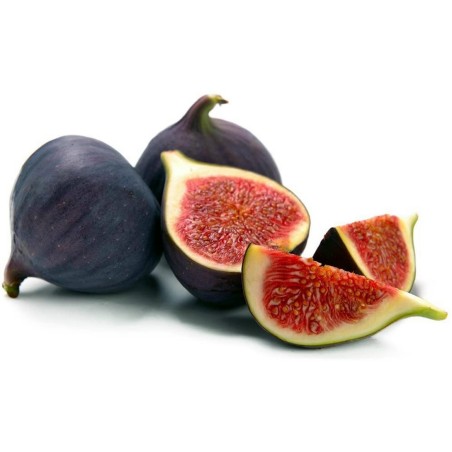
Giant Kumquats or cumquats Seeds - exotic tropical fruit
Price for Package of 3 seeds.
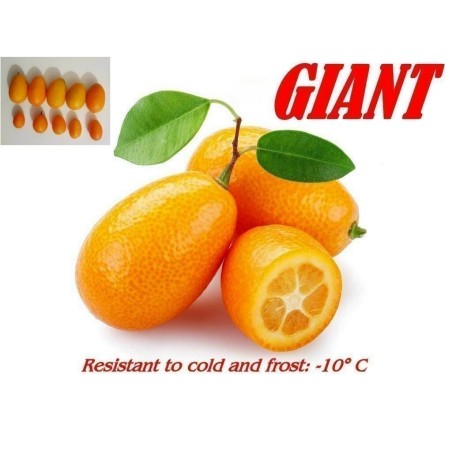
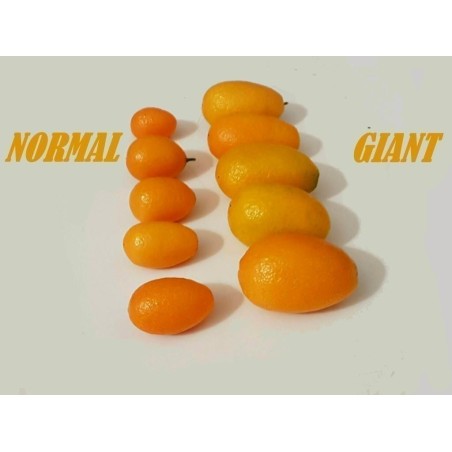
This is a gigantic kumquat, which is more than three times bigger than ordinary kumquat. Kumquats or cumquats are a group of small fruit-bearing trees in the flowering plant
Giant Kumquats or cumquats Seeds - exotic tropical fruit
Price for Package of 3 seeds.
This is a gigantic kumquat, which is more than three times bigger than ordinary kumquat.
Kumquats or cumquats are a group of small fruit-bearing trees in the flowering plant family Rutaceae, either forming the genus Fortunella, or placed within Citrus sensu lato. The edible fruit closely resembles that of the orange (Citrus sinensis), but it is much smaller and ovular, being approximately the size and shape of an olive. The English name "kumquat" derives from the Cantonese pronunciation gam1 gwat1 (given in Jyutping romanization).
They are slow-growing evergreen shrubs or short trees, from 2.5 to 4.5 meters (8 to 15 ft) tall, with dense branches, sometimes bearing small thorns. The leaves are dark glossy green, and the flowers white, similar to other citrus flowers, borne singly or clustered in the leaf-axils. Depending on size, the kumquat tree can produce hundreds or even thousands of fruits each year.[1] The tree can be hydrophytic, with the fruit often found floating on water near shore during the ripe season.[citation needed]
The plant is native to south Asia and the Asia-Pacific region. The earliest historical reference to kumquats appears in literature of China in the 12th century. They have long been cultivated in Japan, Taiwan, the Philippines, and southeast Asia. They were introduced to Europe in 1846 by Robert Fortune, collector for the London Horticultural Society, and shortly thereafter into North America.
Classification
Carl Peter Thunberg originally classified the kumquats as Citrus japonica in his 1784 book Flora Japonica. In 1915, Walter T. Swingle reclassified them in a segregate genus, Fortunella, named in honor of Robert Fortune. Seven species of Fortunella have generally been recognized—F. japonica, F. margarita, F. crassifolia, F. hindsii, F. obovata and F. polyandra, as well as the recently described F. bawangica . The Flora of China returns the kumquat to Citrus and combines the species into the single species as Citrus japonica.[2]
Varieties :
Round kumquat
The round kumquat (also Marumi kumquat or Morgani kumquat) is an evergreen tree, producing edible golden-yellow colored fruit. The fruit is small and usually round but can be oval shaped. The peel has a sweet flavor but the fruit has a sour center. The fruit can be eaten cooked but is mainly used to make marmalade and jelly. It is grown as an ornamental plant and can be used in bonsai. This plant symbolizes good luck in China and other Asian countries, where it is sometimes given as a gift during the Lunar New Year. It's more commonly cultivated than most other kumquats as it is cold tolerant. It can be kept as a houseplant.
When the kumquats are divided into multiple species the name Fortunella japonica (Citrus japonica) is retained by this group.
Oval kumquat
Fortunella margarita, also known as the oval kumquat or the Nagami kumquat, is a close relative to Citrus species. It is a small evergreen tree, that can reach more than 12 ft (4 m) high and 9 ft (3 m) large. It is native to southeastern Asia, and more precisely to China. The oval kumquat has very fragrant citrus-like white flowers, and small edible oval orange fruits. The oval kumquat is an ornamental little tree, with showy foliage, flowers and fruits. It is also fairly frost-hardy, and will withstand negative temperatures such as 14 °F (-10 °C), and even a little lower for very brief periods. It can be grown in USDA hardiness zones 9 and warmer, but can also be tried in sheltered places, in USDA hardiness zone 8. Unlike most citrus species, the oval kumquat has a shorter growth period, and goes into dormancy fairly earlier in autumn. This partly explains its better frost hardiness.
Characteristics
The evergreen leaves of oval kumquats are deep-green and relatively small. They can reach up to 3 in (7 cm) long and 1.5 in (3.5 cm) wide. The white flowers of the oval kumquat are similar to the citrus flowers. They are strongly perfumed, and they appear relatively late in the growing season, generally late spring.
The oval kumquat is a fruit that looks like any citrus fruit, with an orange rind. The fruits are oblong, up to 2 in (5 cm) long. Unlike the common citrus, which have a rind which is inedible raw, oval kumquats have an edible sweet rind. The flesh, however, is not as sweet as the rind, and the juice is quite acidic and sour, with a lemon-like flavor. This fruit is generally eaten fresh, with its rind. It can also be processed into preserves, jams, and other products.
Cultivation
The oval kumquat needs a well-drained and fertile ground. It dislikes alkaline soils. The oval kumquat is susceptible to common citrus pests and diseases.
Jiangsu kumquat
The Jiangsu kumquat or Fukushu kumquat bears edible fruit that can be eaten raw. The fruit can be made into jelly and marmalade. The fruit can be round or bell shaped; it is bright orange when fully ripe. It may also be distinguished from other kumquats by its round leaves that make this species unique within the genus. It is grown for its edible fruit and as an ornamental plant. It cannot withstand frost.
When the kumquats are divided into multiple species the name Fortunella obovata (Citrus obovata) is used for this group.
Cultivation and uses
Kumquats are cultivated in China, South Korea, North Korea, Taiwan, Southeast Asia, Japan, the Middle East, Europe (notably Corfu, Greece), southern Pakistan, and the southern United States (notably Florida, Louisiana, Alabama) and California.
They are much hardier than other citrus plants such as oranges. The 'Nagami' kumquat requires a hot summer, ranging from 25 °C to 38 °C (77 °F to 100 °F), but can withstand frost down to about −10 °C (14 °F) without injury. They grow in the tea hills of Hunan, China, where the climate is too cold for other citrus fruits, even the Mikan (also known as the Satsuma) orange. The trees differ also from other citrus species in that they enter into a period of winter dormancy so profound that they will remain in it through several weeks of subsequent warm weather without putting out new shoots or blossoms. Despite their ability to survive low temperatures, kumquat trees grow better and produce larger and sweeter fruits in warmer regions.
Uses
Kumquats are often eaten raw. As the rind is sweet and the juicy center is sour, the raw fruit is usually consumed either whole—to savor the contrast—or only the rind is eaten. The fruit is considered ripe when it reaches a yellowish-orange stage and has just shed the last tint of green.
Culinary uses include candying and kumquat preserves, marmalade, and jelly. Kumquats can also be sliced and added to salads. In recent years kumquats have gained popularity as a garnish for cocktail beverages, including the martini as a replacement for the more familiar olive. A kumquat liqueur mixes the fruit with vodka or other clear spirit. Kumquats are also being used by chefs to create a niche for their desserts and are common in European countries.
The Cantonese often preserve kumquats in salt or sugar. A batch of the fruit is buried in dry salt inside a glass jar. Over time, all the juice from the fruit is diffused into the salt. The fruit in the jar becomes shrunken, wrinkled, and dark brown in color, and the salt combines with the juice to become a dark brown brine. A few salted kumquats with a few teaspoons of the brine/juice may be mixed with hot water to make a remedy for sore throats.[citation needed] A jar of such preserved kumquats can last several years and still keep its flavor.[citation needed]
In the Philippines and Taiwan, kumquats are a popular addition to green tea and black tea, either hot or iced.
In Vietnam, kumquat bonsai trees (round kumquat plant) are used as a decoration for the Tết (Lunar New Year) holiday. Kumquat fruits are also boiled or dried to make a candied snack called mứt quất.
Expediem in intreaga lume din Uniunea Europeana, folosind posta aeriana recomandata, cu confirmare prin semnatura la livrare.
📦Urmarirea comenzii tale Conectati-va la contul dvs. si navigati laIstoricul comenzilor > Detalii pentru a gasi numarul dvs. de urmarire.
Veti primi notificari prin e-mail pentru fiecare etapa a comenzii dumneavoastra. Daca nu vedeti aceste mesaje, verificati folderul Spam/mesaje nedorite sau contactati furnizorul dvs. de e-mail. Alternativ, cautati online cum sa deblocati e-mailurile expeditorilor.
SERVICIUL NOSTRU DE EMAIL FUNCTIONEAZA
Veti primi notificari prin e-mail pentru fiecare etapa a comenzii dvs. Daca nu vedeti aceste mesaje, verificati folderul Spam/mesaje nedorite sau contactati furnizorul dvs. de e-mail.
📧Cum sa te asiguri ca e-mailurile de la magazinul nostru online ajung intotdeauna in contul tau Gmailsau orice alt e-mailal furnizoruluiIn Inbox si nu sunt marcate ca spam sau blocate:
Adauga expeditorul in contactele Google sau ale oricarui alt furnizor de e-mail. Nu te putem ajuta daca setarile tale nu sunt astfel. Contacteaza furnizorul tau de e-mail pentru asistenta.
Pasul 1: Deschide Gmail si gaseste un e-mail de la noi xxxxxxxxxxxx@xxx.com Nu incercati sa ne trimiteti un e-mail direct la aceasta adresa; nu il vom primi. Orice contact se face exclusiv prin formularul de contact din magazinul nostru online! Daca nu gasiti e-mailul nostru, este posibil sa fi fost blocat. In acest caz, continuati cu Pasul 4 de mai jos.
Pasul 2: Puneti cursorul peste numele expeditorului sau adresa de e-mail din partea de sus a e-mailului.
Pasul 3: Faceti clic pe pictograma "Adauga la contacte" (mica pictograma cu o persoana).
Acest lucru va ajuta Gmail sa ne recunoasca ca expeditor de incredere, asigurandu-se ca e-mailurile noastre ajung direct in inboxul tau si nu in folderul de spam.
Creati un filtru pentru a preveni ca e-mailurile sa fie marcate ca spam sau blocate
Pasul 1: Deschide Gmail si da clic pe pictograma rotita din coltul din dreapta sus, apoi selecteaza "Vezi toate setarile".
Pasul 2: Accesati fila "Filtre si adrese blocate".
Pasul 3: Faceti clic pe "Creati un filtru nou".
Pasul 4: In campul "From", introduceti adresa de e-mail pe care doriti sa o adaugati pe lista alba (e.g., e-mailul magazinului nostru).
Pasul 5: Faceti clic pe "Creeaza filtru".
Pasul 6: In fereastra urmatoare, bifati caseta etichetata "Nu-l trimite niciodata in Spam".
Pasul 7: Faceti clic pe "Creeaza filtru" pentru a salva.
Acest lucru va asigura ca e-mailurile noastre ajung intotdeauna in inbox-ul tau si nu vor fi marcate ca spam sau blocate din greseala.
Urmareste-ti coletul prin:
Aftership
17Track
Posta.hr (pentru numere de urmarire precum RGxxxxxxHR)
⚠️Notificari importante
Plata la livrare esteNUDisponibil.
Furnizati intotdeauna un numar de telefon mobil valid cu codul tarii cand comandati (e.g., +365 456 7686 576).
Nu ordona sa P.O. Cutii, sau daca nu puteti fi acasa pentru a semna pentru colet, coletele nu pot fi lasate la vecini.
Daca un pachet trimis la P.O. Daca cutia este pierduta sau nedistribuita, nu se va emite nicio rambursare.
⚖️Responsabilitatea clientului privind conformitatea legala Clientul este responsabil sa se asigure ca produsul poate fi importat legal in tara sa, inclusiv prin respectarea tuturor reglementarilor de import, obtinerea permiselor necesare si plata taxelor vamale, impozitelor si a altor taxe aplicabile. Va rugam sa verificati legislatia locala inainte de a comanda pentru a evita orice probleme cu vama sau livrarea.
📦Pachete Pierdute, Returnate & Reexpediate
Clienti din Brazilia si Mexic:Nu putem rambursa coletele pierdute sau distruse de catre autoritatile vamale.
Daca coletul dumneavoastra este returnat, va vom rambursa doar costul produsului — costurile de livrare nu sunt rambursabile.
Costul expedierii de retur (2 €) si orice costuri de reexpediere trebuie acoperite de client.
Daca un pachet ne este returnat din orice motiv, sunteti responsabil pentru plata transportului de retur (€2) plus costul reexpedierii pachetului.
🚚Livrare colet Trimiterile inregistrate necesita o semnatura.
Daca urmarirea arata ca pachetul este inca la oficiul postal de expediere, acesta este in tranzit — contactati oficiul postal local pentru actualizari.
Din pacate, nici noi, nici serviciul postal prin care a fost expediata comanda dumneavoastra nu va putem ajuta sa aflati unde se afla aceasta. Cand vedeti ca pachetul este in tara dumneavoastra,TREBUIE sa contactati oficiul postal cu numarul de urmarire.si discutati problema cu ei. Trimitem toate comenzile prin posta oficiala de stat.
Nu suntem responsabili pentru termenele de livrare si nu putem urmari expedierile in numele dumneavoastra.
📅Optiuni de livrare & timpi estimati
Optiune de livrare
Timp de procesare
Notite
Livrare Prioritara
Se expediaza in 1–7 zile lucratoare
Acorda prioritate procesarii comenzilor (nu garanteaza o livrare mai rapida); pot aparea intarzieri in timpul sarbatorilor (3–10 zile)
Livrare securizata
Se expediaza in 1–7 zile lucratoare
Disponibil pentru comenzi de pana la 150 €; rambursare in caz de pierdere
Livrare standard
Se expediaza in 7–10 zile lucratoare
Mai economic; pot aparea intarzieri in perioada sarbatorilor (7–14 zile)
Timp estimat de livrare:
In UE:3–20 zile
La nivel mondial:5–30 zile
Exemple din SUA:Livrat in 13, 17, 19, 22, sau 27 de zile.
Nota:Timpul de livrare depinde de locatia dvs. si de sistemul postal local. COVID-19 sau perioadele de sarbatori pot provoca intarzieri suplimentare.
💰Costuri de livrare Taxele de expediere si manipulare sunt calculate automat la finalizarea comenzii, in functie de greutatea coletului si de destinatie.
⏰Ore de procesare a comenzilor Nu procesam si nu expediem comenzile in zilele de sambata si duminica.
💳Optiuni de plata
Transfer bancar (SEPA / IBAN / SWIFT-BIC) Includeti referinta comenzii dvs. in descrierea platii (e.g., "SGS-19811702"). Comenzile care nu sunt platite in termen de 7 zile vor fi anulate automat.
PayPal Platile sunt acceptate numai in euro. Va rugam sa selectati euro la finalizarea comenzii.
Plata cu cardul Acceptam Visa, MasterCard, American Express, CB, Diners Club, Discover, China UnionPay, JCB, si Discover.
⚠️Taxe de tranzactie Clientii sunt responsabili pentru orice comisioane de tranzactie bancare sau PayPal. Va rugam sa va asigurati ca detaliile de plata sunt corecte pentru o procesare mai rapida a comenzii.
📢Note finale Inainte de a plasa comanda, verificati intotdeauna site-ul nostru pentru anunturi speciale, programul din perioada sarbatorilor sau conditii specifice de livrare care ar putea afecta achizitia dumneavoastra.
Notificare importanta: Facturi digitale
Pentru a contribui la reducerea risipei de hartie, nu includem o factura tiparita impreuna cu comanda dvs. Puteti descarca si imprima cu usurinta factura dvs. in orice moment accesand contul dvs.Istoric comenzi in profilul contului tau