This variety produces extremely large fruits weighing 10 grams per fruit. Triple Crown Blackberry Seeds . The healthful benefits are many , rich in vitamin C , vitamin K , B vitamin , Omega-3 , Manganese . Antioxidant strength
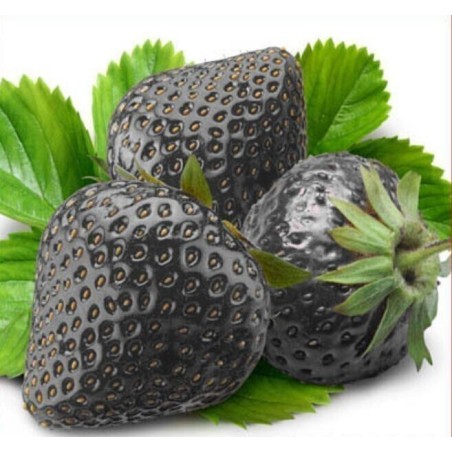
This variety produces extremely large fruits weighing 10 grams per fruit.
Triple Crown Blackberry Seeds . The healthful benefits are many , rich in vitamin C , vitamin K , B vitamin , Omega-3 , Manganese . Antioxidant strength at top of more than 1000 antioxidant foods consumed in the U.S.
Wikipedia:
The blackberry is an edible fruit produced by many species in the Rubus genus in the Rosaceae family, hybrids among these species within the Rubus subgenus, and hybrids between the Rubus and Idaeobatus subgenera. What distinguishes the blackberry from its raspberry relatives is whether or not the torus (receptacle or stem) 'picks-with' (i.e. stays with) the fruit. When picking a blackberry fruit, the torus does stay with the fruit. With a raspberry, the torus remains on the plant, leaving a hollow core in the raspberry fruit. The term 'bramble', a word meaning any impenetrable scrub, has traditionally been applied specifically to the blackberry or its products,[1] though in the United States it applies to all members of the Rubus genus. In the western US, the term caneberry is used to refer to blackberries and raspberries as a group rather than the term bramble.
The usually black fruit is not a berry in the botanical sense of the word. Botanically it is termed an aggregate fruit, composed of small drupelets. It is a widespread and well-known group of over 375 species, many of which are closely related apomictic microspecies native throughout Europe, northwestern Africa, temperate western and central Asia and North and South America.
Growth and anatomical description
Blackberries are perennial plants which typically bear biennial stems ("canes") from the perennial root system.
In its first year, a new stem, the primocane, grows vigorously to its full length of 3–6 m (in some cases, up to 9 m), arching or trailing along the ground and bearing large palmately compound leaves with five or seven leaflets; it does not produce any flowers. In its second year, the cane becomes a floricane and the stem does not grow longer, but the lateral buds break to produce flowering laterals (which have smaller leaves with three or five leaflets).[3] First- and second-year shoots usually have numerous short-curved, very sharp prickles that are often erroneously called thorns. These prickles can tear through denim with ease and make the plant very difficult to navigate around. Prickle-free cultivars have been developed. Recently the University of Arkansas has developed primocane fruiting blackberries that grow and flower on first-year growth much as the primocane-fruiting (also called fall bearing or everbearing) red raspberries do.
Unmanaged mature plants form a tangle of dense arching stems, the branches rooting from the node tip on many species when they reach the ground. Vigorous and growing rapidly in woods, scrub, hillsides, and hedgerows, blackberry shrubs tolerate poor soils, readily colonizing wasteland, ditches, and vacant lots.
The flowers are produced in late spring and early summer on short racemes on the tips of the flowering laterals.[3] Each flower is about 2–3 cm in diameter with five white or pale pink petals.[3]
The drupelets only develop around ovules that are fertilized by the male gamete from a pollen grain. The most likely cause of undeveloped ovules is inadequate pollinator visits.[5] Even a small change in conditions, such as a rainy day or a day too hot for bees to work after early morning, can reduce the number of bee visits to the flower, thus reducing the quality of the fruit. Incomplete drupelet development can also be a symptom of exhausted reserves in the plant's roots or infection with a virus such as Raspberry bushy dwarf virus.
In botanical terminology, the fruit is not a berry but an aggregate fruit of numerous drupelets.
Ecology
Blackberry leaves are food for certain caterpillars; some grazing mammals, especially deer, are also very fond of the leaves. Caterpillars of the concealer moth Alabonia geoffrella have been found feeding inside dead blackberry shoots. When mature, the berries are eaten and their seeds dispersed by several mammals, such as the red fox and the Eurasian badger, as well as by small birds.
Blackberries grow wild throughout all parts of the United Kingdom and Ireland. They are an important element in the ecology of those countries. Harvesting the berries is a popular pastime in these countries. However, it is also considered an invasive weed, sending down its strong suckering roots amongst garden hedges and shrubs. In some parts of the world, such as in Australia, Chile, New Zealand, and the Pacific Northwest of North America, some blackberry species, particularly Rubus armeniacus (syn. R. procerus, 'Himalaya') and Rubus laciniatus ('Evergreen'), are naturalised and considered an invasive species and a serious weed.
The blackberry tends to be red during its unripe ("green") phase, leading to an old expression that "blackberries are red when they're green".
In various parts of the United States, wild blackberries are sometimes called "Black-caps", a term more commonly used for black raspberries, Rubus occidentalis.
As there is forensic evidence from the Iron Age Haraldskær Woman that she consumed blackberries some 2500 years ago, it is reasonable to conclude that blackberries have been eaten by humans over thousands of years.
Uses
Food
The soft fruit is popular for use in desserts, jams, seedless jelly, and sometimes wine. It is often mixed with apples for pies and crumbles. Blackberries are also used to produce candy.
Good nectar producers, blackberry shrubs bearing flowers yield a medium to dark, fruity honey.
Phytochemical research
Blackberries contain numerous phytochemicals including polyphenols, flavonoids, anthocyanins, salicylic acid, ellagic acid, and fiber.[7][8] Anthocyanins in blackberries are responsible for their rich dark color.
Phytochemical components of blackberries, salicylic acid and ellagic acid have been associated in preliminary research with toxicity to cancer cells,[9][10] including breast cancer cells.
Blackberries rank highly among fruits for in vitro antioxidant strength, particularly because of their dense content of polyphenolic compounds, such as ellagic acid, tannins, ellagitannins, quercetin, gallic acid, anthocyanins, and cyanidins.[12][13] One report placed blackberry at the top of more than 1000 antioxidant foods consumed in the United States.
Nutrients
Blackberries are notable for their high nutritional contents of dietary fiber, vitamin C, vitamin K, and the essential mineral manganese.
Blackberries have both soluble and insoluble fiber.[15] One cup of blackberries (144 g) has an average of 7.6 g of fibre and contains half the daily recommended dose of vitamin C.[8] Dietary fiber is important in maintaining a healthy digestive system, as it supports regular bowel movements.
Nutrient content of seeds
Blackberries contain numerous large seeds that are not always preferred by consumers. The seeds contain oil rich in omega-3 (alpha-linolenic acid) and -6 fats (linoleic acid) as well as protein, dietary fiber, carotenoids, ellagitannins and ellagic acid.
Cultivation
Commercial cultivation
Worldwide, Mexico is the leading producer of blackberries, with nearly the entire crop being produced for export into the off-season fresh markets in North America and Europe. The Mexican market is almost entirely from the cultivar 'Tupy' (often spelled 'Tupi', but the EMBRAPA program in Brazil from which it was released prefers the 'Tupy' spelling.). In the US, Oregon is the leading commercial blackberry producer, producing 42.6 million pounds on 6,180 acres (25.0 km2), in 1995[17] and 56.1 million pounds on 7,000 acres (28 km2) in 2009.
Numerous cultivars have been selected for commercial and amateur cultivation in Europe[2] and the United States.[19] Since the many species form hybrids easily, there are numerous cultivars with more than one species in their ancestry.
'Marion' (marketed as "marionberry") is an important cultivar that was selected from seedlings from a cross between 'Chehalem' and 'Olallie' (commonly called "olallieberry") berries.[20] 'Olallie' in turn is a cross between loganberry and youngberry. 'Marion', 'Chehalem' and 'Olallie' are just three of many trailing blackberry cultivars developed by the United States Department of Agriculture Agricultural Research Service (USDA-ARS) blackberry breeding program at Oregon State University in Corvallis, Oregon.
The most recent cultivars released from this program are the prickle-free cultivars 'Black Diamond', 'Black Pearl', and 'Nightfall' as well as the very early-ripening 'Obsidian' and 'Metolius'. 'Black Diamond' is now the leading cultivar being planted in the Pacific Northwest. Some of the other cultivars from this program are 'Newberry', 'Waldo', 'Siskiyou', 'Black Butte', 'Kotata', 'Pacific', and 'Cascade'.
Trailing blackberries are vigorous and crown forming, require a trellis for support, and are less cold hardy than the erect or semi-erect blackberries. In addition to the United States's Pacific Northwest, these types do well in similar climates such as the United Kingdom, New Zealand, Chile, and the Mediterranean countries.
Semi-erect, prickle-free blackberries were first developed at the John Innes Centre in Norwich, UK, and subsequently by the USDA-ARS in Beltsville, Maryland. These are crown forming and very vigorous and need a trellis for support. Cultivars include 'Black Satin' 'Chester Thornless', 'Dirksen Thornless', 'Hull Thornless', 'Loch Ness', 'Loch Tay', 'Merton Thornless', 'Smoothstem', and 'Triple Crown'. Recently, the cultivar 'Cacanska Bestrna' (also called 'Cacak Thornless') has been developed in Serbia and has been planted on many thousands of hectares there.
The University of Arkansas has developed cultivars of erect blackberries. These types are less vigorous than the semi-erect types and produce new canes from root initials (therefore they spread underground like raspberries). There are prickly and prickle-free cultivars from this program, including 'Navaho', 'Ouachita', 'Cherokee', 'Apache', 'Arapaho', and 'Kiowa'. They are also responsible for developing the primocane fruiting blackberries such as 'Prime-Jan' and 'Prime-Jim'.
In raspberries, these types are called primocane fruiting, fall fruiting, or everbearing. 'Prime-Jim' and 'Prime-Jan' were released in 2004 by the University of Arkansas and are the first cultivars of primocane fruiting blackberry.[22] They grow much like the other erect cultivars described above, however the canes that emerge in the spring, will flower in mid-summer and fruit in late summer or fall. The fall crop has its highest quality when it ripens in cool mild climate such as in California or the Pacific Northwest.
'Illini Hardy' a semi-erect prickly cultivar introduced by the University of Illinois is cane hardy in zone 5, where traditionally blackberry production has been problematic, since canes often failed to survive the winter.
Blackberry production in Mexico has expanded enormously in the past decade. While once based on the cultivar 'Brazos', an old erect blackberry cultivar developed in Texas in 1959, the Mexican industry is now dominated by the Brazilian 'Tupy' released in the 1990s. 'Tupy' has the erect blackberry 'Comanche', and a "wild Uruguayan blackberry" as parents.[23] Since there are no native blackberries in Uruguay, the suspicion is that the widely grown 'Boysenberry' is the male parent. In order to produce these blackberries in regions of Mexico where there is no winter chilling to stimulate flower bud development, chemical defoliation and application of growth regulators are used to bring the plants into bloom.
Diseases and pests
As a result of blackberries belonging to the same genus as raspberries,[24] they share the same diseases including anthracnose which can cause the berry to have uneven ripening and sap flow may also be slowed.[25][26] They also share the same remedies including the Bordeaux mixture,[27] a combination of lime, water and Copper(II) sulfate.[28] The rows between blackberry plants must be free of weeds, blackberry suckers and grasses which may lead to pests or diseases.[29] Fruit growers are selective when planting blackberry bushes as wild blackberries may be infected[29] and gardeners are recommended to purchase only certified disease-free plants.
The spotted-wing drosophila, Drosophila suzukii is a serious pest of blackberries.[31] Unlike its vinegar fly relatives which are primarily attracted to rotting or fermented fruit, D. suzukii attacks fresh, ripe fruit by laying eggs under the soft skin. The larvae hatch and grow in the fruit, destroying the fruit's commercial value.
Another pest is Amphorophora rubi, known as the Blackberry Aphid, which not only eats blackberries but raspberries as well.
Byturus tomentosus (Raspberry beetle), Lampronia corticella (Raspberry Moth) and Anthonomus rubi (Strawberry blossom weevil) are also known to infest blackberries.
Folklore
Folklore in the United Kingdom is told that blackberries should not be picked after Old Michaelmas Day (11 October) as the devil has claimed them. There is some value behind this legend as wetter and cooler weather often allows the fruit to become infected by various molds such as Botryotinia which give the fruit an unpleasant look and may be toxic.
Wysyłamy na cały świat z Unii Europejskiej przesyłką lotniczą poleconą z potwierdzeniem odbioru (podpis przy doręczeniu).
📦Śledzenie Twojego zamówienia Zaloguj się na swoje konto i przejdź doHistoria zamówień > Szczegóły aby znaleźć numer śledzenia.
Otrzymasz powiadomienia e-mailowe na każdym etapie twojego zamówienia. Jeśli nie widzisz tych wiadomości, sprawdź folder Spam/Junk lub skontaktuj się z dostawcą poczty. Alternatywnie wyszukaj w Internecie, jak odblokować adresy e-mail nadawców.
NASZA USŁUGA E-MAILOWA DZIAŁA
Otrzymasz powiadomienia e-mail na każdym etapie realizacji zamówienia. Jeśli nie widzisz tych wiadomości, sprawdź folder Spam/Kosz lub skontaktuj się z dostawcą poczty e-mail.
📧Jak upewnić się, że e-maile z naszego sklepu internetowego zawsze trafiają do Twojego Gmailalub jakikolwiek inny e-maildostawcyOdebrane i nie oznaczone jako spam ani zablokowane:
Dodaj nadawcę do kontaktów w Google lub u dowolnego innego dostawcy poczty e-mail. Nie możemy ci pomóc, jeśli twoje ustawienia nie wyglądają w ten sposób. Skontaktuj się z dostawcą poczty e-mail, aby uzyskać pomoc.
Krok 1: Otwórz Gmail i znajdź e-mail od nas xxxxxxxxxxxx@xxx.com Nie próbuj wysyłać do nas wiadomości e-mail bezpośrednio na ten adres; nie otrzymamy jej. Kontakt odbywa się wyłącznie przez formularz kontaktowy w naszym sklepie internetowym! Jeśli nie możesz znaleźć naszej wiadomości e-mail, mogła zostać zablokowana. W takim przypadku przejdź do Kroku 4 poniżej.
Krok 2: Najedź kursorem na nazwę nadawcy lub adres e-mail u góry wiadomości.
Krok 3: Kliknij ikonę "Dodaj do kontaktów" (mała ikona osoby).
To pomoże Gmailowi rozpoznać nas jako zaufanego nadawcę, dzięki czemu nasze e-maile trafią prosto do Twojej skrzynki odbiorczej, a nie do spamu.
Utwórz filtr, aby zapobiec oznaczaniu wiadomości e-mail jako spam lub ich blokowaniu
Krok 1: Otwórz Gmail i kliknij ikonę koła zębatego w prawym górnym rogu, a następnie wybierz "Zobacz wszystkie ustawienia".
Krok 2: Przejdź do zakładki „Filtry i zablokowane adresy”.
Krok 3: Kliknij "Utwórz nowy filtr".
Krok 4: W polu "From" wpisz adres e-mail, który chcesz dodać do białej listy (e.g., adres e-mail naszego sklepu).
Krok 5: Kliknij "Utwórz filtr".
Krok 6: W następnym oknie zaznacz pole oznaczone "Nigdy nie wysyłaj tego do spamu".
Krok 7: Kliknij "Utwórz filtr", aby zapisać.
To zapewni, że nasze e-maile zawsze trafią do Twojej skrzynki odbiorczej i nie zostaną omyłkowo oznaczone jako spam ani zablokowane.
Śledź swoją przesyłkę przez:
Aftership
17Track
Posta.hr (dla numerów śledzenia takich jak RGxxxxxxHR)
⚠️Ważne informacje
Płatność za pobraniem toNIE dostępne.
Zawsze podaj ważny numer telefonu komórkowego z kodem kraju podczas składania zamówienia (e.g., +365 456 7686 576).
Nie rozkazuj, aby P.O. Pudełka, lub jeśli nie możesz być w domu, aby podpisać odbiór przesyłki, paczki nie mogą być zostawiane u sąsiadów.
Jeśli paczka wysłana do P.O. Jeżeli paczka zostanie zgubiona lub nie doręczona, zwrot pieniędzy nie zostanie wydany.
⚖️Odpowiedzialność klienta za przestrzeganie przepisów prawa Klient jest odpowiedzialny za zapewnienie, że produkt jest legalny do importu do jego kraju, w tym za przestrzeganie wszystkich przepisów importowych, uzyskanie niezbędnych pozwoleń oraz uiszczenie należnych ceł, podatków i innych opłat. Proszę sprawdzić lokalne przepisy przed złożeniem zamówienia, aby uniknąć problemów z odprawą celną lub dostawą.
📦Zaginione, Zwrócone & Ponownie Wysyłane Przesyłki
Klienci Brazylii & Meksyku:Nie możemy zwrócić pieniędzy za przesyłki zagubione lub zniszczone przez służby celne.
Jeśli twoja przesyłka zostanie zwrócona, zwrócimy tylko koszt produktu — koszty wysyłki nie podlegają zwrotowi.
Koszty odesłania (€2) oraz wszelkie koszty ponownej wysyłki muszą zostać pokryte przez klienta.
Jeśli paczka zostanie do nas zwrócona z jakiegokolwiek powodu, jesteś odpowiedzialny za opłacenie kosztów wysyłki zwrotnej (€2) oraz kosztu ponownej wysyłki paczki.
Jeśli w systemie śledzenia widać, że paczka nadal znajduje się w urzędzie pocztowym nadania, to znaczy, że jest w drodze — skontaktuj się ze swoim lokalnym urzędem pocztowym, aby uzyskać aktualizacje.
Niestety ani my, ani poczta, przez którą zostało wysłane Twoje zamówienie, nie jesteśmy w stanie pomóc Ci w ustaleniu, gdzie ono się znajduje. Kiedy zobaczysz, że Twoja paczka jest w Twoim kraju, ,MUSISZ skontaktować się z urzędem pocztowym, podając numer śledzeniaI omówić tę sprawę z nimi. Wysyłamy wszystkie zamówienia pocztą państwową.
Nie ponosimy odpowiedzialności za terminy dostawy i nie możemy śledzić przesyłek w Państwa imieniu.
📅Opcje Dostawy & Szacowane Czasy
Opcja dostawy
Czas Przetwarzania
Notatki
Dostawa Priorytetowa
Wysyłka w ciągu 1–7 dni roboczych
Priorytetowo traktuje realizację zamówień (nie gwarantuje szybszej dostawy); w okresie świątecznym możliwe opóźnienia (3–10 dni)
Bezpieczna Dostawa
Wysyłka w ciągu 1–7 dni roboczych
Dostępne dla zamówień do €150; zwrot w przypadku zagubienia
Dostawa standardowa
Wysyłka w ciągu 7–10 dni roboczych
Bardziej ekonomiczna; w okresie świątecznym możliwe opóźnienia (7–14 dni)
Szacowany czas dostawy:
W UE: 3–20 dni
Na całym świecie:5–30 dni
Przykłady USA:Dostarczone w ciągu 13, 17, 19, 22 lub 27 dni.
Uwaga:Czasy dostawy zależą od Twojej lokalizacji i lokalnego systemu pocztowego. COVID-19 lub okresy świąteczne mogą powodować dodatkowe opóźnienia.
💰Koszty wysyłki Opłaty za wysyłkę i obsługę są obliczane automatycznie podczas finalizacji zamówienia na podstawie wagi przesyłki i miejsca przeznaczenia.
⏰Godziny realizacji zamówień Nie przetwarzamy ani nie wysyłamy zamówień w soboty ani w niedziele.
💳Opcje płatności
Przelew bankowy (SEPA / IBAN / SWIFT-BIC) Umieść numer zamówienia w opisie płatności (e.g., "SGS-19811702"). Zamówienia bez dokonanej płatności w ciągu 7 dni zostaną automatycznie anulowane.
PayPal Płatności akceptowane są wyłącznie w euro. Proszę wybrać euro podczas finalizacji zamówienia.
Płatność kartą Akceptujemy karty Visa, MasterCard, American Express, CB, Diners Club, Discover, China UnionPay, JCB oraz Discover.
⚠️Opłaty transakcyjne Klienci ponoszą wszelkie opłaty transakcyjne pobierane przez bank lub PayPal. Proszę upewnić się, że dane płatnicze są poprawne, aby przyspieszyć przetwarzanie zamówienia.
📢Uwagi końcowe Przed złożeniem zamówienia zawsze sprawdź naszą stronę internetową pod kątem specjalnych komunikatów, harmonogramów świątecznych lub szczególnych warunków wysyłki, które mogą wpłynąć na twój zakup.
Ważne zawiadomienie: Faktury elektroniczne
Aby ograniczyć ilość odpadów papierowych, nie dołączamy do zamówienia wydrukowanej faktury. Fakturę możesz łatwo pobrać i wydrukować w dowolnym momencie, odwiedzając swojeHistoria zamówień w profilu twojego konta