This variety produces extremely large fruits weighing 10 grams per fruit. Triple Crown Blackberry Seeds . The healthful benefits are many , rich in vitamin C , vitamin K , B vitamin , Omega-3 , Manganese . Antioxidant strength
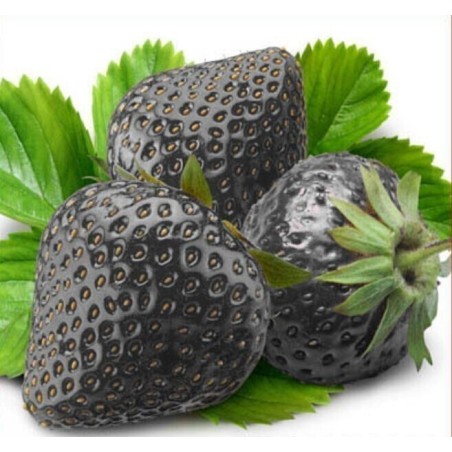
This variety produces extremely large fruits weighing 10 grams per fruit.
Triple Crown Blackberry Seeds . The healthful benefits are many , rich in vitamin C , vitamin K , B vitamin , Omega-3 , Manganese . Antioxidant strength at top of more than 1000 antioxidant foods consumed in the U.S.
Wikipedia:
The blackberry is an edible fruit produced by many species in the Rubus genus in the Rosaceae family, hybrids among these species within the Rubus subgenus, and hybrids between the Rubus and Idaeobatus subgenera. What distinguishes the blackberry from its raspberry relatives is whether or not the torus (receptacle or stem) 'picks-with' (i.e. stays with) the fruit. When picking a blackberry fruit, the torus does stay with the fruit. With a raspberry, the torus remains on the plant, leaving a hollow core in the raspberry fruit. The term 'bramble', a word meaning any impenetrable scrub, has traditionally been applied specifically to the blackberry or its products,[1] though in the United States it applies to all members of the Rubus genus. In the western US, the term caneberry is used to refer to blackberries and raspberries as a group rather than the term bramble.
The usually black fruit is not a berry in the botanical sense of the word. Botanically it is termed an aggregate fruit, composed of small drupelets. It is a widespread and well-known group of over 375 species, many of which are closely related apomictic microspecies native throughout Europe, northwestern Africa, temperate western and central Asia and North and South America.
Growth and anatomical description
Blackberries are perennial plants which typically bear biennial stems ("canes") from the perennial root system.
In its first year, a new stem, the primocane, grows vigorously to its full length of 3–6 m (in some cases, up to 9 m), arching or trailing along the ground and bearing large palmately compound leaves with five or seven leaflets; it does not produce any flowers. In its second year, the cane becomes a floricane and the stem does not grow longer, but the lateral buds break to produce flowering laterals (which have smaller leaves with three or five leaflets).[3] First- and second-year shoots usually have numerous short-curved, very sharp prickles that are often erroneously called thorns. These prickles can tear through denim with ease and make the plant very difficult to navigate around. Prickle-free cultivars have been developed. Recently the University of Arkansas has developed primocane fruiting blackberries that grow and flower on first-year growth much as the primocane-fruiting (also called fall bearing or everbearing) red raspberries do.
Unmanaged mature plants form a tangle of dense arching stems, the branches rooting from the node tip on many species when they reach the ground. Vigorous and growing rapidly in woods, scrub, hillsides, and hedgerows, blackberry shrubs tolerate poor soils, readily colonizing wasteland, ditches, and vacant lots.
The flowers are produced in late spring and early summer on short racemes on the tips of the flowering laterals.[3] Each flower is about 2–3 cm in diameter with five white or pale pink petals.[3]
The drupelets only develop around ovules that are fertilized by the male gamete from a pollen grain. The most likely cause of undeveloped ovules is inadequate pollinator visits.[5] Even a small change in conditions, such as a rainy day or a day too hot for bees to work after early morning, can reduce the number of bee visits to the flower, thus reducing the quality of the fruit. Incomplete drupelet development can also be a symptom of exhausted reserves in the plant's roots or infection with a virus such as Raspberry bushy dwarf virus.
In botanical terminology, the fruit is not a berry but an aggregate fruit of numerous drupelets.
Ecology
Blackberry leaves are food for certain caterpillars; some grazing mammals, especially deer, are also very fond of the leaves. Caterpillars of the concealer moth Alabonia geoffrella have been found feeding inside dead blackberry shoots. When mature, the berries are eaten and their seeds dispersed by several mammals, such as the red fox and the Eurasian badger, as well as by small birds.
Blackberries grow wild throughout all parts of the United Kingdom and Ireland. They are an important element in the ecology of those countries. Harvesting the berries is a popular pastime in these countries. However, it is also considered an invasive weed, sending down its strong suckering roots amongst garden hedges and shrubs. In some parts of the world, such as in Australia, Chile, New Zealand, and the Pacific Northwest of North America, some blackberry species, particularly Rubus armeniacus (syn. R. procerus, 'Himalaya') and Rubus laciniatus ('Evergreen'), are naturalised and considered an invasive species and a serious weed.
The blackberry tends to be red during its unripe ("green") phase, leading to an old expression that "blackberries are red when they're green".
In various parts of the United States, wild blackberries are sometimes called "Black-caps", a term more commonly used for black raspberries, Rubus occidentalis.
As there is forensic evidence from the Iron Age Haraldskær Woman that she consumed blackberries some 2500 years ago, it is reasonable to conclude that blackberries have been eaten by humans over thousands of years.
Uses
Food
The soft fruit is popular for use in desserts, jams, seedless jelly, and sometimes wine. It is often mixed with apples for pies and crumbles. Blackberries are also used to produce candy.
Good nectar producers, blackberry shrubs bearing flowers yield a medium to dark, fruity honey.
Phytochemical research
Blackberries contain numerous phytochemicals including polyphenols, flavonoids, anthocyanins, salicylic acid, ellagic acid, and fiber.[7][8] Anthocyanins in blackberries are responsible for their rich dark color.
Phytochemical components of blackberries, salicylic acid and ellagic acid have been associated in preliminary research with toxicity to cancer cells,[9][10] including breast cancer cells.
Blackberries rank highly among fruits for in vitro antioxidant strength, particularly because of their dense content of polyphenolic compounds, such as ellagic acid, tannins, ellagitannins, quercetin, gallic acid, anthocyanins, and cyanidins.[12][13] One report placed blackberry at the top of more than 1000 antioxidant foods consumed in the United States.
Nutrients
Blackberries are notable for their high nutritional contents of dietary fiber, vitamin C, vitamin K, and the essential mineral manganese.
Blackberries have both soluble and insoluble fiber.[15] One cup of blackberries (144 g) has an average of 7.6 g of fibre and contains half the daily recommended dose of vitamin C.[8] Dietary fiber is important in maintaining a healthy digestive system, as it supports regular bowel movements.
Nutrient content of seeds
Blackberries contain numerous large seeds that are not always preferred by consumers. The seeds contain oil rich in omega-3 (alpha-linolenic acid) and -6 fats (linoleic acid) as well as protein, dietary fiber, carotenoids, ellagitannins and ellagic acid.
Cultivation
Commercial cultivation
Worldwide, Mexico is the leading producer of blackberries, with nearly the entire crop being produced for export into the off-season fresh markets in North America and Europe. The Mexican market is almost entirely from the cultivar 'Tupy' (often spelled 'Tupi', but the EMBRAPA program in Brazil from which it was released prefers the 'Tupy' spelling.). In the US, Oregon is the leading commercial blackberry producer, producing 42.6 million pounds on 6,180 acres (25.0 km2), in 1995[17] and 56.1 million pounds on 7,000 acres (28 km2) in 2009.
Numerous cultivars have been selected for commercial and amateur cultivation in Europe[2] and the United States.[19] Since the many species form hybrids easily, there are numerous cultivars with more than one species in their ancestry.
'Marion' (marketed as "marionberry") is an important cultivar that was selected from seedlings from a cross between 'Chehalem' and 'Olallie' (commonly called "olallieberry") berries.[20] 'Olallie' in turn is a cross between loganberry and youngberry. 'Marion', 'Chehalem' and 'Olallie' are just three of many trailing blackberry cultivars developed by the United States Department of Agriculture Agricultural Research Service (USDA-ARS) blackberry breeding program at Oregon State University in Corvallis, Oregon.
The most recent cultivars released from this program are the prickle-free cultivars 'Black Diamond', 'Black Pearl', and 'Nightfall' as well as the very early-ripening 'Obsidian' and 'Metolius'. 'Black Diamond' is now the leading cultivar being planted in the Pacific Northwest. Some of the other cultivars from this program are 'Newberry', 'Waldo', 'Siskiyou', 'Black Butte', 'Kotata', 'Pacific', and 'Cascade'.
Trailing blackberries are vigorous and crown forming, require a trellis for support, and are less cold hardy than the erect or semi-erect blackberries. In addition to the United States's Pacific Northwest, these types do well in similar climates such as the United Kingdom, New Zealand, Chile, and the Mediterranean countries.
Semi-erect, prickle-free blackberries were first developed at the John Innes Centre in Norwich, UK, and subsequently by the USDA-ARS in Beltsville, Maryland. These are crown forming and very vigorous and need a trellis for support. Cultivars include 'Black Satin' 'Chester Thornless', 'Dirksen Thornless', 'Hull Thornless', 'Loch Ness', 'Loch Tay', 'Merton Thornless', 'Smoothstem', and 'Triple Crown'. Recently, the cultivar 'Cacanska Bestrna' (also called 'Cacak Thornless') has been developed in Serbia and has been planted on many thousands of hectares there.
The University of Arkansas has developed cultivars of erect blackberries. These types are less vigorous than the semi-erect types and produce new canes from root initials (therefore they spread underground like raspberries). There are prickly and prickle-free cultivars from this program, including 'Navaho', 'Ouachita', 'Cherokee', 'Apache', 'Arapaho', and 'Kiowa'. They are also responsible for developing the primocane fruiting blackberries such as 'Prime-Jan' and 'Prime-Jim'.
In raspberries, these types are called primocane fruiting, fall fruiting, or everbearing. 'Prime-Jim' and 'Prime-Jan' were released in 2004 by the University of Arkansas and are the first cultivars of primocane fruiting blackberry.[22] They grow much like the other erect cultivars described above, however the canes that emerge in the spring, will flower in mid-summer and fruit in late summer or fall. The fall crop has its highest quality when it ripens in cool mild climate such as in California or the Pacific Northwest.
'Illini Hardy' a semi-erect prickly cultivar introduced by the University of Illinois is cane hardy in zone 5, where traditionally blackberry production has been problematic, since canes often failed to survive the winter.
Blackberry production in Mexico has expanded enormously in the past decade. While once based on the cultivar 'Brazos', an old erect blackberry cultivar developed in Texas in 1959, the Mexican industry is now dominated by the Brazilian 'Tupy' released in the 1990s. 'Tupy' has the erect blackberry 'Comanche', and a "wild Uruguayan blackberry" as parents.[23] Since there are no native blackberries in Uruguay, the suspicion is that the widely grown 'Boysenberry' is the male parent. In order to produce these blackberries in regions of Mexico where there is no winter chilling to stimulate flower bud development, chemical defoliation and application of growth regulators are used to bring the plants into bloom.
Diseases and pests
As a result of blackberries belonging to the same genus as raspberries,[24] they share the same diseases including anthracnose which can cause the berry to have uneven ripening and sap flow may also be slowed.[25][26] They also share the same remedies including the Bordeaux mixture,[27] a combination of lime, water and Copper(II) sulfate.[28] The rows between blackberry plants must be free of weeds, blackberry suckers and grasses which may lead to pests or diseases.[29] Fruit growers are selective when planting blackberry bushes as wild blackberries may be infected[29] and gardeners are recommended to purchase only certified disease-free plants.
The spotted-wing drosophila, Drosophila suzukii is a serious pest of blackberries.[31] Unlike its vinegar fly relatives which are primarily attracted to rotting or fermented fruit, D. suzukii attacks fresh, ripe fruit by laying eggs under the soft skin. The larvae hatch and grow in the fruit, destroying the fruit's commercial value.
Another pest is Amphorophora rubi, known as the Blackberry Aphid, which not only eats blackberries but raspberries as well.
Byturus tomentosus (Raspberry beetle), Lampronia corticella (Raspberry Moth) and Anthonomus rubi (Strawberry blossom weevil) are also known to infest blackberries.
Folklore
Folklore in the United Kingdom is told that blackberries should not be picked after Old Michaelmas Day (11 October) as the devil has claimed them. There is some value behind this legend as wetter and cooler weather often allows the fruit to become infected by various molds such as Botryotinia which give the fruit an unpleasant look and may be toxic.
Expediem in intreaga lume din Uniunea Europeana, folosind posta aeriana recomandata, cu confirmare prin semnatura la livrare.
📦Urmarirea comenzii tale Conectati-va la contul dvs. si navigati laIstoricul comenzilor > Detalii pentru a gasi numarul dvs. de urmarire.
Veti primi notificari prin e-mail pentru fiecare etapa a comenzii dumneavoastra. Daca nu vedeti aceste mesaje, verificati folderul Spam/mesaje nedorite sau contactati furnizorul dvs. de e-mail. Alternativ, cautati online cum sa deblocati e-mailurile expeditorilor.
SERVICIUL NOSTRU DE EMAIL FUNCTIONEAZA
Veti primi notificari prin e-mail pentru fiecare etapa a comenzii dvs. Daca nu vedeti aceste mesaje, verificati folderul Spam/mesaje nedorite sau contactati furnizorul dvs. de e-mail.
📧Cum sa te asiguri ca e-mailurile de la magazinul nostru online ajung intotdeauna in contul tau Gmailsau orice alt e-mailal furnizoruluiIn Inbox si nu sunt marcate ca spam sau blocate:
Adauga expeditorul in contactele Google sau ale oricarui alt furnizor de e-mail. Nu te putem ajuta daca setarile tale nu sunt astfel. Contacteaza furnizorul tau de e-mail pentru asistenta.
Pasul 1: Deschide Gmail si gaseste un e-mail de la noi xxxxxxxxxxxx@xxx.com Nu incercati sa ne trimiteti un e-mail direct la aceasta adresa; nu il vom primi. Orice contact se face exclusiv prin formularul de contact din magazinul nostru online! Daca nu gasiti e-mailul nostru, este posibil sa fi fost blocat. In acest caz, continuati cu Pasul 4 de mai jos.
Pasul 2: Puneti cursorul peste numele expeditorului sau adresa de e-mail din partea de sus a e-mailului.
Pasul 3: Faceti clic pe pictograma "Adauga la contacte" (mica pictograma cu o persoana).
Acest lucru va ajuta Gmail sa ne recunoasca ca expeditor de incredere, asigurandu-se ca e-mailurile noastre ajung direct in inboxul tau si nu in folderul de spam.
Creati un filtru pentru a preveni ca e-mailurile sa fie marcate ca spam sau blocate
Pasul 1: Deschide Gmail si da clic pe pictograma rotita din coltul din dreapta sus, apoi selecteaza "Vezi toate setarile".
Pasul 2: Accesati fila "Filtre si adrese blocate".
Pasul 3: Faceti clic pe "Creati un filtru nou".
Pasul 4: In campul "From", introduceti adresa de e-mail pe care doriti sa o adaugati pe lista alba (e.g., e-mailul magazinului nostru).
Pasul 5: Faceti clic pe "Creeaza filtru".
Pasul 6: In fereastra urmatoare, bifati caseta etichetata "Nu-l trimite niciodata in Spam".
Pasul 7: Faceti clic pe "Creeaza filtru" pentru a salva.
Acest lucru va asigura ca e-mailurile noastre ajung intotdeauna in inbox-ul tau si nu vor fi marcate ca spam sau blocate din greseala.
Urmareste-ti coletul prin:
Aftership
17Track
Posta.hr (pentru numere de urmarire precum RGxxxxxxHR)
⚠️Notificari importante
Plata la livrare esteNUDisponibil.
Furnizati intotdeauna un numar de telefon mobil valid cu codul tarii cand comandati (e.g., +365 456 7686 576).
Nu ordona sa P.O. Cutii, sau daca nu puteti fi acasa pentru a semna pentru colet, coletele nu pot fi lasate la vecini.
Daca un pachet trimis la P.O. Daca cutia este pierduta sau nedistribuita, nu se va emite nicio rambursare.
⚖️Responsabilitatea clientului privind conformitatea legala Clientul este responsabil sa se asigure ca produsul poate fi importat legal in tara sa, inclusiv prin respectarea tuturor reglementarilor de import, obtinerea permiselor necesare si plata taxelor vamale, impozitelor si a altor taxe aplicabile. Va rugam sa verificati legislatia locala inainte de a comanda pentru a evita orice probleme cu vama sau livrarea.
📦Pachete Pierdute, Returnate & Reexpediate
Clienti din Brazilia si Mexic:Nu putem rambursa coletele pierdute sau distruse de catre autoritatile vamale.
Daca coletul dumneavoastra este returnat, va vom rambursa doar costul produsului — costurile de livrare nu sunt rambursabile.
Costul expedierii de retur (2 €) si orice costuri de reexpediere trebuie acoperite de client.
Daca un pachet ne este returnat din orice motiv, sunteti responsabil pentru plata transportului de retur (€2) plus costul reexpedierii pachetului.
🚚Livrare colet Trimiterile inregistrate necesita o semnatura.
Daca urmarirea arata ca pachetul este inca la oficiul postal de expediere, acesta este in tranzit — contactati oficiul postal local pentru actualizari.
Din pacate, nici noi, nici serviciul postal prin care a fost expediata comanda dumneavoastra nu va putem ajuta sa aflati unde se afla aceasta. Cand vedeti ca pachetul este in tara dumneavoastra,TREBUIE sa contactati oficiul postal cu numarul de urmarire.si discutati problema cu ei. Trimitem toate comenzile prin posta oficiala de stat.
Nu suntem responsabili pentru termenele de livrare si nu putem urmari expedierile in numele dumneavoastra.
📅Optiuni de livrare & timpi estimati
Optiune de livrare
Timp de procesare
Notite
Livrare Prioritara
Se expediaza in 1–7 zile lucratoare
Acorda prioritate procesarii comenzilor (nu garanteaza o livrare mai rapida); pot aparea intarzieri in timpul sarbatorilor (3–10 zile)
Livrare securizata
Se expediaza in 1–7 zile lucratoare
Disponibil pentru comenzi de pana la 150 €; rambursare in caz de pierdere
Livrare standard
Se expediaza in 7–10 zile lucratoare
Mai economic; pot aparea intarzieri in perioada sarbatorilor (7–14 zile)
Timp estimat de livrare:
In UE:3–20 zile
La nivel mondial:5–30 zile
Exemple din SUA:Livrat in 13, 17, 19, 22, sau 27 de zile.
Nota:Timpul de livrare depinde de locatia dvs. si de sistemul postal local. COVID-19 sau perioadele de sarbatori pot provoca intarzieri suplimentare.
💰Costuri de livrare Taxele de expediere si manipulare sunt calculate automat la finalizarea comenzii, in functie de greutatea coletului si de destinatie.
⏰Ore de procesare a comenzilor Nu procesam si nu expediem comenzile in zilele de sambata si duminica.
💳Optiuni de plata
Transfer bancar (SEPA / IBAN / SWIFT-BIC) Includeti referinta comenzii dvs. in descrierea platii (e.g., "SGS-19811702"). Comenzile care nu sunt platite in termen de 7 zile vor fi anulate automat.
PayPal Platile sunt acceptate numai in euro. Va rugam sa selectati euro la finalizarea comenzii.
Plata cu cardul Acceptam Visa, MasterCard, American Express, CB, Diners Club, Discover, China UnionPay, JCB, si Discover.
⚠️Taxe de tranzactie Clientii sunt responsabili pentru orice comisioane de tranzactie bancare sau PayPal. Va rugam sa va asigurati ca detaliile de plata sunt corecte pentru o procesare mai rapida a comenzii.
📢Note finale Inainte de a plasa comanda, verificati intotdeauna site-ul nostru pentru anunturi speciale, programul din perioada sarbatorilor sau conditii specifice de livrare care ar putea afecta achizitia dumneavoastra.
Notificare importanta: Facturi digitale
Pentru a contribui la reducerea risipei de hartie, nu includem o factura tiparita impreuna cu comanda dvs. Puteti descarca si imprima cu usurinta factura dvs. in orice moment accesand contul dvs.Istoric comenzi in profilul contului tau