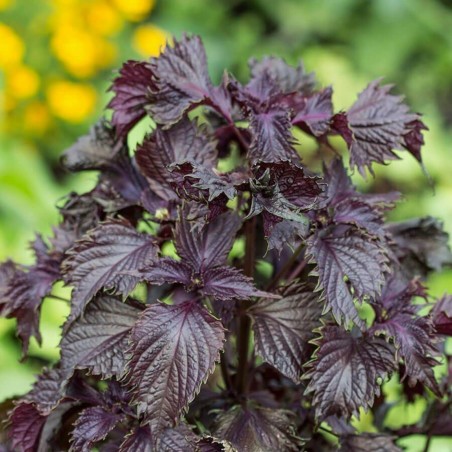
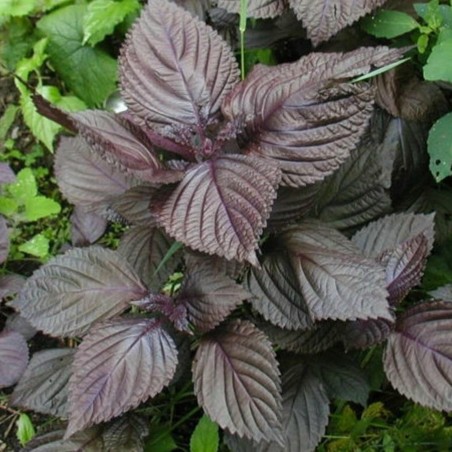
🌿 Nasiona shiso purpurowego (Perilla frutescens var. crispa) dają intensywnie aromatyczne czerwono-purpurowe shiso znane jako akajiso, cenione w Japonii i w całej Azji Wschodniej za wyrazisty kolor, charakterystyczny miętowo-korzenny aromat oraz tradycyjne zastosowania kulinarne. Wyjątkowe zioło do kiszenia, sushi, dań z ryżem, sałatek, dekoracji i kuchni azjatyckiej.
Nasiona shiso purpurowego (Perilla frutescens var. crispa)
Cena za opakowanie 50 nasion (0.09g)
Purple zioło które stało się japońską ikoną kulinarną
Shiso purpurowe, znane botanicznie jako Perilla frutescens var. crispa, jest jednym z najbardziej rozpoznawalnych aromatycznych ziół w kuchni Azji Wschodniej. W Japonii znane jako akajiso w odniesieniu do czerwonej lub purpurowej formy, cenione jest nie tylko za intensywny zapach, ale także za niezwykły purpurowo-czerwony kolor, jaki nadaje potrawom. Od stuleci perilla była ważną rośliną spożywczą i tradycyjnym ziołem w Chinach, Japonii, Korei i innych częściach Azji. Zapisy historyczne z Chin dokumentują jej użycie od ponad dwóch tysięcy lat, natomiast kuchnia japońska szczególnie rozsławiła shiso purpurowe dzięki kiszeniu i tradycyjnej żywności konserwowanej. :contentReference[oaicite:0]{index=0}
Co sprawia że shiso purpurowe jest tak wyjątkowe
Pierwszą rzeczą, którą ludzie zauważają, jest kolor. Shiso purpurowe wytwarza silnie pigmentowane liście zawierające związki antocyjanowe, tworząc odcienie od czerwonawo-purpurowych po głęboki fiolet. Drugą zaletą jest aromat: świeże liście mają złożony ziołowy zapach z miętowymi, korzennymi i lekko ciepłymi nutami. Charakterystyczna woń pochodzi od lotnych związków w roślinie, w tym perillaldehydu i innych składników aromatycznych. To jeden z powodów, dla których shiso jest cenione zarówno za aromat, jak i wygląd. :contentReference[oaicite:1]{index=1}
Słynne w Japonii do umeboshi
To właśnie tutaj shiso purpurowe ma szczególnie ważną tradycyjną rolę. Japońskie czerwone shiso jest powszechnie używane przy przygotowywaniu umeboshi, tradycyjnych solonych i marynowanych japońskich śliwek. Liście nadają zarówno charakterystyczny smak, jak i znane purpurowo-czerwone zabarwienie kojarzone z wieloma tradycyjnymi sposobami przygotowania umeboshi. :contentReference[oaicite:2]{index=2} To tradycyjne powiązanie sprawia, że akajiso jest czymś znacznie więcej niż ozdobnym purpurowym ziołem. To autentyczny składnik japońskiej kultury kulinarnej i nadal jest cenione przez osoby, które przygotowują w domu tradycyjne kiszonki i przetwory.
Idealne do sushi sashimi i dań z ryżem
Liście shiso są szeroko stosowane jako świeża aromatyczna dekoracja w daniach kuchni japońskiej. Charakterystyczny smak szczególnie dobrze komponuje się z surową rybą, sushi i sashimi, a młode liście mogą być również dodawane do sałatek i innych świeżych potraw. :contentReference[oaicite:3]{index=3} Połączenie intensywnie purpurowego ulistnienia i mocnego świeżego aromatu sprawia, że nawet niewielka ilość jest zauważalna wizualnie i smakowo.
Tradycyjne zioło w całej Azji
Shiso purpurowe należy do znacznie szerszej azjatyckiej tradycji kulinarnej związanej z perillą. W Chinach perilla była historycznie używana zarówno jako żywność, jak i w tradycyjnej medycynie. W Korei liście i nasiona perilli są ważnymi składnikami kulinarnymi, natomiast w Wietnamie perilla jest używana jako aromatyczne zioło i przyprawa. :contentReference[oaicite:4]{index=4} Ta długa historia wyjaśnia, dlaczego perilla jest uważana za tak cenną roślinę w całej Azji Wschodniej i Południowo-Wschodniej.
Liście młode pędy i nasiona
Różne części perilli mają tradycyjne zastosowania kulinarne. Delikatne liście można jeść na świeżo, używać jako dekoracji, dodawać do sałatek lub gotować z innymi składnikami. Młode pędy i rozwijające się struktury nasienne także mogą służyć jako delikatne składniki kulinarne, natomiast dojrzałe nasiona były tradycyjnie używane jako przyprawa w niektórych częściach Azji. :contentReference[oaicite:5]{index=5}
Więcej niż zioło kulinarne
Perilla ma wyjątkowo bogatą historię etnobotaniczną. W tradycyjnej medycynie chińskiej liście, łodygi i nasiona od stuleci były odnotowywane jako surowce zielarskie. Tradycyjne zastosowania obejmowały preparaty kojarzone z kaszlem, dolegliwościami trawiennymi, przeziębieniami i innymi dolegliwościami. Są to historyczne tradycyjne zastosowania i nie powinny być przedstawiane jako potwierdzone metody leczenia. Współczesne dowody kliniczne pozostają niewystarczające, aby uznać perillę za leczenie konkretnych schorzeń. :contentReference[oaicite:6]{index=6}
Dlaczego ludzie cenią ją od pokoleń
Atrakcyjność shiso purpurowego wynika z kilku cech występujących w jednej roślinie: niepowtarzalnego aromatu, pięknego purpurowego ulistnienia, silnej tożsamości kulinarnej oraz bardzo długiej historii w azjatyckich tradycjach żywieniowych i zielarskich. Jest szczególnie cenione przez osoby, które lubią autentyczną kuchnię japońską, tradycyjne kiszenie, nietypowe zioła oraz rośliny o prawdziwym dziedzictwie kulturowym, a nie tylko wartości ozdobnej.
Naturalna roślina aromatyczna i tradycyjna
Perilla zawiera szeroki zakres naturalnie występujących związków aromatycznych i fenolowych. Badania analizowały aktywność antyoksydacyjną, przeciwdrobnoustrojową, przeciwzapalną oraz związaną z owadami w ekstraktach i olejkach eterycznych z perilli. Wyniki laboratoryjne są interesujące naukowo, ale nie należy ich mylić z potwierdzonymi domowymi działaniami leczniczymi lub efektami zwalczania szkodników. :contentReference[oaicite:7]{index=7}
Piękny dodatek do ogrodu ziołowego
Shiso purpurowe jest także doskonałym wyborem, gdy liczy się wygląd. Jego intensywnie zabarwione ulistnienie tworzy silny kontrast z typowymi zielonymi ziołami kulinarnymi, dzięki czemu może jednocześnie pełnić funkcję użytecznej rośliny kuchennej i elementu ozdobnego. Połączenie purpurowego ulistnienia, nietypowego aromatu i znaczenia kulturowego czyni je szczególnie atrakcyjnym do ogrodów ziołowych, ogrodów w stylu azjatyckim, uprawy w pojemnikach oraz kolekcji nietypowych roślin jadalnych.
Szczegóły produktu
Produkt: Nasiona shiso purpurowego
Nazwa botaniczna: Perilla frutescens var. crispa
Nazwa zwyczajowa: Shiso purpurowe
Nazwa japońska: Akajiso
Rodzina: Jasnotowate (Lamiaceae)
Typ rośliny: Aromatyczne zioło jednoroczne
Ulistnienie: Purpurowe do czerwono-purpurowego
Smak: Aromatyczny, miętowy, korzenny i charakterystyczny
Główne zastosowania kulinarne: Kiszonki, umeboshi, sushi, sashimi, dania z ryżem, sałatki i dekoracje
Znaczenie tradycyjne: Japońskie, chińskie, koreańskie i wietnamskie tradycje kulinarne i zielarskie
Wysyłamy na cały świat z Unii Europejskiej przesyłką lotniczą poleconą z potwierdzeniem odbioru (podpis przy doręczeniu).
📦Śledzenie Twojego zamówienia Zaloguj się na swoje konto i przejdź doHistoria zamówień > Szczegóły aby znaleźć numer śledzenia.
Otrzymasz powiadomienia e-mailowe na każdym etapie twojego zamówienia. Jeśli nie widzisz tych wiadomości, sprawdź folder Spam/Junk lub skontaktuj się z dostawcą poczty. Alternatywnie wyszukaj w Internecie, jak odblokować adresy e-mail nadawców.
NASZA USŁUGA E-MAILOWA DZIAŁA
Otrzymasz powiadomienia e-mail na każdym etapie realizacji zamówienia. Jeśli nie widzisz tych wiadomości, sprawdź folder Spam/Kosz lub skontaktuj się z dostawcą poczty e-mail.
📧Jak upewnić się, że e-maile z naszego sklepu internetowego zawsze trafiają do Twojego Gmailalub jakikolwiek inny e-maildostawcyOdebrane i nie oznaczone jako spam ani zablokowane:
Dodaj nadawcę do kontaktów w Google lub u dowolnego innego dostawcy poczty e-mail. Nie możemy ci pomóc, jeśli twoje ustawienia nie wyglądają w ten sposób. Skontaktuj się z dostawcą poczty e-mail, aby uzyskać pomoc.
Krok 1: Otwórz Gmail i znajdź e-mail od nas xxxxxxxxxxxx@xxx.com Nie próbuj wysyłać do nas wiadomości e-mail bezpośrednio na ten adres; nie otrzymamy jej. Kontakt odbywa się wyłącznie przez formularz kontaktowy w naszym sklepie internetowym! Jeśli nie możesz znaleźć naszej wiadomości e-mail, mogła zostać zablokowana. W takim przypadku przejdź do Kroku 4 poniżej.
Krok 2: Najedź kursorem na nazwę nadawcy lub adres e-mail u góry wiadomości.
Krok 3: Kliknij ikonę "Dodaj do kontaktów" (mała ikona osoby).
To pomoże Gmailowi rozpoznać nas jako zaufanego nadawcę, dzięki czemu nasze e-maile trafią prosto do Twojej skrzynki odbiorczej, a nie do spamu.
Utwórz filtr, aby zapobiec oznaczaniu wiadomości e-mail jako spam lub ich blokowaniu
Krok 1: Otwórz Gmail i kliknij ikonę koła zębatego w prawym górnym rogu, a następnie wybierz "Zobacz wszystkie ustawienia".
Krok 2: Przejdź do zakładki „Filtry i zablokowane adresy”.
Krok 3: Kliknij "Utwórz nowy filtr".
Krok 4: W polu "From" wpisz adres e-mail, który chcesz dodać do białej listy (e.g., adres e-mail naszego sklepu).
Krok 5: Kliknij "Utwórz filtr".
Krok 6: W następnym oknie zaznacz pole oznaczone "Nigdy nie wysyłaj tego do spamu".
Krok 7: Kliknij "Utwórz filtr", aby zapisać.
To zapewni, że nasze e-maile zawsze trafią do Twojej skrzynki odbiorczej i nie zostaną omyłkowo oznaczone jako spam ani zablokowane.
Śledź swoją przesyłkę przez:
Aftership
17Track
Posta.hr (dla numerów śledzenia takich jak RGxxxxxxHR)
⚠️Ważne informacje
Płatność za pobraniem toNIE dostępne.
Zawsze podaj ważny numer telefonu komórkowego z kodem kraju podczas składania zamówienia (e.g., +365 456 7686 576).
Nie rozkazuj, aby P.O. Pudełka, lub jeśli nie możesz być w domu, aby podpisać odbiór przesyłki, paczki nie mogą być zostawiane u sąsiadów.
Jeśli paczka wysłana do P.O. Jeżeli paczka zostanie zgubiona lub nie doręczona, zwrot pieniędzy nie zostanie wydany.
⚖️Odpowiedzialność klienta za przestrzeganie przepisów prawa Klient jest odpowiedzialny za zapewnienie, że produkt jest legalny do importu do jego kraju, w tym za przestrzeganie wszystkich przepisów importowych, uzyskanie niezbędnych pozwoleń oraz uiszczenie należnych ceł, podatków i innych opłat. Proszę sprawdzić lokalne przepisy przed złożeniem zamówienia, aby uniknąć problemów z odprawą celną lub dostawą.
📦Zaginione, Zwrócone & Ponownie Wysyłane Przesyłki
Klienci Brazylii & Meksyku:Nie możemy zwrócić pieniędzy za przesyłki zagubione lub zniszczone przez służby celne.
Jeśli twoja przesyłka zostanie zwrócona, zwrócimy tylko koszt produktu — koszty wysyłki nie podlegają zwrotowi.
Koszty odesłania (€2) oraz wszelkie koszty ponownej wysyłki muszą zostać pokryte przez klienta.
Jeśli paczka zostanie do nas zwrócona z jakiegokolwiek powodu, jesteś odpowiedzialny za opłacenie kosztów wysyłki zwrotnej (€2) oraz kosztu ponownej wysyłki paczki.
Jeśli w systemie śledzenia widać, że paczka nadal znajduje się w urzędzie pocztowym nadania, to znaczy, że jest w drodze — skontaktuj się ze swoim lokalnym urzędem pocztowym, aby uzyskać aktualizacje.
Niestety ani my, ani poczta, przez którą zostało wysłane Twoje zamówienie, nie jesteśmy w stanie pomóc Ci w ustaleniu, gdzie ono się znajduje. Kiedy zobaczysz, że Twoja paczka jest w Twoim kraju, ,MUSISZ skontaktować się z urzędem pocztowym, podając numer śledzeniaI omówić tę sprawę z nimi. Wysyłamy wszystkie zamówienia pocztą państwową.
Nie ponosimy odpowiedzialności za terminy dostawy i nie możemy śledzić przesyłek w Państwa imieniu.
📅Opcje Dostawy & Szacowane Czasy
Opcja dostawy
Czas Przetwarzania
Notatki
Dostawa Priorytetowa
Wysyłka w ciągu 1–7 dni roboczych
Priorytetowo traktuje realizację zamówień (nie gwarantuje szybszej dostawy); w okresie świątecznym możliwe opóźnienia (3–10 dni)
Bezpieczna Dostawa
Wysyłka w ciągu 1–7 dni roboczych
Dostępne dla zamówień do €150; zwrot w przypadku zagubienia
Dostawa standardowa
Wysyłka w ciągu 7–10 dni roboczych
Bardziej ekonomiczna; w okresie świątecznym możliwe opóźnienia (7–14 dni)
Szacowany czas dostawy:
W UE: 3–20 dni
Na całym świecie:5–30 dni
Przykłady USA:Dostarczone w ciągu 13, 17, 19, 22 lub 27 dni.
Uwaga:Czasy dostawy zależą od Twojej lokalizacji i lokalnego systemu pocztowego. COVID-19 lub okresy świąteczne mogą powodować dodatkowe opóźnienia.
💰Koszty wysyłki Opłaty za wysyłkę i obsługę są obliczane automatycznie podczas finalizacji zamówienia na podstawie wagi przesyłki i miejsca przeznaczenia.
⏰Godziny realizacji zamówień Nie przetwarzamy ani nie wysyłamy zamówień w soboty ani w niedziele.
💳Opcje płatności
Przelew bankowy (SEPA / IBAN / SWIFT-BIC) Umieść numer zamówienia w opisie płatności (e.g., "SGS-19811702"). Zamówienia bez dokonanej płatności w ciągu 7 dni zostaną automatycznie anulowane.
PayPal Płatności akceptowane są wyłącznie w euro. Proszę wybrać euro podczas finalizacji zamówienia.
Płatność kartą Akceptujemy karty Visa, MasterCard, American Express, CB, Diners Club, Discover, China UnionPay, JCB oraz Discover.
⚠️Opłaty transakcyjne Klienci ponoszą wszelkie opłaty transakcyjne pobierane przez bank lub PayPal. Proszę upewnić się, że dane płatnicze są poprawne, aby przyspieszyć przetwarzanie zamówienia.
📢Uwagi końcowe Przed złożeniem zamówienia zawsze sprawdź naszą stronę internetową pod kątem specjalnych komunikatów, harmonogramów świątecznych lub szczególnych warunków wysyłki, które mogą wpłynąć na twój zakup.
Ważne zawiadomienie: Faktury elektroniczne
Aby ograniczyć ilość odpadów papierowych, nie dołączamy do zamówienia wydrukowanej faktury. Fakturę możesz łatwo pobrać i wydrukować w dowolnym momencie, odwiedzając swojeHistoria zamówień w profilu twojego konta