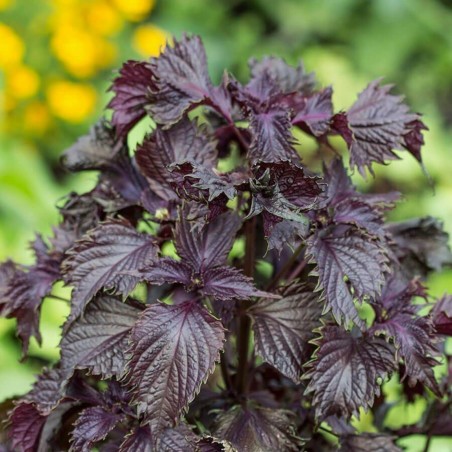
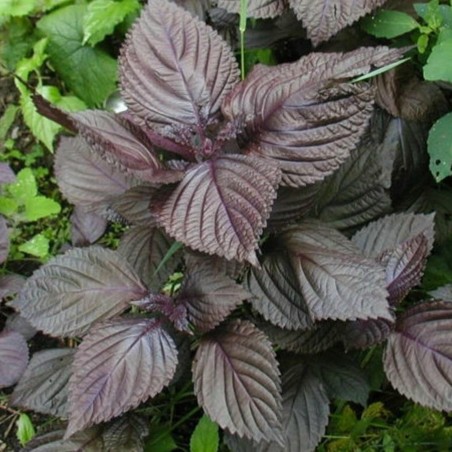
🌿 Paarse shiso zaden (Perilla frutescens var. crispa) produceren de intens aromatische roodpaarse shiso, bekend als akajiso, die in Japan en in heel Oost-Azië wordt gewaardeerd om zijn opvallende kleur, kenmerkende muntachtig-kruidige aroma en traditionele culinaire toepassingen. Een bijzonder kruid voor inmaken, sushi, rijstgerechten, salades, garneringen en de Aziatische keuken.
Paarse shiso zaden (Perilla frutescens var. crispa)
Prijs voor verpakking van 50 zaden (0.09g)
Het paarse kruid dat een Japans culinair icoon werd
Paarse shiso, botanisch bekend als Perilla frutescens var. crispa, is een van de meest herkenbare aromatische kruiden in de Oost-Aziatische keuken. In Japan bekend als akajiso wanneer het gaat om de rode of paarse vorm, wordt het niet alleen gewaardeerd om zijn intense geur, maar ook om de opvallende paars-rode kleur die het aan voedsel geeft. Al eeuwenlang is perilla een belangrijk voedingsmiddel en traditioneel kruid in China, Japan, Korea en andere delen van Azië. Historische bronnen uit China documenteren het gebruik al meer dan tweeduizend jaar, terwijl de Japanse keuken paarse shiso bijzonder beroemd maakte via inmaken en traditionele geconserveerde voedingsmiddelen. :contentReference[oaicite:0]{index=0}
Wat paarse shiso zo bijzonder maakt
Het eerste wat mensen opvalt is de kleur. Paarse shiso ontwikkelt sterk gepigmenteerde bladeren die anthocyanen bevatten, met tinten variërend van roodpaars tot diep violet. De tweede aantrekkingskracht is het aroma: verse bladeren hebben een complexe kruidige geur met muntachtige, kruidige en licht warme tonen. De karakteristieke geur komt van vluchtige verbindingen in de plant, waaronder perillaldehyde en andere aromatische bestanddelen. Dit is een van de redenen waarom shiso evenzeer om zijn aroma als om zijn uiterlijk wordt gewaardeerd. :contentReference[oaicite:1]{index=1}
Beroemd in Japan voor umeboshi
Hier heeft paarse shiso een bijzonder belangrijke traditionele rol. Japanse rode shiso wordt beroemd gebruikt bij de bereiding van umeboshi, traditionele gezouten en ingelegde Japanse pruimen. De bladeren zorgen zowel voor de karakteristieke smaak als voor de bekende roodpaarse kleuring die bij veel traditionele umeboshi-bereidingen hoort. :contentReference[oaicite:2]{index=2} Die traditionele verbinding maakt akajiso veel meer dan een sierlijk paars kruid. Het is een echt ingrediënt van de Japanse eetcultuur en blijft gewaardeerd door mensen die thuis traditionele pickles en geconserveerde producten maken.
Perfect voor sushi sashimi en rijstgerechten
Shisobladeren worden veel gebruikt als verse aromatische garnering bij Japanse gerechten. De uitgesproken smaak werkt vooral goed naast rauwe vis, sushi en sashimi, terwijl jonge bladeren ook in salades en andere verse bereidingen kunnen worden verwerkt. :contentReference[oaicite:3]{index=3} De combinatie van levendig paars blad en een krachtige frisse geur maakt zelfs een kleine hoeveelheid visueel en gastronomisch opvallend.
Een traditioneel kruid in heel Azië
Paarse shiso behoort tot een veel bredere Aziatische culinaire traditie rond perilla. In China is perilla historisch gebruikt als zowel voedsel als traditionele geneeskunde. In Korea zijn perillabladeren en -zaden belangrijke culinaire ingrediënten, terwijl perilla in Vietnam wordt gebruikt als aromatisch kruid en specerij. :contentReference[oaicite:4]{index=4} Deze lange geschiedenis verklaart waarom perilla in Oost- en Zuidoost-Azië als zo’n waardevolle plant wordt beschouwd.
Bladeren jonge scheuten en zaden
Verschillende delen van perilla hebben traditionele culinaire toepassingen. Malse bladeren kunnen vers worden gegeten, als garnering worden gebruikt, aan salades worden toegevoegd of met andere ingrediënten worden meegekookt. Jonge scheuten en zich ontwikkelende zaadstructuren kunnen eveneens als delicate culinaire componenten worden gebruikt, terwijl rijpe zaden in delen van Azië traditioneel als kruiderij zijn gebruikt. :contentReference[oaicite:5]{index=5}
Meer dan een culinair kruid
Perilla heeft een uitzonderlijk rijke etnobotanische geschiedenis. In de traditionele Chinese geneeskunde zijn bladeren, stengels en zaden al eeuwenlang als kruidenmateriaal beschreven. Traditionele toepassingen omvatten onder meer bereidingen die in verband werden gebracht met hoest, spijsverteringsongemakken, verkoudheid en andere klachten. Dit zijn historische traditionele toepassingen en mogen niet worden gepresenteerd als bewezen medische behandelingen. Modern klinisch bewijs blijft onvoldoende om perilla vast te stellen als behandeling voor specifieke medische aandoeningen. :contentReference[oaicite:6]{index=6}
Waarom mensen het al generaties lang waarderen
De aantrekkingskracht van paarse shiso komt voort uit meerdere kwaliteiten die in dezelfde plant samenkomen: een onmiskenbare geur, prachtig paars blad, een sterke culinaire identiteit en een zeer lange geschiedenis in Aziatische voedings- en kruidentradities. Het wordt vooral gewaardeerd door mensen die houden van authentiek Japans koken, traditioneel inmaken, bijzondere kruiden en planten met een echte culturele geschiedenis in plaats van louter sierwaarde.
Natuurlijk aromatische en traditionele plant
Perilla bevat een brede reeks van nature voorkomende aromatische en fenolische verbindingen. Onderzoek heeft antioxidant-, antimicrobiële, ontstekingsremmende en insectgerelateerde biologische activiteit in perilla-extracten en essentiële oliën onderzocht. Deze laboratoriumbevindingen zijn wetenschappelijk interessant, maar ze mogen niet worden verward met bewezen effecten voor huiselijke medische toepassingen of plaagbestrijding. :contentReference[oaicite:7]{index=7}
Prachtige aanvulling op een kruidentuin
Paarse shiso is ook een uitstekende keuze wanneer het uiterlijk belangrijk is. Het rijkgekleurde blad vormt een sterk contrast met gewone groene keukenkruiden, waardoor het tegelijk kan functioneren als nuttige keukenplant en als sieraccent. De combinatie van paars blad, een ongebruikelijke geur en culturele betekenis maakt het bijzonder aantrekkelijk voor kruidentuinen, Aziatisch gethematiseerde tuinen, teelt in potten en collecties van bijzondere eetbare planten.
Productdetails
Product: Paarse shiso zaden
Botanische naam: Perilla frutescens var. crispa
Gebruikelijke naam: Paarse shiso
Japanse naam: Akajiso
Familie: Lamiaceae
Planttype: Aromatisch eenjarig kruid
Blad: Paars tot roodpaars
Smaak: Aromatisch, muntachtig, kruidig en uitgesproken
We verzenden wereldwijd vanuit de Europese Unie per aangetekende luchtpost met handtekeningbevestiging bij bezorging.
📦Uw bestelling volgen Log in op je account en navigeer naarBestelgeschiedenis > Details om uw trackingnummer te vinden.
Je ontvangt e-mailmeldingen voor elke fase van je bestelling. Als je deze berichten niet ziet, controleer dan je map Spam/Ongewenste e-mail of neem contact op met je e-mailprovider. Als alternatief kun je online zoeken naar hoe je e-mails van een afzender kunt deblokkeren.
ONZE E-MAILDIENST WERKT
U ontvangt e-mailmeldingen voor elke fase van uw bestelling. Als u deze berichten niet ziet, controleer dan uw map Spam/Ongewenste e-mail of neem contact op met uw e-mailprovider.
📧Hoe u ervoor zorgt dat e-mails van onze webshop altijd in uw Gmail terechtkomenof een andere e-mailvan de providerIn de inbox en niet als spam gemarkeerd of geblokkeerd:
Voeg de Afzender toe aan de contacten van uw Google-account of van een andere e-mailprovider. We kunnen u niet helpen als uw instellingen er niet zo uitzien. Neem contact op met uw e-mailprovider voor hulp.
Stap 1: Open Gmail en zoek een e-mail van ons xxxxxxxxxxxx@xxx.com Probeer ons niet rechtstreeks een e-mail naar dit adres te sturen; we zullen die niet ontvangen. Elk contact verloopt uitsluitend via het contactformulier in onze online shop! Als je onze e-mail niet kunt vinden, is deze mogelijk geblokkeerd. Ga in dat geval verder met Stap 4 hieronder.
Stap 2: Beweeg de muisaanwijzer over de naam van de afzender of het e-mailadres bovenaan de e-mail.
Stap 3Klik op het pictogram "Toevoegen aan contacten" (het pictogram van een klein persoonnetje).
Dit helpt Gmail ons te herkennen als een vertrouwde afzender, zodat onze e-mails rechtstreeks in je inbox terechtkomen en niet in de spam.
Maak een filter om te voorkomen dat e-mails als spam worden gemarkeerd of geblokkeerd
Stap 1: Open Gmail en klik op het tandwielpictogram rechtsboven, selecteer vervolgens "Alle instellingen bekijken".
Stap 2: Ga naar het tabblad "Filters en geblokkeerde adressen".
Stap 3: Klik op "Maak een nieuw filter aan".
Stap 4: Voer in het veld "From" het e-mailadres in dat u op de witte lijst wilt zetten (e.g., het e-mailadres van onze winkel).
Stap 5: Klik op "Filter maken".
Stap 6: Vink in het volgende venster het vakje met het label "Nooit naar Spam sturen" aan.
Stap 7: Klik op "Filter maken" om op te slaan.
Dit zorgt ervoor dat onze e-mails altijd in uw inbox terechtkomen en niet per ongeluk als spam worden gemarkeerd of geblokkeerd.
Volg uw pakket via:
Aftership
17Track
Posta.hr (voor trackingnummers zoals RGxxxxxxHR)
⚠️Belangrijke mededelingen
Contant bij aflevering isNIETBeschikbaar.
Geef bij het bestellen altijd een geldig mobiel nummer met landcode op (e.g., +365 456 7686 576).
Beveel niet om P.O. Dozen, of als u niet thuis kunt zijn om voor het pakket te tekenen, mogen pakketten niet bij buren worden achtergelaten.
Als een pakket gestuurd naar een P.O. Als de doos verloren is gegaan of niet is afgeleverd, wordt er geen terugbetaling verleend.
⚖️Verantwoordelijkheid van de klant voor naleving van wet- en regelgeving De klant is verantwoordelijk ervoor te zorgen dat het product legaal in hun land kan worden geïmporteerd, inclusief het naleven van alle importvoorschriften, het verkrijgen van de benodigde vergunningen en het betalen van toepasselijke douaneheffingen, belastingen en andere kosten. Controleer alstublieft uw lokale wetgeving voordat u bestelt om eventuele problemen met de douane of levering te voorkomen.
📦Verloren, Geretourneerde & Opnieuw Verzonden Pakketten
Brazilië & Mexico Klanten:We kunnen geen restitutie geven voor pakketten die door de douane verloren zijn gegaan of vernietigd zijn.
Als uw pakket wordt geretourneerd, zullen wij alleen de productkosten terugbetalen — verzendkosten zijn niet restitueerbaar.
Retourporto (€2) en eventuele kosten voor herverzending moeten door de klant worden betaald.
Als een pakket om welke reden dan ook naar ons wordt teruggestuurd, bent u verantwoordelijk voor het betalen van de retourverzendkosten (€2) plus de kosten om het pakket opnieuw te verzenden.
🚚Levering van zending Aangetekende zendingen vereisen een handtekening.
Als uw tracking aangeeft dat het pakket nog bij het postkantoor van vertrek is, is het onderweg — neem contact op met uw plaatselijke postkantoor voor updates.
Helaas kunnen noch wij, noch het postkantoor waarmee je bestelling is verzonden, je helpen met de vraag waar je bestelling is. Wanneer je ziet dat je pakket in je land is,je MOET contact opnemen met je postkantoor met het track & trace-nummerEn bespreek de zaak met hen. Wij verzenden alle bestellingen per officiële staatspost.
Wij zijn niet verantwoordelijk voor levertijden en kunnen zendingen niet voor u volgen.
📅Bezorgopties & Geschatte Tijden
Bezorgoptie
Verwerkingstijd
Notities
Prioritaire levering
Wordt verzonden binnen 1–7 werkdagen
Prioriteert orderverwerking (geen gegarandeerd snellere levering); vertragingen mogelijk tijdens feestdagen (3–10 dagen)
Beveiligde Levering
Wordt verzonden binnen 1–7 werkdagen
Beschikbaar voor bestellingen tot €150; terugbetaling bij verlies
Standaard levering
Verzending binnen 7–10 werkdagen
Goedkoper; tijdens feestdagen kunnen vertragingen optreden (7–14 dagen)
Geschatte levertijd:
Binnen de EU: 3–20 dagen
Wereldwijd: 5–30 dagen
Voorbeelden uit de VS:Geleverd in 13, 17, 19, 22, of 27 dagen.
Opmerking:De levertijden zijn afhankelijk van uw locatie en de lokale postdienst. COVID-19 of de feestdagen kunnen extra vertragingen veroorzaken.
💰Verzendkosten Verzend- en afhandelingskosten worden automatisch berekend bij het afrekenen op basis van het gewicht van het pakket en de bestemming.
⏰Verwerkingstijden voor bestellingen We verwerken of verzenden geen bestellingen op zaterdag of zondag.
💳 Betaalopties
Bankoverschrijving (SEPA / IBAN / SWIFT-BIC) Vermeld uw bestelreferentie in de betalingsomschrijving (e.g., "SGS-19811702"). Bestellingen zonder betaling binnen 7 dagen worden automatisch geannuleerd.
PayPal Betalingen worden alleen in euro's geaccepteerd. Selecteer alstublieft euro's tijdens het afrekenen.
Kaartbetaling We accepteren Visa, MasterCard, American Express, CB, Diners Club, Discover, China UnionPay, JCB, en Discover.
⚠️Transactiekosten Klanten zijn verantwoordelijk voor eventuele bank- of PayPal-transactiekosten. Zorg alstublieft dat de betalingsgegevens correct zijn voor een snellere verwerking van uw bestelling.
📢Slotopmerkingen Controleer voor het plaatsen van uw bestelling altijd onze website op speciale mededelingen, bezorgschema's tijdens feestdagen of specifieke verzendvoorwaarden die uw aankoop kunnen beïnvloeden.
Belangrijke mededeling: Digitale facturen
Om papierafval te verminderen voegen we geen papieren factuur bij je bestelling. Je kunt je factuur op elk gewenst moment eenvoudig downloaden en afdrukken door je Bestelgeschiedenis in je accountprofiel