Purple Shiso Seeds (Perilla frutescens var. crispa)

skladová jednotka (SKU) MHS-18-(0.09-g) Kategorie Domů
Cena: 1,55 €
S DPH
4.6 ( 5 reviews)

Purple Shiso Seeds (Perilla frutescens var. crispa)

Price for Package of 50 (0,09g) seeds.

Perilla frutescens var. crispa, or shiso (/ˈʃiːsoʊ/,[2] from the Japanese シソ), belongs to the genus Perilla, in the mint family, Lamiaceae. Shiso is a perennial plant that may be cultivated as an annual

Čistá hmotnost:
Sdílet na

Purple Shiso Seeds (Perilla frutescens var. crispa)

Price for Package of 50 (0,09g) seeds.

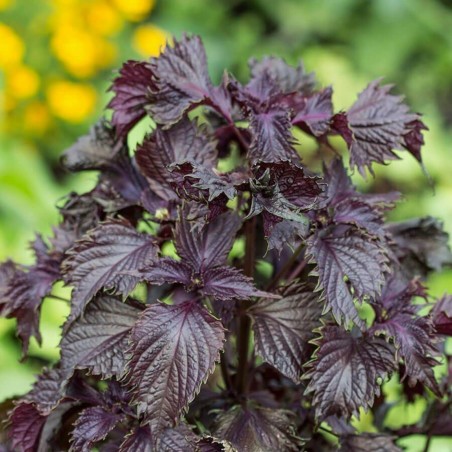
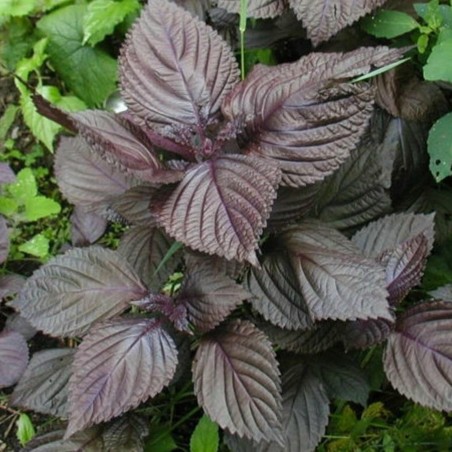
Perilla frutescens var. crispa, or shiso (/ˈʃiːsoʊ/,[2] from the Japanese シソ), belongs to the genus Perilla, in the mint family, Lamiaceae. Shiso is a perennial plant that may be cultivated as an annual in temperate climates. The plant occurs in purple-leaved ("red") and green-leaved ("green") forms. There are also frilly ruffled-leaved forms (chirimen-jiso) and forms that are red only on the underside (katamen-jiso). Different parts of the plant have a number of culinary uses in East Asian and Southeast Asian cuisine.

Names

This herb has also been known in English as the "beefsteak plant", possibly on account of the purple-leaved varieties evoking the bloody-red color of meat.[3] It is sometimes referred to by its genus name, perilla, but this is ambiguous as it could also refer to a different cultigen (Perilla frutescens var. frutescens) which is distinguished as egoma in Japan and tul-kkae or "wild sesame" in Korea.[4][5] The perilla or "beefsteak plant" began to be recognized by the native Japanese name shiso among American diners of Japanese cuisine, especially aficionados of sushi in the later decades of the 20th century.[6]

In Japan, the cultigen is called shiso (紫蘇/シソ; [ɕiso̞]).[7][8] In Vietnam, it is called tía tô ([tiɜ˧ˀ˦ to˧]).[9] The Japanese name shiso and the Vietnamese tía tô are cognates, each loan words from zǐsū (紫苏/紫蘇),[10] which means Perilla frutescens in Chinese. (Perilla frutescens var. crispa is called huíhuísū (回回苏/回回蘇) in Chinese.) The first character 紫[11] means "purple",[7] and the second 蘇[12] means "to be resurrected, revived, rehabilitated". In Japan, shiso traditionally denoted the purple-red form.[13] In recent years, green is considered typical, and red considered atypical.[citation needed]

The red-leaved form of shiso was introduced into the West around the 1850s,[14] when the ornamental variety was usually referred to as P. nankinensis. This red-leafed border plant eventually earned the English-language name "beefsteak plant".

Other common names include "perilla mint",[15] "Chinese basil",[16][17][18] and "wild basil".[16] The alias "wild coleus"[19] or "summer coleus"[16] probably describe ornamental varieties. The red shiso or su tzu types are called purple mint[16] or purple mint plant.[15] It is called rattlesnake weed[16] in the Ozarks, because the sound the dried stalks make when disturbed along a footpath is similar to a rattlesnake's rattling sound.

Origins and distribution

Suggested native origins are mountainous terrains of India and China,[21] although some books say Southeast Asia.

Shiso spread throughout ancient China. One of the early mentions on record occurs in Renown Physician's Extra Records (Chinese: 名醫別錄; pinyin: Míng Yī Bié Lù), around 500 AD,[23] where it is listed as su (蘇), and some of its uses are described.

The perilla was introduced into Japan around the eighth to ninth centuries.

The species was introduced into the Western horticulture as an ornamental and became widely naturalized and established in the United States and may be considered weedy or invasive.

Description

Though now lumped into a single species of polytypic character, the two cultigens continue to be regarded as distinct commodities in the Asian countries where they are most exploited. While they are morphologically similar, the modern strains are readily distinguishable. Accordingly, the description is used separately or comparatively for the cultivars.

Shiso grows to 40–100 centimetres (16–39 in) tall.[25] It has broad ovate leaves with pointy ends and serrated margins, arranged oppositely with long leafstalks.[citation needed] Shiso's distinctive flavor comes from its perillaldehyde component,[26] which present only in low concentration in other perilla varieties.

The red (purple) forms of the shiso (forma purpurea and crispa) come from its pigment, called "perilla anthocyanin" or shisonin[27] The color is present in both sides of the leaves, the entire stalk, and flower buds (calyces).

The red crinkly-leafed version (called chirimenjiso in Japan) was the form of shiso first examined by Western botany, and Carl Peter Thunberg named it P. crispa (the name meaning "wavy or curly"). That Latin name was later retained when the shiso was reclassed as a variety.

Bicolored cultivars (var. Crispa forma discolor Makino; カタメンジソ (katamenjiso) or katamen shiso) are red on the underside of the leaf.[28][29] Green crinkly-leafed cultivars (called chirimenaojiso, forma viridi-crispa) are seen.

Shiso produces harder, smaller seeds compared to other perilla varieties.[30][31] Shiso seeds weigh about 1.5 g per 1000 seeds.[32]

Red shiso

The purple-red type may be known as akajiso (赤ジソ/紅ジソ "red shiso"). It is often used for coloring umeboshi (English: pickled plum). The shiso leaf turns bright red when it reacts with the umezu, the vinegary brine that wells up from the plums after being pickled in their vats.[7][33] The red pigment is identified as the Perilla anthocyanin, a.k.a. shisonin.[34] The mature red leaves make undesirable raw salad leaves, but germinated sprouts, or me-jiso (芽ジソ), have been long used as garnish to accent a Japanese dish, such as a plate of sashimi.[7][35] The tiny pellets of flower-buds (ho-jiso) and seed pods (fruits) can be scraped off using the chopstick or fingers and mixed into the soy sauce dip to add the distinct spicy flavor, especially to flavor fish.[35][36]

Green shiso

Bunches of green shiso-leaves packaged in styrofoam trays can be found on supermarket shelves in Japan and Japanese food markets in the West. Earnest production of the leafy herb did not begin until the 1960s. Shimbo (2001), p. 58

One anecdote is that c. 1961, a cooperative or guild of tsuma (ツマ "garnish") commodities based in Shizuoka Prefecture picked large-sized green leaves of shiso and shipped them to the Osaka market. They gained popularity such that ōba (大葉 "big leaf") became the trade name for bunches of picked green leaves.

A dissenting account places its origin in the city of Toyohashi, Aichi, the foremost ōba-producer in the country,[38] and claims Toyohashi's Greenhouse Horticultural Agricultural Cooperative[a] experimented with planting c. 1955, and around 1962 started merchandizing the leaf part as Ōba. In 1963 they organized "cooperative sorting and sales" of the crop (kyōsen kyōhan (共選・共販), analogous to cranberry cooperatives in the US) and c. 1970 they achieved year-round production.[39]

The word ōba was originally a trade name and was not entered into the Shin Meikai kokugo jiten until its 5th edition (Kindaichi (1997)) and is absent from the 4th edition (1989). This dictionary is more progressive than the Kojien cited previously, as Kindaichi's dictionary, from the 1st ed. (1972), and definitely in the 2nd ed. (1974) defined shiso as a plant with leaves of "purple(green) color".[40]

Chemical composition

Shiso contain only about 25.2–25.7% lipid,[41] but still contains a comparable 60% ratio of ALA.[42][43]

The plant produces the natural product perilloxin, which is built around a 3-benzoxepin moiety. Perilloxin inhibits the enzyme cyclooxygenase with an IC50 of 23.2 μM.[44] Non-steroidal anti-inflammatory drugs like aspirin and ibuprofen also work by inhibiting the cyclooxygenase enzyme family.

Of the known chemotypes of perilla, PA (main component: perillaldehyde) is the only one used for culinary purposes. Other chemotypes are PK (perilla ketone), EK (eschscholzia ketone), PL (perillene), PP (phenylpropanoids: myristicin, dillapiole, elemicin), C (citral) and a type rich in rosefuran.

Perilla ketone is toxic to some animals. When cattle and horses consume purple mint (of the PK chemotype) while grazing in fields in which it grows, the perilla ketone causes pulmonary edema, leading to a condition sometimes called perilla mint toxicosis.

The oxime of perillaldehyde (perillartin) is used as an artificial sweetener in Japan, as it is about 2,000 times sweeter than sucrose.

The pronounced flavor and aroma of shiso derives from perillaldehyde,[45] but this substance is lacking in the "wild sesame" and "sesame leaf" variety. Other aromatic essential oils present are limonene,[45] caryophyllene,[45] and farnesene.[citation needed]

Many forms are rich in perilla ketone, which is a potent lung toxin to some livestock,[46] though effects on humans remains to be studied.[46]

The artificial sweetener perillartine can be synthesized from perillaldehyde, but it is used in Japan only for sweetening tobacco,[47] despite being 2000 times sweeter than sucrose, owing to its bitterness and aftertaste, and insolubility in water.[48]

Cultivation

In temperate climates, the plant is self-sowing, but the seeds[ambiguous] are not viable after long storage, and germination rates are low after a year.

The weedy types have often lost the characteristic shiso fragrance and are not suited for eating (cf. perilla ketone). Also, the red leaves are not ordinarily served raw.

Culinary use

See under Perilla for a survey of the herbal and spice uses of the species in different countries

Japan

Called shiso (紫蘇) in Japanese, P. frutescens var. crispa leaves, seeds, and sprouts are used extensively in Japanese cuisine. Green leaves, called aojiso (青紫蘇; "blue shiso"), are used as a herb in cold noodle dishes (hiyamugi and sōmen), cold tofu (hiyayakko), tataki and namerō. Aojiso is also served fresh with sashimi. Purple leaves, called akajiso (赤紫蘇; "red shiso"), are used to dye pickled plums (umeboshi). Shiso seed pods are salted and preserved to be used as a spice, while the germinated sprouts called mejiso (芽紫蘇) are used as garnish. The inflorescence of shiso, called hojiso (穂紫蘇), is used as garnish on a sashimi plate.

The Japanese name for the variety of perilla normally used in Japanese cuisine (Perilla frutescens var. crispa) is shiso (紫蘇). This name is already commonplace in US mass media's coverage of Japanese restaurants and cuisine. The Japanese call the green type aojiso (青紫蘇), or ooba ("big leaf"), and often eat the fresh leaves with sashimi (sliced raw fish) or cut them into thin strips in salads, spaghetti, and meat and fish dishes. It is also used as a savory herb in a variety of dishes, even as a pizza topping (initially it was used in place of basil). In the summer of 2009, Pepsi Japan released a seasonal flavored beverage, Pepsi Shiso.

The Japanese shiso leaves grow in green, red, and bicolored forms, and crinkly (chirimen-jiso) varieties, as noted. Parts of the plants eaten are the leaves, flower and buds from the flower stalks, fruits and seeds, and sprouts.

The purple form is called akajiso (赤紫蘇, red shiso), and is used to dye umeboshi (pickled ume) red or combined with ume paste in sushi to make umeshiso maki. It can also be used to make a sweet, red juice to enjoy during summer.

Japanese use green shiso leaves raw with sashimi. Dried leaves are also infused to make tea.[citation needed] The red shiso leaf is not normally consumed fresh, but needs to be e.g. cured in salt.[clarification needed] The pigment in the leaves turns from purple to bright red color when steeped in umezu, and is used to color and flavor umeboshi.

An inflorescence of shiso, called hojiso (ear shiso), is typically used as garnish on a sashimi plate; the individual flowers can be stripped off the stem using the chopstick, adding its flavor to the soy sauce dip. The fruits of the shiso (shiso-no-mi), containing fine seeds (mericarp) about 1 mm or less in diameter (about the size of mustard seed), can be preserved in salt and used as a spice or condiment. Young leaves and flower buds are used for pickling in Japan and Taiwan.

The other type of edible perilla (Perilla frutescens) called egoma (荏胡麻) is of limited culinary importance in Japan, though this is the variety commonly used in nearby Korea. The cultivar is known regionally as jūnen in the Tohoku (northeast) regions of Japan. The term means "ten years", supposedly because it adds this many years to one's lifespan. A preparation called shingorō, made in Fukushima prefecture, consists of half-pounded unsweet rice patties which are skewered, smeared with miso, blended with roasted and ground jūnen seeds, and roasted over charcoal. The oil pressed from this plant was once used to fuel lamps in the Middle Ages.[clarification needed] The warlord Saitō Dōsan, who started out in various occupations, was a peddler of this type of oil, rather than the more familiar rapeseed oil, according to a story by historical novelist Ryōtarō Shiba.

A whole leaf of green shiso is often used as a receptacle to hold wasabi, or various tsuma (garnishes) and ken (daikon radishes, etc., sliced into fine threads). It seems to have superseded baran,[citation needed] the serrated green plastic film, named after the Aspidistra plant, once used in takeout sushi boxes.

Green leaves

The green leaf can be chopped and used as herb or condiment for an assortment of cold dishes such as:

cold noodles (hiyamugi, sōmen)

cold tofu (known as Hiyayakko)

tataki and namerō

Chopped leaves can be used to flavor any number of fillings or batter to be cooked, for use in warm dishes. A whole leaf battered on the obverse side is made into tempura.[50] Whole leaves are often combined with shrimp or other fried items.

Red leaves

Red leaves are used for making pickled plum (umeboshi) as mentioned, but this is no longer a yearly chore undertaken by the average household. Red shiso is used to color shiba-zuke [ja], a type of pickled eggplant served in Kyoto. (Cucumber, myoga, and shiso seeds may also be used),[51] Kyoto specialty.

Seeds

The seed pods or berries of the shiso may be salted and preserved like a spice.[52] They can be combined with fine slivers of daikon to make a simple salad.

One source from the 1960s says that oil expressed from shiso seeds was once used for deep-frying purposes.

Sprouts

The germinated sprouts (cotyledons)[53] used as garnish are known as mejiso (芽ジソ). Another reference refers to the me-jiso as the moyashi (sprout) of the shiso.[7]

Any time it is mentioned that shiso "buds" are used, there is reason to suspect this is a mistranslation for "sprouts" since the word me (芽) can mean either.[54][b]

Though young buds or shoots are not usually used in restaurants, the me-jiso used could be microgreen size.[55] People engaged in growing their own shiso in planters refer to the plucked seedlings they have thinned as mejiso.[56][better source needed]

Yukari

The name yukari refers to dried and pulverized red-shiso flakes,[57] and has become as a generic term,[58] although Mishima Foods Co. [ja] insists it is the proprietary name for its products.[59] The term yukari-no-iro has signified the color purple since the Heian period, based on a poem in the Kokin Wakashū (c. 910) about a murasaki or gromwell blooming in Musashino (an old name for the Tokyo area).[60] Moreover, the term Murasaki-no-yukari [ja] has been used as an alias for Lady Murasaki's romance of the shining prince.

Furikake

Other than the yukari variety, there are many commercial brand furikake-type sprinkle-seasoning products that contain shiso. They can be sprinkled on rice or mixed into musubi. They are often sprinkled on pasta.

Shiso pasta can be made from fresh-chopped leaves, sometimes combined with the crumbled roe of tarako.[61] Rather than cooking the cod roe, the hot pasta is tossed into it.

Korea

  1. frutescens var. crispa, called soyeop (소엽) or chajogi (차조기), is a less-popular culinary plant than P. frutescens in Korea. It is, however, a commonly seen wild plant, and the leaves are occasionally used as a ssam vegetable.[62] The purplish leaves are sometimes pickled in soy sauce or soybean paste as a jangajji, or deep-fried with a thin coat of rice-flour batter.[62]

Laos

The purple leaves, called pak maengda (ຜັກແມງດາ), are strong in fragrance, but not ruffled. They are used for Lao rice vermicelli, khao poon (ເຂົ້າປຸ້ນ), which is very similar to the Vietnamese bún. They are used as part of the dish for their fragrance.

Vietnam

Tía tô is a cultivated P. frutescens var. crispa in Vietnam,[63] which compared to the Japanese shiso has slightly smaller leaves but much-stronger aromatic flavor. It is native to Southeast Asia.[64][65] Unlike the Perilla frutescens counterpart, the leaves on the Vietnamese perilla have green color on the top side and purplish-red on the bottom side.

In North and South Vietnam, the Vietnamese perilla are eaten raw or used in Vietnamese salads, soups, or stir-fried dishes. The strong flavors are perfect for cooking seafoods such as shrimp and fish dishes. Aromatic leaves are also widely used in pickling. Plants can be grown in open fields, gardens, or containers.

Vietnamese cuisine uses a P. frutescens var. crispa variety similar to the Japanese perilla, but with greenish bronze on the top face and purple on the opposite face. The leaves are smaller and have a much stronger fragrance. In Vietnamese, it is called tía tô, derived from the characters (紫蘇) whose standard pronunciation in Vietnamese is tử tô. It is usually eaten as a garnish in rice vermicelli dishes called bún and a number of stews and simmered dishes.

Ornamental use

The red-leaved shiso, in earlier literature referred to as Perilla nankinensis, became available to gardening enthusiasts in England circa 1855.[14] By 1862, the English were reporting overuse of this plant, and proposing Coleus vershaeffeltii [66] or Amaranthus melancholicus var. ruber made available by J.G. Veitch [67] as an alternative.

It was introduced later in the United States, perhaps in the 1860s.[68][69]

Nutritional

Bactericidal and preservative effects of the shiso, due to the presence of terpenes such as perilla alcohol, have been noted.

Kategorie Domů Referenční číslo MHS-18-(0.09-g) Skladem 432 ks
Purple Shiso Seeds (Perilla frutescens var. crispa) - 1.395

🌍Celosvětová doprava z EU

Z Evropské unie odesíláme do celého světa registrovanou leteckou poštou s potvrzením podpisu při doručení.

📦Sledování vaší objednávky
Přihlaste se do svého účtu a přejděte naHistorie objednávek > Podrobnosti najít vaše sledovací číslo.

Obdržíte e-mailová oznámení o každé fázi vaší objednávky.
Pokud tyto zprávy nevidíte, zkontrolujte prosím složku Spam/Nežádaná pošta nebo kontaktujte svého poskytovatele e-mailu. Případně vyhledejte na internetu, jak odblokovat e-mailovou adresu odesílatele.

NAŠE E-MAILOVÁ SLUŽBA FUNGUJE

  • Obdržíte e-mailová upozornění v každé fázi vaší objednávky. Pokud tyto zprávy nevidíte, zkontrolujte prosím složku Spam/Nevyžádaná pošta nebo kontaktujte svého poskytovatele e-mailu.


📧Jak zajistit, aby e-maily z našeho online obchodu vždy dorazily do vašeho Gmailunebo jakýkoli jiný e-mailposkytovatele Jsou v doručené poště a nejsou označeny jako nevyžádaná pošta nebo zablokovány:

  1. Přidejte Odesílatele do kontaktů ve svém účtu Google nebo u jakéhokoli jiného poskytovatele e-mailu. Nemůžeme vám pomoci, pokud vaše nastavení není takové. Obraťte se na svého poskytovatele e-mailu pro pomoc.

    • Krok 1: Otevřete Gmail a najděte e-mail od nás xxxxxxxxxxxx@xxx.com
      Nezkoušejte nám posílat e-mail přímo na tuto adresu; nedostaneme ho. Veškerý kontakt probíhá výhradně přes kontaktní formulář v našem online obchodě!
      Pokud nemůžete najít náš e-mail, mohl být zablokován. V tom případě postupujte podle kroku 4 níže.

    • Krok 2: Umístěte kurzor myši nad jméno odesílatele nebo e-mailovou adresu v horní části e-mailu.

    • Krok 3: Klikněte na ikonu „Přidat do kontaktů“ (malá ikona osoby).

    To pomůže Gmailu rozpoznat nás jako důvěryhodného odesílatele, takže naše e-maily půjdou přímo do vaší doručené pošty a ne do spamu.

  2. Vytvořte filtr, který zabrání tomu, aby byly e-maily označeny jako spam nebo zablokovány.

    • Krok 1: Otevřete Gmail a klikněte na ikonu ozubeného kola v pravém horním rohu, poté vyberte "Zobrazit všechna nastavení".

    • Krok 2: Přejděte na kartu "Filtry a zablokované adresy".

    • Krok 3: Klikněte na "Vytvořit nový filtr".

    • Krok 4: Do pole "From" zadejte e-mailovou adresu, kterou chcete přidat na bílou listinu (e.g., e-mail našeho obchodu).

    • Krok 5: Klikněte na "Vytvořit filtr".

    • Krok 6: V dalším okně zaškrtněte políčko označené "Nikdy to neodesílat do spamu".

    • Krok 7: Klikněte na "Vytvořit filtr" pro uložení.

    To zajistí, že naše e-maily vždy dorazí do vaší doručené pošty a nebudou omylem označeny jako spam ani zablokovány.

Sledujte svou zásilku pomocí:

  • Aftership

  • 17Track

  • Posta.hr (pro sledovací čísla jako RGxxxxxxHR)

⚠️Důležitá oznámení

  • Platba na dobírku jeNE k dispozici.

  • Při objednávání vždy uveďte platné mobilní číslo s předvolbou země (e.g., +365 456 7686 576).

  • Nenařizujte, aby P.O. Krabice, nebo pokud nemůžete být doma, abyste podepsali převzetí balíku, zásilky nelze zanechat u sousedů.

  • Pokud je balíček zaslaný na P.O. Pokud je zásilka ztracena nebo nedoručena, nebude poskytnuto vrácení peněz.

⚖️Zodpovědnost zákazníka za dodržování právních předpisů
Zákazník je odpovědný za zajištění, že je dovoz produktu do své země legální, včetně dodržení všech dovozních předpisů, získání nezbytných povolení a zaplacení příslušných celních poplatků, daní a dalších poplatků. Před objednáním si prosím ověřte místní právní předpisy, abyste se vyhnuli problémům s celním odbavením nebo doručením.

📦Ztracené, Vrácené & Přeposílané Zásilky

  • Zákazníci Brazílie & Mexika:Nemůžeme refundovat zásilky ztracené nebo zničené celními orgány.

  • Pokud bude vaše zásilka vrácena, vrátíme pouze cenu produktu — náklady na dopravu se nevrací.

  • Zpětné poštovné (€2) a případné náklady na opětovné odeslání musí hradit zákazník.

  • Pokud nám bude balíček z jakéhokoli důvodu vrácen, jste povinni uhradit zpětné poštovné (2 €) a náklady na opětovné odeslání balíčku.

🚚Doručení zásilky
Registrované zásilky vyžadují podpis.

Pokud vaše sledování ukazuje, že je balíček stále na poště odesílatele, je na cestě — kontaktujte místní pobočku pošty pro aktuální informace.

Bohužel my ani pošta, přes kterou byla vaše objednávka odeslána, vám nemůžeme pomoci s tím, kde se vaše objednávka nachází. Jakmile uvidíte, že je vaše zásilka ve vaší zemi,MUSÍTE kontaktovat svou poštu s číslem zásilky a projednejte to s nimi. Všechny objednávky odesíláme oficiální státní poštou.

Neodpovídáme za dodací lhůty a nemůžeme za vás sledovat zásilky.

📅Možnosti doručení & odhadované časy

Možnost doručeníDoba zpracováníPoznámky
Přednostní doručeníOdesíláme během 1–7 pracovních dnů.Upřednostňuje zpracování objednávek (není zaručeno rychlejší doručení); během svátků mohou nastat zpoždění (3–10 dní)
Zabezpečené doručeníOdesíláme během 1–7 pracovních dnů.Dostupné pro objednávky do €150; vrácení peněz v případě ztráty
Standardní doručeníOdesíláme do 7–10 pracovních dnů.Levnější; během svátků mohou nastat zpoždění (7–14 dní)

Odhadovaný čas doručení:

  • V rámci EU: 3–20 dní

  • Celosvětově:5–30 dní

  • Příklady USA:Doručeno za 13, 17, 19, 22 nebo 27 dní.

  • Poznámka:Doba doručení závisí na vaší poloze a na místním poštovním systému. COVID-19 nebo sváteční období mohou způsobit další zpoždění.

💰Náklady na dopravu
Poplatky za dopravu a manipulaci se automaticky vypočítají při dokončení objednávky na základě hmotnosti zásilky a místa doručení.

Provozní doba zpracování objednávek
V sobotu a v neděli objednávky nevyřizujeme ani neodesíláme.

💳Možnosti platby

  • Bankovní převod (SEPA / IBAN / SWIFT-BIC)
    Do popisu platby uveďte referenci vaší objednávky (e.g., "SGS-19811702").
    Objednávky bez platby do 7 dnů budou automaticky zrušeny.

  • PayPal
    Platby jsou přijímány pouze v eurech.
    Prosím vyberte eura při placení.

  • Platba kartou
    Akceptujeme Visa, MasterCard, American Express, CB, Diners Club, Discover, China UnionPay, JCB a Discover.

⚠️Transakční poplatky
Zákazníci hradí veškeré bankovní nebo PayPal transakční poplatky.
Prosím, zajistěte přesné platební údaje pro rychlejší zpracování objednávky.

📢Závěrečné poznámky
Před zadáním objednávky si vždy zkontrolujte naše webové stránky kvůli zvláštním oznámením, informacím o provozu během svátků nebo konkrétním přepravním podmínkám, které by mohly ovlivnit váš nákup.

Důležité upozornění: Digitální faktury

Abychom snížili množství papírového odpadu, nepřikládáme k vaší objednávce tištěnou fakturu. Fakturu si můžete kdykoli snadno stáhnout a vytisknout návštěvou vašehoHistorie objednávek v profilu vašeho účtu
Již brzy

Související produkty