Il sommacco, conosciuto anche col nome di sumac, è una spezia caratterizzata da buone proprietà antiossidanti. Si ricava dalla pianta del sommacco, nome scientifico Rhus coriaria
Il sommacco, conosciuto anche col nome di sumac, è una spezia caratterizzata da buone proprietà antiossidanti. Si ricava dalla pianta del sommacco, nome scientifico Rhus coriaria, appartenente alla famiglia delle Anacardiaceae.
La pianta si presenta sotto forma di un arbusto che può raggiungere i 3 metri di altezza, le sue foglie sono seghettate e fiorisce in primavera ed in estate. Per la preparazione della spezia i frutti del sommacco vengono raccolti tra luglio e settembre quando non sono ancora giunti a maturazione e vengono poi fatti essiccare. Ad essiccazione avvenuta i frutti vengono tritati e si ottiene così la spezia chiamata sommacco o sumac.
La pianta è abbastanza diffusa in Europa Meridionale ed in medio Oriente.
Composizione Chimica
Il sommacco contiene acqua, proteine, fibre, carboidrati, ceneri, grassi ed olio essenziale in cui si trova la maggior parte delle sostanze con proprietà terapeutiche. È una buona fonte di minerali e precisamente contiene: fosforo, potassio, rame, ferro, zinco, magnesio, calcio, sodio.
Contiene acido malico, acido oleico, acido linoleico e acido stearico; il sommacco contiene circa il 23 % di tannino che, insieme alle sostanze coloranti in esso contenute, viene principalmente utilizzato a livello industriale per la tintura dei tessuti in quanto a proprietà fissanti molto buone.
In ultimo il sommacco contiene un’alta percentuale di sostanze antiossidanti che come sappiamo hanno una attività anti invecchiamento nei confronti delle cellule del nostro organismo nonché benefici effetti sulla nostra salute.
Antibatterico:
grazie alle sostanze contenute nelle foglie, nei frutti e nell’olio essenziale da esso ricavato ha diverse virtù. Ha innanzitutto proprietà antibatteriche, antifungine, febbrifughe, diuretiche, ed antinfiammatorie.
Sistema cardiovascolare:
l’estratto delle foglie ha dimostrato di avere effetti benefici sul sistema cardiovascolare. Le foglie contengono infatti gallotannini che hanno principalmente proprietà anti ischemiche.
Abbassa la glicemia:
l’estratto di frutti di sommacco o sumac ha dimostrato invece di avere proprietà ipoglicemizzanti.
Antiossidanti:
la proprietà più importante di questa spezia è senza dubbio quella antiossidante, il sommacco infatti è uno degli alimenti con il più alto potere antiossidante al mondo. Per farne comprendere bene il valore si è soliti paragonare il potere antiossidante del sumac o sommacco con quello della mela che è ritenuta un buon alimento con proprietà antiossidanti. Pensate che il sommacco, dal punto di vista delle proprietà antiossidanti, è ben 73 volte più potente della mela.
Radicali liberi:
la grande abbondanza di antiossidanti contrasta gli effetti nocivi dei radicali liberi con benefici in termine di prevenzione nei confronti di diverse patologie, dai tumori alle malattie cardiovascolari.
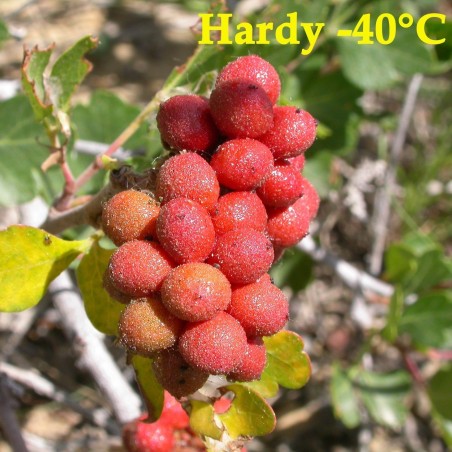
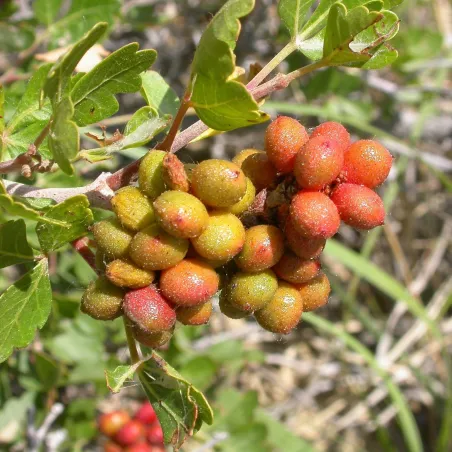
A low deciduous shrub that offers attractive flowers in spring and bright fruits and foliage in fall, skunkbush sumac is native to western North America. In mid-spring before the leaves emerge, conspicuous clusters of pale yellow flowers appear at the stem tips. Small berries follow, ripening red in late summer. Resembling poison ivy foliage, the downy three-lobed leaves are mildly glossy and medium to dark green. The leaflets have blunt-toothed edges. Bruised leaves release a malodorous scent. In autumn, the foliage turns fiery colors.
Skunkbush sumac does best in full sun and moderately moist soil, with the brightest autumn color produced under such conditions. In drier soil plants are smaller. Use this extremely hardy shrub as a loose low screen at the edge of a woodland or building, or to clothe a bank or other erosion-prone site. Plants may sucker and form a thicket in some conditions.
Genus: Rhus
Species: trilobata
Common Name: Skunkbush Sumac
Other Name: Schamltzia trilobata, Rhus Canadensis var. Trilobata, Quailbush
Pre-treatment: required
Zone Hardiness Cold: 4
Zone Hardiness warm: 7
Plant Type: Small Shrub
Height / Width: 1-2m/2-3m
Growth rate: medium
Vegetation type: decidious
Leaf /Flower color: green/yellow-green
Light
Conditions : Light Conditions
Unless a site is completely exposed, light conditions will change during the day and even during the year. The northern and eastern sides of a house receive the least amount of light, with the northern exsposure being the shadiest. The western and southern sides of a house receive the most light and are conidered the hottest exposures due to intense afternoon sun.
You will notice that sun and shade patterns change during the day. The western side of a house may even be shady due to shadows cast by large trees or a structure from an adjacent property. If you have just bought a new home or just beginning to garden in your older home, take time to map sun and shade throughout the day. You will get a more accurate feel for your site's true light conditions.
Conditions : Full to Partial Sun
Full sunlight is needed for many plants to assume their full potential. Many of these plants will do fine with a little less sunlight, although they may not flower as heavily or their foliage as vibrant. Areas on the southern and western sides of buildings usually are the sunniest. The only exception is when houses or buildings are so close together, shadows are cast from neighboring properties. Full sun usually means 6 or more hours of direct unobstructed sunlight on a sunny day. Partial sun receives less than 6 hours of sun, but more than 3 hours. Plants able to take full sun in some climates may only be able to tolerate part sun in other climates. Know the culture of the plant before you buy and plant it!
Watering
Conditions : Moist and Well Drained
Moist and well drained means exactly what it sounds like. Soil is moist without being soggy because the texture of the soil allows excess moisture to drain away. Most plants like about 1 inch of water per week. Amending your soil with compost will help improve texture and water holding or draining capacity. A 3 inch layer of mulch will help to maintain soil moisture and studies have shown that mulched plants grow faster than non-mulched plants.
Planting
How-tos : Planting Shrubs
Dig a hole twice the size of the root ball and deep enough to plant at the same level the shrub was in the container. If soil is poor, dig hole even wider and fill with a mixture half original soil and half compost or soil amendment.
Carefully remove shrub from container and gently separate roots. Position in center of hole, best side facing forward. Fill in with original soil or an amended mixture if needed as described above. For larger shrubs, build a water well. Finish by mulching and watering well.
If the plant is balled-and-burlapped, remove fasteners and fold back the top of natural burlap, tucking it down into hole, after you've positioned shrub. Make sure that all burlap is buried so that it won't wick water away from rootball during hot, dry periods. If synthetic burlap, remove if possible. If not possible, cut away or make slits to allow for roots to develop into the new soil. For larger shrubs, build a water well. Finish by mulching and watering well.
If shrub is bare-root, look for a discoloration somewhere near the base; this mark is likely where the soil line was. If soil is too sandy or too clayey, add organic matter. This will help with both drainage and water holding capacity. Fill soil, firming just enough to support shrub. Finish by mulching and watering well.
Problems
Diseases : Verticillium or Fusarium Wilt
Wilts may be contracted through infected seed, plant debris, or soil. This fungus begins and multiplies during the cool, moist season, becoming obvious when weather turns warm and dry. Plants wilt because the fungus damages their water conducting mechanisms. Overfertilization can worsen this problem. Able to overwinter in soil for many years, it is also carried and harbored in common weeds.
Prevention and Control: If possible, select resistant varieties. Keep nitrogen-heavy fertilizers to a minimum as well as over-irrigating as they encourage lush growth. Practice crop rotation and prune out or better yet remove infected plants.
Fungi : Powdery Mildew
Powdery Mildew is usually found on plants that do not have enough air circulation or adequate light. Problems are worse where nights are cool and days are warm and humid. The powdery white or gray fungus is usually found on the upper surface of leaves or fruit. Leaves will often turn yellow or brown, curl up, and drop off. New foliage emerges crinkled and distorted. Fruit will be dwarfed and often drops early.
Prevention and Control: Plant resistant varieties and space plants properly so they receive adequate light and air circulation. Always water from below, keeping water off the foliage. This is paramount for roses. Go easy on the nitrogen fertilizer. Apply fungicides according to label directions before problem becomes severe and follow directions exactly, not missing any required treatments. Sanitation is a must - clean up and remove all leaves, flowers, or debris in the fall and destroy.
Pest : Caterpillars
Caterpillars are the immature form of moths and butterflies. They are voracious feeders attacking a wide variety of plants. They can be highly destructive and are characterized as leaf feeders, stem borers, leaf rollers, cutworms and tent-formers.
Prevention and Control: keep weeds down, scout individual plants and remove caterpillars, apply labeled insecticides such as soaps and oils, take advantage of natural enemies such as parasitic wasps in the garden and use Bacillus thuringiensis (biological warfare) for some caterpillar species.
Fungi : Leaf Spots
Leaf spots are caused by fungi or bacteria. Brown or black spots and patches may be either ragged or circular, with a water soaked or yellow-edged appearance. Insects, rain, dirty garden tools, or even people can help its spread.
Prevention and Control: Remove infected leaves when the plant is dry. Leaves that collect around the base of the plant should be raked up and disposed of. Avoid overhead irrigation if possible; water should be directed at soil level. For fungal leaf spots, use a recommended fungicide according to label directions.
Pest : Scale Insects
Scales are insects, related to mealybugs, that can be a problem on a wide variety of plants - indoor and outdoor. Young scales crawl until they find a good feeding site. The adult females then lose their legs and remain on a spot protected by its hard shell layer. They appear as bumps, often on the lower sides of leaves. They have piercing mouth parts that suck the sap out of plant tissue. Scales can weaken a plant leading to yellow foliage and leaf drop. They also produce a sweet substance called honeydew (coveted by ants) which can lead to an unattractive black surface fungal growth called sooty mold.
Prevention and Control: Once established they are hard to control. Isolate infested plants away from those that are not infested. Cosnult your local garden center professional or Cooperative Extension office in your county for a legal recommendation regarding their control. Encourage natural enemies such as parasitic wasps in the garden.
Miscellaneous
Conditions : Deer Tolerant
There are no plants that are 100% deer resistant, but many that are deer tolerant. There are plants that deer prefer over others. You will find that what deer will or will not eat varies in different parts of the country. A lot of it has to do with how hungry they are. Most deer will sample everything at least once, decide if they like it or not and return if favorable. A fence is the good deer barrier. You may go for a really tall one (7 to 8 feet), or try 2 parallel fences, (4 to 5 feet apart). Use a wire mesh fence rather than board, since deer are capable of wiggling through a 12 inch space.
Conditions : Pollution Tolerant
Air pollution is becoming a bigger problem each day. Pollutants in our air damage plants. The plants are damaged by absorbing sulfur dioxide, ozone, peroxyacetyl nitrate, ethylene, and nitrogen dioxide through their pores. Cell membrane damage may result in leaf drop, blotched or burnt looking leaves, or off-colored tissue between veins. Vehicles and industrial processes are the key culprits and conditions worsen on hot summer days. Though planting only pollution tolerant plants is not the solution to this problem, it is a visual bandaid. Your Cooperative Extension Service may have a list of plants that are more pollution tolerant in your area.
Conditions : Rabbit Tolerant
As cute as they are, rabbits can really damage a vegetable garden. Young, tender lettuce plants seem to be their favorite. If a free-roaming dog is not a possiblility for you, consider installing raised vegetable beds and covering tender shoots with netting. If you have ample room, you can opt to plant enough for you and the bunnies. Scents don't always repel animals, as they get used to them and are often washed off in the rain.
Conditions : Slope Tolerant
Slope tolerant plants are those that have a fibrous root system and are often plants that prefer good soil drainage. These plants assist in erosion control by stabilizing/holding the soil on slopes intact.
Conditions : Wind Tolerant
Plants that are wind tolerant usually have flexible, strong branches that are not brittle. Wind tolerant plants often have thick or waxy leaves that control moisture loss from whipping winds. Native plants are often the best adapted to not only wind, but also soil and other climatic conditions.
Conditions : Fall Color
Fall color is the result of trees or shrubs changing colors according to complex chemical formulas present in their leaves. Depending on how much iron, magnesium, phosphorus, or sodium is in the plant, and the acidity of the chemicals in the leaves, leaves might turn amber, gold, red, orange or just fade from green to brown. Scarlet oaks, red maples and sumacs, for instance, have a slightly acidic sap, which causes the leaves to turn bright red. The leaves of some varieties of ash, growing in areas where limestone is present, will turn a regal purplish-blue.
Although many people believe that cooler temperatures are responsible for the color change, the weather has nothing to do with it at all. As the days grow shorter and the nights longer, a chemical clock inside the trees starts up, releasing a hormone which restricts the flow of sap to each leaf. As fall progresses, the sap flow slows and chlorophyll, the chemical that gives the leaves their green color in the spring and summer, disappears. The residual sap becomes more concentrated as it dries, creating the colors of fall.
Glossary : Deciduous
Deciduous refers to those plants that lose their leaves or needles at the end of the growing season.
Glossary : Shrub
Shrub: is a deciduous or evergreen woody perennial that has multiple branches that form near its base.
Glossary : Heat Zone
The 12 zones of the AHS Heat Zone map indicate the average number of days each year that a given region experiences ""heat days"" or temperatures over 86 degrees F(30 degrees Celsius). That is the point at which plants begin suffering physiological damage from heat. The zones range from Zone 1 (less than one heat day) to Zone 12 (more than 210 heat days). The AHS Heat Zone, which deals with heat tolerance, should not be confused with the USDA Hardiness Zone system which deals with cold tolerance. For example: Seattle, Washington has a USDA Hardiness Zone of 8, the same as Charleston, South Carolina; however Seattle's Heat Zone is 2 where Charleston's Heat Zone is 11. What this says is that winter temperature in the two cities may be similar, but because Charleston has significantly warmer weather for a longer period of time, plant selection based on heat tolerance is a factor to consider.
Glossary : Plant Characteristics
Plant characteristics define the plant, enabling a search that finds specific types of plants such as bulbs, trees, shrubs, grass, perennials, etc.
Glossary : Medium Shrub
A medium shrub is generally between 3 and 6 feet tall.
Glossary : Flower Characteristics
Flower characteristics can vary greatly and may help you decide on a ""look or feel"" for your garden. If you're looking for fragrance or large, showy flowers, click these boxes and possibilities that fit your cultural conditions will be shown. If you have no preference, leave boxes unchecked to return a greater number of possibilities.
Glossary : Foliage Characteristics
By searching foliage characteristics, you will have the opportunity to look for foliage with distinguishable features such as variegated leaves, aromatic foliage, or unusual texture, color or shape. This field will be most helpful to you if you are looking for accent plants. If you have no preference, leave this field blank to return a larger selection of plants.
Sommacco è associato solitamente con piante che causano eruzioni cutanee come edera velenosa, quercia di veleno e sommacco. Tuttavia, esistono varietà commestibili sommacco. Queste varietà, come Rhus trilobata, comunemente chiamato sommacco di corno di cervo e Rhus aromatica o limone sommacco, producono bacche rosse. Sapori di sommacco commestibile estate bevande e tè e aggiunge colore e sapore ai pasti. Nel paesaggio, è necessario utilizzare commestibile sommacco in una zona selvaggia e controllo erosione su un terreno digradante, disturbato. Propagare sommacco dal seme nel tardo autunno o metà inverno.
Istruzioni
Apportano una pentola di acqua fino a 195 gradi F. versare l'acqua in una ciotola. Mettere i semi di sommacco nella ciotola di acqua e lasciarli in ammollo per 24 ore. Lasciare che l'acqua si raffreddi naturalmente come ammollo i semi.
• Montare iniziare del seme mescolare in un secchio e aggiungere lentamente l'acqua fino a quando è umido, ma non fangosi o saturo. Mettere la miscela di suolo umido in un seme piatto o in singoli vasi di 2 pollici. Livello alto col palmo della mano senza la compattazione del terreno.
• Assicuratevi un foro al centro di ogni piatto o 2 pollici a parte nel vassoio del seme con il dito indice o una matita. Praticare i fori 1/2 pollice profondo.
Seme uno sommacco bagnarsi in ogni buco e coprire con 1/2 pollice di terreno umido. Mettete i semi di sommacco in un'area che viene filtrata luce. Tenere semi di sommacco a 86 gradi F durante il giorno e a 68 gradi F durante la notte. Semi germinano in 10-20 giorni.
Piantine di sommacco •transplant in singoli vasi di 4 pollici quando si sviluppa la seconda serie di "foglie vere." Questi emergono dal seme dopo la prima serie di foglie, chiamato "fogli del seme". Riempire i vasi con terriccio e piantare i semenzali così l'altezza della base del gambo è lo stesso nel nuovo contenitore come era nella pentola iniziare del seme.
•Transplant sumac fuori a metà a fine estate, o tenere i giovani semenzali in contenitori in una serra attraverso il primo inverno e trapiantarli fuori nella primavera successiva.
Non è stato possibile inviare il tuo giudizio sulla recensione
Segnala commento
Sei sicuro di voler segnalare questo commento?
Segnalazione inviata
La tua segnalazione è stata inviata e sarà esaminata da un moderatore.
Non è stato possibile inviare la tua segnalazione
Recensione inviata
Il tuo commento è stato acquisito e sarà disponibile dopo l'approvazione da parte di un moderatore.
Non è stato possibile inviare la tua recensione
🌍 Spedizioni in tutto il mondo dall'UE
Spediamo in tutto il mondo dall'Unione Europea tramite posta aerea raccomandata con firma obbligatoria alla consegna.
📦 Tracciamento dell'ordine
Per trovare il tuo numero di tracciamento, accedi al tuo account e vai su: Cronologia ordini > Dettagli. Il tuo numero di tracciamento si trova direttamente all'interno dei dettagli dell'ordine.
Riceverai notifiche via email per ogni fase del tuo ordine.
Se ne non vedi questi messaggi, controlla la cartella Spam/Posta indesiderata o contatta il tuo fornitore di posta elettronica. In alternativa, cerca online come sbloccare le email del mittente.
IL NOSTRO SERVIZIO EMAIL FUNZIONA — Se non ricevi le email, è probabile che sia un problema del tuo fornitore di posta o delle tue impostazioni.
📧 Come assicurarsi che le email del nostro negozio online arrivino sempre nella tua casella di posta
Per evitare che le nostre email vengano contrassegnate come spam, aggiungi il nostro indirizzo email ai tuoi contatti:
Apri Gmail (o qualsiasi altro fornitore) e trova una nostra email (xxxxxxxxxxxx@xxx.com).
Passa il mouse sopra il nome o l'indirizzo email del mittente.
Fai clic sull'icona "Aggiungi ai contatti" (l'icona dell'omino).
Non possiamo aiutarti se le tue impostazioni non sono configurate in questo modo. Contatta il tuo fornitore di posta elettronica per assistenza.
In alternativa, crea un filtro su Gmail:
Apri Gmail e vai su Impostazioni > Visualizza tutte le impostazioni.
Vai alla scheda Filtri e indirizzi bloccati.
Fai clic su Crea un nuovo filtro e inserisci il nostro indirizzo email.
Seleziona Non inviare mai a Spam e fai clic su Crea filtro.
📍 Traccia il tuo pacco
Il tuo numero di tracciamento si trova nei dettagli del tuo ordine. Puoi tracciare il tuo ordine tramite le seguenti piattaforme:
Posta.hr (per numeri di tracciamento come RGxxxxxxHR)
⚠️ Avvisi Importanti
Il pagamento in contrassegno NON è disponibile.
Al momento dell'ordine, fornisci sempre un numero di cellulare valido con il prefisso internazionale (es: +39 312 345 6789).
NON ordinare a caselle postali (P.O. Boxes) o se non puoi essere a casa per firmare per il pacco. I pacchi non possono essere lasciati ai vicini.
Se un pacco inviato a una casella postale viene smarrito o non consegnato, non verrà effettuato alcun rimborso.
⚖️ Responsabilità del cliente per la conformità legale
Il cliente è responsabile di assicurarsi che il prodotto sia legale da importare nel proprio paese, inclusa la conformità a tutte le normative di importazione, l'ottenimento dei permessi necessari e il pagamento di dazi doganali, tasse e altre commissioni applicabili. Si prega di controllare le leggi locali prima di ordinare.
🔄 Pacchi smarriti, restituiti e rispediti
Clienti di Brasile e Messico: Non possiamo rimborsare pacchi smarriti o distrutti dalla dogana.
Se il tuo pacco viene restituito, rimborseremo solo il costo del prodotto — le spese di spedizione non sono rimborsabili.
Le spese di spedizione per il reso (2 €) e le eventuali spese di rispedizione sono a carico del cliente.
🚚 Consegna della spedizione
Le spedizioni raccomandate richiedono una firma.
Se il tracciamento mostra che il pacco si trova ancora presso l'ufficio postale di origine, è in transito — contatta il tuo ufficio postale locale per aggiornamenti.
Sfortunatamente, né noi né l'ufficio postale tramite il quale è stato inviato il tuo ordine possiamo aiutarti a sapere dove si trova esattamente il tuo ordine. Quando vedi che il pacco è nel tuo paese, DEVI contattare il tuo ufficio postale con il numero di tracciamento.
⏱️ Opzioni di consegna e tempi stimati
Opzione di consegna
Tempi di elaborazione
Note
Priority Delivery
Spedito in 1–7 giorni lavorativi
Priorità all'elaborazione dell'ordine; possibili ritardi durante le festività (3–10 giorni)
Secured Delivery
Spedito in 1–7 giorni lavorativi
Disponibile per ordini fino a 150 €; rimborso in caso di smarrimento
Standard Delivery
Spedito in 7–10 giorni lavorativi
Più economico; possibili ritardi durante le festività (7–14 giorni)
Tempi di consegna stimati:
All'interno dell'UE: 3–20 giorni
Resto del mondo: 5–30- giorni
Nota: i tempi di consegna dipendono dalla tua posizione e dal sistema postale locale. Il COVID-19 o i periodi festivi possono causare ulteriori ritardi.
💰 Spese di spedizione
Le spese di spedizione e gestione vengono calcolate automaticamente al momento del checkout in base al peso del pacco e alla destinazione.
⏰ Orari di elaborazione degli ordini
Non elaboriamo né spediamo ordini il sabato o la domenica.
💳 Opzioni di pagamento
Desideriamo informarti di un importante cambiamento riguardante le commissioni di pagamento. Sfortunatamente, a causa delle commissioni di transazione eccezionalmente elevate imposte da PayPal, siamo costretti ad applicare un supplemento per i pagamenti effettuati tramite il loro servizio.
Tuttavia, abbiamo una soluzione per te! Puoi evitare queste commissioni astronomiche scegliendo uno dei nostri metodi di pagamento alternativi con ZERO COMMISSIONI:
✅ Pagamento con carta di credito/debito – 0% commissioni
✅ Bonifico bancario – 0% commissioni
Bonifico bancario (SEPA / IBAN / SWIFT-BIC): includi il riferimento dell'ordine nella descrizione del pagamento. Gli ordini senza pagamento entro 4 giorni verranno annullati automaticamente.
PayPal: i pagamenti sono accettati solo in Euro. Si prega di selezionare Euro durante il checkout.
Pagamento con carta: Accettiamo Visa, MasterCard, American Express, CB, Diners Club, Discover, China UnionPay, JCB e Discover.
⚠️ Commissioni di transazione
I clienti sono responsabili di eventuali commissioni di transazione bancarie o PayPal.
📝 Note finali
Prima di effettuare l'ordine, controlla sempre il nostro sito web per avvisi speciali, orari festivi o condizioni di spedizione specifiche.



Commenti (7)
Non è stato possibile inviare il tuo giudizio sulla recensione
Segnala commento
Segnalazione inviata
Non è stato possibile inviare la tua segnalazione