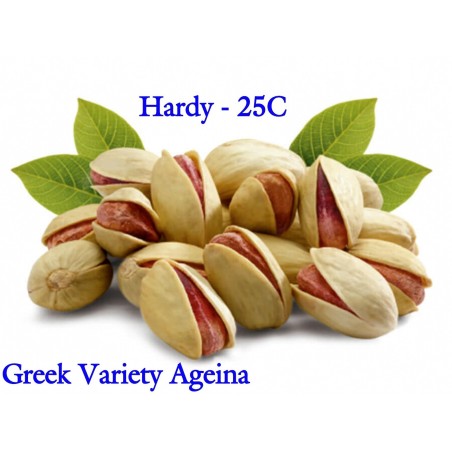
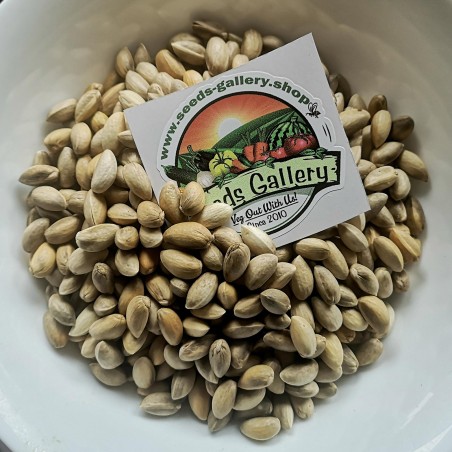
🌰 Pistachezaden Griekse variëteit Aegina (Pistacia vera) zijn premium Griekse pistachezaden van de beroemde variëteit Aegina, bekend om uitstekende nootkwaliteit, zoete groene kernen en van nature splijtende schalen. Deze winterharde bladverliezende bomen zijn uitzonderlijk koudetolerant, waarbij bij gevestigde planten is vastgesteld dat ze temperaturen tot ongeveer -20 tot -21°C kunnen doorstaan, en zijn ideaal voor tuinen in mediterrane stijl en pistacheboomgaarden.
Prijs voor verpakking van 5, 10, 20, 50, 100 of 500 zaden
🌰 Aegina is een van de bekendste en meest gewaardeerde pistachevariëteiten uit Griekenland. Deze traditionele Griekse variëteit komt van het eiland Aegina, waar de pistacheteelt een lange geschiedenis heeft en waar de beroemde Fystiki Aeginas wordt beschermd vanwege zijn onderscheidende kwaliteit en kenmerken.
Als je een echt bijzondere notenboom wilt kweken, is Pistacia vera Aegina een uitstekende keuze. Het is een langlevende bladverliezende boom die zich kan aanpassen aan hete, droge zomers en koude winters. De bomen zijn vooral interessant voor telers in regio’s waar de wintertemperaturen streng kunnen worden, omdat is vastgesteld dat gevestigde Aegina-pistachebomen temperaturen tot ongeveer -20 tot -21°C kunnen verdragen, en mogelijk lager afhankelijk van de leeftijd van de plant, gezondheid, standplaatsomstandigheden en acclimatisatie.
Waarom Aegina-pistache kweken
🌰 Beroemde Griekse eetbare pistachevariëteit
🇬🇷 Traditionele variëteit geassocieerd met het eiland Aegina
🌱 Pistacia vera, de echte eetbare pistachespecies
❄️ Van gevestigde bomen is vastgesteld dat ze ongeveer -20 tot -21°C verdragen
☀️ Uitstekende aanpassing aan hete, zonnige en relatief droge omstandigheden
🌳 Langlevende bladverliezende boom
🌿 Van nature spreidende groeivorm
🥜 Zoete eetbare kernen met een aantrekkelijke groene kleur
🐚 Noten splijten van nature tijdens het rijpen
🌱 Tweehuizige soort met afzonderlijke mannelijke en vrouwelijke bomen
🌾 Uitstekende keuze voor huistuinen en commerciële boomgaarden
Aegina is niet zomaar een generieke pistache. Het is een erkende Griekse cultivar met een lange teeltgeschiedenis in Griekenland. Wetenschappelijke studies naar de belangrijkste Griekse pistachecultivars identificeren Aegina en Pontikis als de dominante Griekse cultivars, waarbij Aegina een uitstekende nootkwaliteit en een sterk productiepotentieel laat zien.
Aegina-noten hebben een kenmerkende smal hartvormige vorm, groene kernen en een hoog aandeel natuurlijk gespleten schalen. Onderzoek aan volwassen Aegina-bomen registreerde ongeveer 78,5% natuurlijk gespleten noten en gemiddelde opbrengsten bij volledige productie rond 18 kg droge noten per boom onder de bestudeerde omstandigheden.
Zoete groene kernen en natuurlijk gespleten schalen
🌰 De eetbare kern is de echte beloning van het kweken van Pistacia vera. Aegina produceert aantrekkelijke groene tot groen-witte kernen met uitstekende eetkwaliteit en een karakteristieke pistachesmaak.
Wanneer de noten rijpen, splijt de schaal van nature open. Dit is een van de bepalende kenmerken van pistaches en maakt de rijpe oogst bijzonder aantrekkelijk om te oogsten, te roosteren en te eten.
Uitzonderlijke winterhardheid
❄️ Een van de belangrijkste kenmerken voor telers buiten traditionele mediterrane regio’s is de koudetolerantie van gevestigde pistachebomen. Voor dit Aegina-aanbod is koudebestendigheid vastgesteld tot ongeveer -20 tot -21°C, met de mogelijkheid om zelfs lagere temperaturen te overleven afhankelijk van de individuele boom en de teeltomstandigheden.
Jonge zaailingen moeten nog steeds worden beschermd tegen strenge winteromstandigheden totdat ze goed zijn aangeslagen. Volwassen bomen zijn aanzienlijk weerbaarder, vooral wanneer ze op een zonnige, beschutte plek met uitstekende drainage worden geplant.
Deze combinatie van extreme tolerantie voor zomerhitte en indrukwekkende winterhardheid maakt Aegina een bijzonder interessante pistache voor telers in continentale klimaten waar de zomers heet zijn maar de wintertemperaturen soms ver onder het vriespunt kunnen dalen.
Hete zomers zijn precies wat pistaches prettig vinden
☀️ Pistacia vera is van nature aangepast aan regio’s met hete, droge zomers en relatief koude winters. Aegina presteert het best in volle zon met uitstekende bodemdraine.
In tegenstelling tot veel fruitbomen waarderen pistaches geen constant natte grond. Het wortelstelsel heeft goede beluchting nodig, dus vermijd zware, drassige locaties. Een zonnige standplaats met goed doorlatende grond is een van de belangrijkste vereisten voor langdurig succes.
Onthoud: pistaches hebben mannelijke en vrouwelijke bomen nodig
🌳 Pistache is een tweehuizige soort, wat betekent dat mannelijke en vrouwelijke bloemen op afzonderlijke bomen voorkomen. Een vrouwelijke boom kan zonder compatibel mannelijk pollen in de buurt geen commerciële notenoogst produceren.
Voor boomgaardproductie zijn mannelijke bestuivers daarom essentieel. Wetenschappelijk onderzoek in Griekse Aegina-boomgaarden geeft aan dat mannelijke bomen vaak worden aangehouden op ongeveer 12% van de vrouwelijke boombestand, strategisch verspreid door de boomgaard zodat door de wind verspreid pollen de vrouwelijke bloemen kan bereiken.
Dit is een van de belangrijkste punten om te begrijpen bij het kweken van pistaches uit zaad: bomen die uit zaad worden opgekweekt kunnen niet gegarandeerd vrouwelijk zijn. Als je doel commerciële notenproductie is, plan dan voor beide seksen of gebruik bekende geënte vrouwelijke en mannelijke cultivars zodra de zaailingen zich voldoende hebben ontwikkeld.
Aegina-pistache kweken uit zaad
🌱 Pistachezaden kunnen worden opgekweekt in potten, zaaibakken of kweekbedden met een goed drainerend groeimedium. Het weken van de zaden vóór het zaaien kan helpen om hydratatie op gang te brengen, terwijl lichte scarificatie de wateropname door de zaadhuid kan bevorderen.
Zaai ongeveer 2 tot 3 cm diep en houd het groeimedium matig vochtig. Vermijd overmatig water geven en stilstaande omstandigheden. Een warme, lichte plek is ideaal voor de eerste ontwikkeling van de zaailingen.
Zodra zaailingen zich hebben ontwikkeld tot gezonde jonge planten, kunnen ze geleidelijk aan buitenomstandigheden worden gewend. Jonge pistaches profiteren van bescherming tijdens hun eerste winters, ook al zijn gevestigde bomen aanzienlijk beter bestand tegen kou.
Aanplanten en langdurige verzorging
🌿 Kies het zonnigste en best doorlatende deel van de tuin voor de definitieve aanplant. Pistaches zijn langlevende bomen en moeten voldoende ruimte krijgen om hun spreidende kroon te ontwikkelen.
Zon: Volle zon
Bodem: Diep, vruchtbaar en zeer goed doorlatend
Water: Matig zodra aangeslagen
Winter: Vermijd overmatige vochtigheid rond de wortels
Voeding: Evenwichtige bemesting volgens bodem- en plantbehoeften
Snoei: Vorm jonge bomen en behoud een productieve structuur naarmate ze ouder worden
Bestuiving: Mannelijke en vrouwelijke bomen zijn nodig voor notenproductie
Geduld brengt de beloning
🌳 Pistaches zijn geen gewas voor ongeduldige tuiniers. Het zijn langlevende meerjarige bomen die meerdere jaren nodig hebben om tot betekenisvolle productie te komen. Onderzoek naar de cultivar Aegina laat zien dat de productie ongeveer 6 tot 7 jaar na het enten begint, waarbij volledige productie pas veel later wordt bereikt wanneer de bomen volwassen zijn.
Bomen die uit zaad worden opgekweekt kunnen langer nodig hebben en hun uiteindelijke geslacht kan niet uit het zaad zelf worden bepaald. Zodra ze echter zijn aangeslagen, kan een gezonde pistacheboom vele jaren productief blijven en een blijvend onderdeel worden van de tuin of boomgaard.
Aegina voor huistuinen en boomgaarden
🌰 Of je nu wilt experimenteren met het kweken van je eigen pistaches of een productieve boomgaard wilt aanleggen, Aegina is een fascinerende variëteit om te kweken. De combinatie van premium Grieks erfgoed, aantrekkelijke groene kernen, van nature splijtende schalen, hittetolerantie en uitzonderlijke koudetolerantie van gevestigde bomen maakt dit tot een van de interessantste pistachevariëteiten die beschikbaar zijn voor tuiniers.
Met geduld en een goede planning voor bestuiving kunnen deze bomen uiteindelijk je eigen zelfgekweekte pistaches leveren om vers te eten, te roosteren of te verwerken in desserts en hartige gerechten.
Productdetails
Product: Pistachezaden Griekse variëteit Aegina
Botanische naam: Pistacia vera
Variëteit: Aegina
Herkomst: Griekenland
Type boom: Bladverliezende, langlevende notenboom
Groeivorm: Spreidend
Bloemen: Eenslachtig, mannelijk en vrouwelijk op afzonderlijke bomen
Noot: Smal hartvormig met van nature splijtende schaal
Kleur van de kern: Groen tot groen-wit
Smaak: Zoet en kenmerkend voor premium pistache
Koudetolerantie: Bij gevestigde bomen vastgesteld tot ongeveer -20 tot -21°C, met mogelijk grotere tolerantie afhankelijk van de omstandigheden
Klimaat: Hete zomers en koude winters
Zon: Volle zon
Bodem: Goed doorlatend
Bestuiving: Mannelijke en vrouwelijke bomen vereist
Productie: Langdurig meerjarig gewas
Verpakkingsopties: 5, 10, 20, 50, 100 of 500 zaden
Pistachezaden Griekse variëteit Aegina, Aegina pistachezaden, Pistacia vera zaden, Griekse pistachezaden, Griekse Aegina-pistache, Fystiki Aeginas, Aegina pistacheboom, eetbare pistachezaden, premium pistachevariëteit, winterharde pistache, pistachezaden om te planten, pistache kweken uit zaad, mediterrane pistacheboom, Griekse pistacheboom, pistacheboomgaard zaden, winterharde pistachevariëteit.
We verzenden wereldwijd vanuit de Europese Unie per aangetekende luchtpost met handtekeningbevestiging bij bezorging.
📦Uw bestelling volgen Log in op je account en navigeer naarBestelgeschiedenis > Details om uw trackingnummer te vinden.
Je ontvangt e-mailmeldingen voor elke fase van je bestelling. Als je deze berichten niet ziet, controleer dan je map Spam/Ongewenste e-mail of neem contact op met je e-mailprovider. Als alternatief kun je online zoeken naar hoe je e-mails van een afzender kunt deblokkeren.
ONZE E-MAILDIENST WERKT
U ontvangt e-mailmeldingen voor elke fase van uw bestelling. Als u deze berichten niet ziet, controleer dan uw map Spam/Ongewenste e-mail of neem contact op met uw e-mailprovider.
📧Hoe u ervoor zorgt dat e-mails van onze webshop altijd in uw Gmail terechtkomenof een andere e-mailvan de providerIn de inbox en niet als spam gemarkeerd of geblokkeerd:
Voeg de Afzender toe aan de contacten van uw Google-account of van een andere e-mailprovider. We kunnen u niet helpen als uw instellingen er niet zo uitzien. Neem contact op met uw e-mailprovider voor hulp.
Stap 1: Open Gmail en zoek een e-mail van ons xxxxxxxxxxxx@xxx.com Probeer ons niet rechtstreeks een e-mail naar dit adres te sturen; we zullen die niet ontvangen. Elk contact verloopt uitsluitend via het contactformulier in onze online shop! Als je onze e-mail niet kunt vinden, is deze mogelijk geblokkeerd. Ga in dat geval verder met Stap 4 hieronder.
Stap 2: Beweeg de muisaanwijzer over de naam van de afzender of het e-mailadres bovenaan de e-mail.
Stap 3Klik op het pictogram "Toevoegen aan contacten" (het pictogram van een klein persoonnetje).
Dit helpt Gmail ons te herkennen als een vertrouwde afzender, zodat onze e-mails rechtstreeks in je inbox terechtkomen en niet in de spam.
Maak een filter om te voorkomen dat e-mails als spam worden gemarkeerd of geblokkeerd
Stap 1: Open Gmail en klik op het tandwielpictogram rechtsboven, selecteer vervolgens "Alle instellingen bekijken".
Stap 2: Ga naar het tabblad "Filters en geblokkeerde adressen".
Stap 3: Klik op "Maak een nieuw filter aan".
Stap 4: Voer in het veld "From" het e-mailadres in dat u op de witte lijst wilt zetten (e.g., het e-mailadres van onze winkel).
Stap 5: Klik op "Filter maken".
Stap 6: Vink in het volgende venster het vakje met het label "Nooit naar Spam sturen" aan.
Stap 7: Klik op "Filter maken" om op te slaan.
Dit zorgt ervoor dat onze e-mails altijd in uw inbox terechtkomen en niet per ongeluk als spam worden gemarkeerd of geblokkeerd.
Volg uw pakket via:
Aftership
17Track
Posta.hr (voor trackingnummers zoals RGxxxxxxHR)
⚠️Belangrijke mededelingen
Contant bij aflevering isNIETBeschikbaar.
Geef bij het bestellen altijd een geldig mobiel nummer met landcode op (e.g., +365 456 7686 576).
Beveel niet om P.O. Dozen, of als u niet thuis kunt zijn om voor het pakket te tekenen, mogen pakketten niet bij buren worden achtergelaten.
Als een pakket gestuurd naar een P.O. Als de doos verloren is gegaan of niet is afgeleverd, wordt er geen terugbetaling verleend.
⚖️Verantwoordelijkheid van de klant voor naleving van wet- en regelgeving De klant is verantwoordelijk ervoor te zorgen dat het product legaal in hun land kan worden geïmporteerd, inclusief het naleven van alle importvoorschriften, het verkrijgen van de benodigde vergunningen en het betalen van toepasselijke douaneheffingen, belastingen en andere kosten. Controleer alstublieft uw lokale wetgeving voordat u bestelt om eventuele problemen met de douane of levering te voorkomen.
📦Verloren, Geretourneerde & Opnieuw Verzonden Pakketten
Brazilië & Mexico Klanten:We kunnen geen restitutie geven voor pakketten die door de douane verloren zijn gegaan of vernietigd zijn.
Als uw pakket wordt geretourneerd, zullen wij alleen de productkosten terugbetalen — verzendkosten zijn niet restitueerbaar.
Retourporto (€2) en eventuele kosten voor herverzending moeten door de klant worden betaald.
Als een pakket om welke reden dan ook naar ons wordt teruggestuurd, bent u verantwoordelijk voor het betalen van de retourverzendkosten (€2) plus de kosten om het pakket opnieuw te verzenden.
🚚Levering van zending Aangetekende zendingen vereisen een handtekening.
Als uw tracking aangeeft dat het pakket nog bij het postkantoor van vertrek is, is het onderweg — neem contact op met uw plaatselijke postkantoor voor updates.
Helaas kunnen noch wij, noch het postkantoor waarmee je bestelling is verzonden, je helpen met de vraag waar je bestelling is. Wanneer je ziet dat je pakket in je land is,je MOET contact opnemen met je postkantoor met het track & trace-nummerEn bespreek de zaak met hen. Wij verzenden alle bestellingen per officiële staatspost.
Wij zijn niet verantwoordelijk voor levertijden en kunnen zendingen niet voor u volgen.
📅Bezorgopties & Geschatte Tijden
Bezorgoptie
Verwerkingstijd
Notities
Prioritaire levering
Wordt verzonden binnen 1–7 werkdagen
Prioriteert orderverwerking (geen gegarandeerd snellere levering); vertragingen mogelijk tijdens feestdagen (3–10 dagen)
Beveiligde Levering
Wordt verzonden binnen 1–7 werkdagen
Beschikbaar voor bestellingen tot €150; terugbetaling bij verlies
Standaard levering
Verzending binnen 7–10 werkdagen
Goedkoper; tijdens feestdagen kunnen vertragingen optreden (7–14 dagen)
Geschatte levertijd:
Binnen de EU: 3–20 dagen
Wereldwijd: 5–30 dagen
Voorbeelden uit de VS:Geleverd in 13, 17, 19, 22, of 27 dagen.
Opmerking:De levertijden zijn afhankelijk van uw locatie en de lokale postdienst. COVID-19 of de feestdagen kunnen extra vertragingen veroorzaken.
💰Verzendkosten Verzend- en afhandelingskosten worden automatisch berekend bij het afrekenen op basis van het gewicht van het pakket en de bestemming.
⏰Verwerkingstijden voor bestellingen We verwerken of verzenden geen bestellingen op zaterdag of zondag.
💳 Betaalopties
Bankoverschrijving (SEPA / IBAN / SWIFT-BIC) Vermeld uw bestelreferentie in de betalingsomschrijving (e.g., "SGS-19811702"). Bestellingen zonder betaling binnen 7 dagen worden automatisch geannuleerd.
PayPal Betalingen worden alleen in euro's geaccepteerd. Selecteer alstublieft euro's tijdens het afrekenen.
Kaartbetaling We accepteren Visa, MasterCard, American Express, CB, Diners Club, Discover, China UnionPay, JCB, en Discover.
⚠️Transactiekosten Klanten zijn verantwoordelijk voor eventuele bank- of PayPal-transactiekosten. Zorg alstublieft dat de betalingsgegevens correct zijn voor een snellere verwerking van uw bestelling.
📢Slotopmerkingen Controleer voor het plaatsen van uw bestelling altijd onze website op speciale mededelingen, bezorgschema's tijdens feestdagen of specifieke verzendvoorwaarden die uw aankoop kunnen beïnvloeden.
Belangrijke mededeling: Digitale facturen
Om papierafval te verminderen voegen we geen papieren factuur bij je bestelling. Je kunt je factuur op elk gewenst moment eenvoudig downloaden en afdrukken door je Bestelgeschiedenis in je accountprofiel