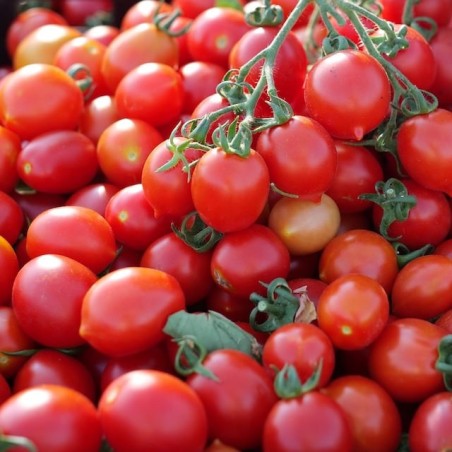
🍊 Buy 1000 Seeds Gooseberry (Physalis peruviana), also known as goldenberry or physalis, and grow a highly productive exotic fruit plant with a unique sweet and slightly tart flavor. This plant is valued worldwide as a premium exotic fruit crop suitable for home gardens and professional cultivation.
Physalis peruviana originates from the mountainous regions of Peru and Chile, where it has been cultivated since ancient times. Today, it is widely grown across tropical, subtropical, and warm temperate regions due to its adaptability and economic importance.
This plant belongs to the Solanaceae family, closely related to tomato, potato, and eggplant. It grows as a branched shrub reaching a height of 1–1.6 meters, with soft, velvety leaves and attractive yellow flowers marked with dark purple spots.
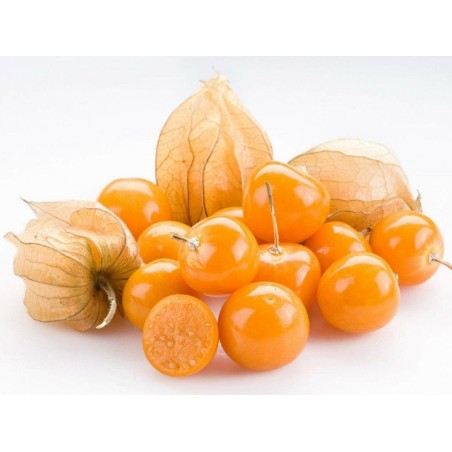
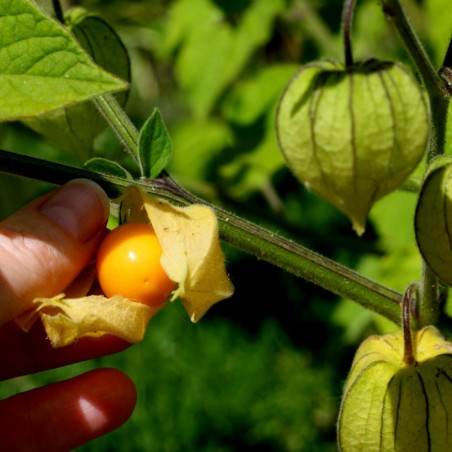
The fruit is a small, round berry measuring approximately 1.2–2 cm, enclosed in a distinctive papery husk that protects it during development. When ripe, the fruit turns bright yellow to orange and develops a pleasant, aromatic flavor often described as a combination of pineapple and tomato.
The protective husk allows the fruit to be stored for up to 30–45 days at room temperature. Please note that the husk is not edible.
This variety can be grown as an annual plant in cooler climates or as a perennial in tropical regions. It thrives in temperatures between 13–18°C, but can tolerate higher temperatures up to 30°C. The plant prefers full sun or partial shade and well-drained, sandy or loamy soil.
Gooseberry physalis seeds produce vigorous plants that yield abundant fruit when properly maintained. Each fruit contains numerous seeds, ensuring high propagation potential.
The fruit is widely used in culinary applications. It can be eaten fresh, added to salads, desserts, and smoothies, or processed into jams, sauces, chutneys, and dried snacks. Due to its decorative husk, it is also popular as a garnish in high-end cuisine.
In addition to its culinary value, this fruit is rich in vitamin C, antioxidants, and beneficial plant compounds such as polyphenols and carotenoids, contributing to a balanced and nutritious diet.
Key growing data: Plant type: Exotic fruit plant Height: 1–1.6 m Fruit size: 1.2–2 cm Climate: Tropical / subtropical / warm temperate Sun exposure: Full sun to partial shade Soil: Well-drained, sandy loam
🌱 Plant Features
Highly productive physalis plant producing sweet, aromatic fruits enclosed in decorative husks with long shelf life.
☀️ Growing Conditions
Prefers warm temperatures and sunny positions. Grows best in fertile, well-drained soil with moderate watering.
🌾 Sowing Instructions
Sow seeds indoors in early spring. Lightly cover with soil and keep at temperatures of 20–25°C. Germination usually occurs within 10–20 days.
🌿 Care & Maintenance
Transplant seedlings after frost danger has passed. Provide spacing of 50–70 cm. Water regularly and support plants if necessary.
⚠️ Important Notes
Protect from frost. Harvest fruits when husks turn dry and papery. Only consume ripe fruits.
Frequently Asked Questions
When should I sow physalis seeds?
Sow indoors in early spring or outdoors after the last frost.
How long does it take to produce fruit?
Typically 70–90 days after transplanting.
Is the husk edible?
No, only the fruit inside is edible.
Can it grow in cooler climates?
Yes, as an annual plant with proper care and warm conditions.
What is the taste of the fruit?
Sweet with a mild tart note, similar to a mix of pineapple and tomato.
Are you sure that you want to report this comment?
Report sent
Your report has been submitted and will be considered by a moderator.
Your report cannot be sent
Review sent
Your comment has been submitted and will be available once approved by a moderator.
Your review cannot be sent
🌍 Worldwide Shipping from the EU
We ship worldwide from the European Union using registered air mail with signature confirmation upon delivery.
📦 Tracking Your Order Log in to your account and navigate to Order History > Details to find your tracking number.
You will receive email notifications for each stage of your order. If you don’t see these messages, please check your Spam/Junk folder or contact your email provider. Alternatively, search online for how to unblock sender emails.
OUR EMAIL SERVICE IS WORKING
You will receive email notifications for each stage of your order. If you don’t see these messages, please check your Spam/Junk folder or contact your email provider.
📧 How to Ensure Emails from Our Online Shop Always Land in Your Gmail or any other email provider'sInbox and Aren't Marked as Spam or Blocked:
Add the Sender to your Google or any other email provider's contacts. We can't help you if your settings are not like this. Contact your email provider for help.
Step 1: Open Gmail and find an email from us xxxxxxxxxxxx@xxx.com Do not try to send us an email directly to this address; we will not receive it. Every contact is exclusively through the contact form in our online shop! If you can’t find our email, it might have been blocked. In that case, proceed with Step 4 below.
Step 2: Hover over the sender’s name or email address at the top of the email.
Step 3: Click the "Add to Contacts" icon (the little person icon).
This will help Gmail recognize us as a trusted sender, ensuring our emails go straight to your inbox and not to spam.
Create a Filter to Prevent Emails from Being Marked as Spam or Blocked
Step 1: Open Gmail and click on the gear icon in the top-right corner, then select "See all settings".
Step 2: Go to the "Filters and Blocked Addresses" tab.
Step 3: Click "Create a new filter".
Step 4: In the "From" field, enter the email address you want to whitelist (e.g., our shop’s email).
Step 5: Click "Create filter".
Step 6: In the next window, check the box labeled "Never send it to Spam".
Step 7: Click "Create filter" to save.
This will ensure our emails always land in your inbox and won’t get marked as spam or blocked by mistake.
Track your package via:
Aftership
17Track
Posta.hr (for tracking numbers like RGxxxxxxHR)
⚠️ Important Notices
Cash on delivery is NOT available.
Always provide a valid mobile number with country code when ordering (e.g., +365 456 7686 576).
Do not order to P.O. Boxes, or if you cannot be home to sign for the package, parcels cannot be left with neighbors.
If a package sent to a P.O. Box is lost or undelivered, no refund will be issued.
⚖️ Customer Responsibility for Legal Compliance The customer is responsible for ensuring that the product is legal to import into their country, including complying with all import regulations, obtaining necessary permits, and paying applicable customs duties, taxes, and other fees. Please check your local laws before ordering to avoid any issues with customs or delivery.
📦 Lost, Returned & Reshipping Packages
Brazil & Mexico Customers: We cannot refund packages lost or destroyed by customs.
If your package is returned, we will refund only the product cost — shipping costs are non-refundable.
Return postage (€2) and any reshipping costs must be covered by the customer.
If a package is returned to us for any reason, you are responsible for paying the return shipping (€2) plus the cost to resend the package.
🚚 Shipment Delivery Registered shipments require a signature.
If your tracking shows that the package is still at the origin post office, it is in transit — contact your local post office for updates.
Unfortunately, neither we nor the post office through which your order was sent can help you with the question of where your order is. When you see that your package is in your country, you MUST contact your post office with the tracking number and discuss the matter with them. We send all orders by official state mail.
We are not responsible for delivery times and cannot track shipments on your behalf.
📅 Delivery Options & Estimated Times
Delivery Option
Processing Time
Notes
Priority Delivery
Ships in 1–7 business days
Prioritizes order processing (not guaranteed faster delivery); delays possible during holidays (3–10 days)
Secured Delivery
Ships in 1–7 business days
Available for orders up to €150; refund if lost
Standard Delivery
Ships in 7–10 business days
More economical; delays possible during holidays (7–14 days)
Estimated Delivery Time:
Within the EU: 3–20 days
Worldwide: 5–30 days
USA Examples: Delivered in 13, 17, 19, 22, or 27 days.
Note: Delivery times depend on your location and local postal system. COVID-19 or holiday seasons may cause additional delays.
💰 Shipping Costs Shipping and handling fees are calculated automatically at checkout based on the parcel weight and destination.
⏰ Order Processing Hours We do not process or ship orders on Saturdays or Sundays.
💳 Payment Options
Bank Transfer (SEPA / IBAN / SWIFT-BIC) Include your order reference in the payment description (e.g., "SGS-19811702"). Orders without payment within 7 days will be automatically cancelled.
PayPal Payments are accepted in Euros only. Please select Euros during checkout.
Card Payment We accept Visa, MasterCard, American Express, CB, Diners Club, Discover, China UnionPay, JCB, and Discover.
⚠️ Transaction Fees Customers are responsible for any bank or PayPal transaction fees. Please ensure accurate payment details for faster order processing.
📢 Final Notes Before placing your order, always check our website for special notices, holiday schedules, or specific shipping conditions that might affect your purchase.
Important Notice: Digital Invoices
To help reduce paper waste, we do not include a printed invoice with your order. You can easily download and print your invoice at any time by visiting your Order History in your account profile