Magnolia wielkokwiatowa (Magnolia grandiflora L.) – gatunek roślin należący do rodziny magnoliowatych. Magnolia ta rośnie na naturalnych stanowiskach na Dalekim Wschodzie i w Ameryce Północnej. W Polsce jest czasami uprawiana jako roślina ozdobna.
Magnolia wielkokwiatowa (Magnolia grandiflora L.) – gatunek roślin należący do rodziny magnoliowatych. Magnolia ta rośnie na naturalnych stanowiskach na Dalekim Wschodzie i w Ameryce Północnej. W Polsce jest czasami uprawiana jako roślina ozdobna.
Magnolia grandiflora, commonly known as the southern magnolia or bull bay, is a tree of the family Magnoliaceae native to the southeastern United States, from coastal North Carolina to central Florida, and west to East Texas and Oklahoma. Reaching 27.5 m (90 ft) in height, it is a large, striking evergreen tree, with large dark green leaves up to 20 cm (7.9 in) long and 12 cm (4.7 in) wide, and large, white, fragrant flowers up to 30 cm (12 in) in diameter. Although endemic to the lowland subtropical forests on the Gulf and south Atlantic coastal plain, magnolia grandiflora is widely cultivated in warmer areas around the world. The timber is hard and heavy, and has been used commercially to make furniture, pallets, and veneer.
Description
Magnolia grandiflora is a medium to large evergreen tree which may grow 120 ft (37 m) tall. It typically has a single stem (or trunk) and a pyramidal shape.
The leaves are simple and broadly ovate, 12–20 cm (4.7–7.9 in) long and 6–12 cm (2.4–4.7 in) broad, with smooth margins. They are dark green, stiff and leathery, and often scurfy underneath with yellow-brown pubescence.
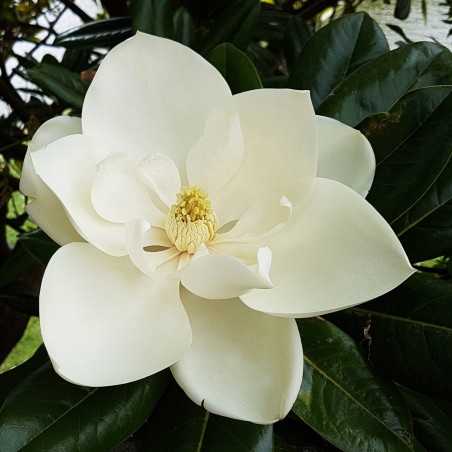
The large, showy, lemon citronella-scented flowers are white, up to 30 cm (12 in) across and fragrant, with six to 12 petals with a waxy texture, emerging from the tips of twigs on mature trees in late spring.
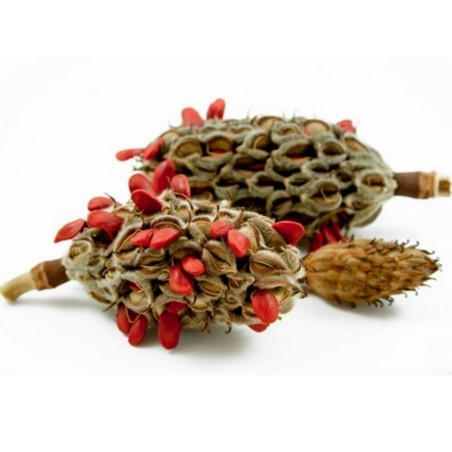
Flowering is followed by the rose-coloured fruit, ovoid polyfollicle, 7.5–10 cm (3.0–3.9 in) long, and 3–5 cm (1.2–2.0 in) wide.
Exceptionally large trees have been reported in the far southern United States. The national champion is a specimen in Smith County, Mississippi, that stands an incredible 37 m (121 ft). Another record includes a 35-m-high specimen from the Chickasawhay District, De Soto National Forest, in Mississippi, which measured 17.75 ft in circumference at breast height, from 1961, and a 30-m-tall tree from Baton Rouge, which reached 18 ft in circumference at breast height.
Taxonomy
Magnolia grandiflora was one of the many species first described by Linnaeus in the 10th edition of his Systema Naturae in 1759, basing his description on the earlier notes of Miller. He did not select a type specimen. Its specific epithet is derived from the Latin words grandis "big", and flor- "flower".
M. grandiflora is most commonly known as southern magnolia, a name derived from its range in the Southern United States. Many broadleaved evergreen trees are known as bays for their resemblance to the leaves of the red bay (Persea borbonia), with this species known as the bull bay for its huge size or alternatively because cattle have been reported eating its leaves. Laurel magnolia, evergreen magnolia, large-flower magnolia or big laurel are alternative names. The timber is known simply as magnolia.
Distribution and habitat
Southern magnolias are native to the Southeastern United States, from coastal North Carolina south to central Florida, and then west to East Texas and Oklahoma. It is found on the edges of bodies of water and swamps, in association with sweetgum (Liquidambar styraciflua), water oak (Quercus nigra), and black tupelo (Nyssa sylvatica). In more sheltered habitats, it grows as a large tree, but can be a low shrub when found on coastal dunes. It is killed by summer fires, and is missing from habitats that undergo regular burning.
In Florida, it is found in a number of different ecological areas that are typically shady and have well-draining soils; it is also found in hummocks, along ravines, on slopes, and in wooded floodplains. Despite preferring sites with increased moisture, it does not tolerate inundation. It grows on sand-hills in maritime forests, where it is found growing with live oaks and saw palmetto. In the eastern United States, it has become an escape, and has become naturalized in the tidewater area of Virginia, the Washington, D.C. metropolitan area and locally in other areas outside of its historically natural range.
Ecology
Magnolia grandiflora can produce seed by 10 years of age, although peak seed production is achieved closer to 25 years of age. Around 50% of seeds can germinate, and they are spread by birds and mammals. Squirrels, opossums, quail, and turkey are known to eat the seeds.
Cultivation and uses
The plant collector Mark Catesby, the first in North America, brought M. grandiflora to Britain in 1726, where it entered cultivation and overshadowed M. virginiana, which had been collected a few years earlier. It had also come to France, the French having collected it in the vicinity of the Mississippi River in Louisiana. It was glowingly described by Philip Miller in his 1731 work The Gardeners' Dictionary. One of the earliest people to cultivate it in Europe was Sir John Colliton of Exeter in Devon; scaffolding and tubs surrounded his tree, where gardeners propagated its branches by layering, the daughter plants initially selling for five guineas each (but later falling to half a guinea).
It is often planted in university campuses and allowed to grow into a large tree, either with dependent branches, or with the lower branches removed to display the bare trunks. It is also espaliered against walls, which improves its frost-hardiness.
United States cultivation
Magnolia grandiflora is a very popular ornamental tree throughout its native range in the coastal plain of the Gulf/South Atlantic states. Grown for its attractive, shiny green leaves and fragrant flowers, it has a long history in the southern United States. Many large and very old specimens can be found in the subtropical port cities such as New Orleans, Mobile, Savannah, Charleston, and Wilmington, NC. M. grandiflora is the state tree of Mississippi and the state flower of Louisiana.
The species is also cultivated in the warmer parts of the United States; on the East Coast, a small number of specimens can be found growing as far north as coastal areas of New Jersey, Connecticut, and Long Island, NY. Farther south, it is grown more widely in Delaware, much of the Chesapeake Bay region in Maryland, and much of eastern Virginia. On the West Coast, it can be grown as far north as the British Columbia/Seattle area, though cooler summers on the West Coast slow growth compared to the East Coast.
In the interior of the US, some of the cold-hardy cultivars have survived north to the southern Ohio Valley (Ohio, Kentucky, southern Indiana). Farther north, few known long term specimens are found due to the severe winters, very cold temperatures, and/or lack of sufficient summer heat.
Magnolia grandiflora is also grown in parts of Mexico, Central America, and South America as well as parts of Asia.
It is recommended for seashore plantings in areas that are windy but have little salt spray. The foliage will bronze, blotch, and burn in severe winters at the northern limits of cultivation, especially when grown in full winter sun, but most leaves remain until they are replaced by new foliage in the spring. In climates where the ground freezes, winter sun appears to do more damage than the cold. In the Northern Hemisphere, the south side of the tree will experience more leaf damage than the north side. Two extremes are known, with leaves white underneath and with leaves brown underneath. The brown varieties are claimed to be more cold-hardy than the white varieties, but this does not appear to be proven as yet. Once established, the plants are drought tolerant, and the most drought tolerant of all the Magnolia species.
The leaves are heavy and tend to fall year round from the interior of the crown and form a dense cover over the soil surface, and they have been used in decorative floral arrangements. The leaves have a waxy coating that makes them resistant to damage from salt and air pollution.
In the United States, southern magnolia, along with sweetbay (Magnolia virginiana) and cucumbertree (Magnolia acuminata), is commercially harvested. Lumber from all three species is simply called magnolia, which is used in the construction of furniture, boxes, pallets, venetian blinds, sashes, and doors and used as veneers. Southern magnolia has yellowish-white sapwood and light to dark brown heartwood tinted yellow or green. The usually straight-grained wood has uniform texture with closely spaced rings. The wood is ranked moderate in heaviness, hardness, and stiffness, and moderately low in shrinkage, bending, and compression strength; it is ranked moderately high in shock resistance.[18] Its use in the Southeastern United States has been supplanted by the availability of harder woods.
Wysyłamy na cały świat z Unii Europejskiej przesyłką lotniczą poleconą z potwierdzeniem odbioru (podpis przy doręczeniu).
📦Śledzenie Twojego zamówienia Zaloguj się na swoje konto i przejdź doHistoria zamówień > Szczegóły aby znaleźć numer śledzenia.
Otrzymasz powiadomienia e-mailowe na każdym etapie twojego zamówienia. Jeśli nie widzisz tych wiadomości, sprawdź folder Spam/Junk lub skontaktuj się z dostawcą poczty. Alternatywnie wyszukaj w Internecie, jak odblokować adresy e-mail nadawców.
NASZA USŁUGA E-MAILOWA DZIAŁA
Otrzymasz powiadomienia e-mail na każdym etapie realizacji zamówienia. Jeśli nie widzisz tych wiadomości, sprawdź folder Spam/Kosz lub skontaktuj się z dostawcą poczty e-mail.
📧Jak upewnić się, że e-maile z naszego sklepu internetowego zawsze trafiają do Twojego Gmailalub jakikolwiek inny e-maildostawcyOdebrane i nie oznaczone jako spam ani zablokowane:
Dodaj nadawcę do kontaktów w Google lub u dowolnego innego dostawcy poczty e-mail. Nie możemy ci pomóc, jeśli twoje ustawienia nie wyglądają w ten sposób. Skontaktuj się z dostawcą poczty e-mail, aby uzyskać pomoc.
Krok 1: Otwórz Gmail i znajdź e-mail od nas xxxxxxxxxxxx@xxx.com Nie próbuj wysyłać do nas wiadomości e-mail bezpośrednio na ten adres; nie otrzymamy jej. Kontakt odbywa się wyłącznie przez formularz kontaktowy w naszym sklepie internetowym! Jeśli nie możesz znaleźć naszej wiadomości e-mail, mogła zostać zablokowana. W takim przypadku przejdź do Kroku 4 poniżej.
Krok 2: Najedź kursorem na nazwę nadawcy lub adres e-mail u góry wiadomości.
Krok 3: Kliknij ikonę "Dodaj do kontaktów" (mała ikona osoby).
To pomoże Gmailowi rozpoznać nas jako zaufanego nadawcę, dzięki czemu nasze e-maile trafią prosto do Twojej skrzynki odbiorczej, a nie do spamu.
Utwórz filtr, aby zapobiec oznaczaniu wiadomości e-mail jako spam lub ich blokowaniu
Krok 1: Otwórz Gmail i kliknij ikonę koła zębatego w prawym górnym rogu, a następnie wybierz "Zobacz wszystkie ustawienia".
Krok 2: Przejdź do zakładki „Filtry i zablokowane adresy”.
Krok 3: Kliknij "Utwórz nowy filtr".
Krok 4: W polu "From" wpisz adres e-mail, który chcesz dodać do białej listy (e.g., adres e-mail naszego sklepu).
Krok 5: Kliknij "Utwórz filtr".
Krok 6: W następnym oknie zaznacz pole oznaczone "Nigdy nie wysyłaj tego do spamu".
Krok 7: Kliknij "Utwórz filtr", aby zapisać.
To zapewni, że nasze e-maile zawsze trafią do Twojej skrzynki odbiorczej i nie zostaną omyłkowo oznaczone jako spam ani zablokowane.
Śledź swoją przesyłkę przez:
Aftership
17Track
Posta.hr (dla numerów śledzenia takich jak RGxxxxxxHR)
⚠️Ważne informacje
Płatność za pobraniem toNIE dostępne.
Zawsze podaj ważny numer telefonu komórkowego z kodem kraju podczas składania zamówienia (e.g., +365 456 7686 576).
Nie rozkazuj, aby P.O. Pudełka, lub jeśli nie możesz być w domu, aby podpisać odbiór przesyłki, paczki nie mogą być zostawiane u sąsiadów.
Jeśli paczka wysłana do P.O. Jeżeli paczka zostanie zgubiona lub nie doręczona, zwrot pieniędzy nie zostanie wydany.
⚖️Odpowiedzialność klienta za przestrzeganie przepisów prawa Klient jest odpowiedzialny za zapewnienie, że produkt jest legalny do importu do jego kraju, w tym za przestrzeganie wszystkich przepisów importowych, uzyskanie niezbędnych pozwoleń oraz uiszczenie należnych ceł, podatków i innych opłat. Proszę sprawdzić lokalne przepisy przed złożeniem zamówienia, aby uniknąć problemów z odprawą celną lub dostawą.
📦Zaginione, Zwrócone & Ponownie Wysyłane Przesyłki
Klienci Brazylii & Meksyku:Nie możemy zwrócić pieniędzy za przesyłki zagubione lub zniszczone przez służby celne.
Jeśli twoja przesyłka zostanie zwrócona, zwrócimy tylko koszt produktu — koszty wysyłki nie podlegają zwrotowi.
Koszty odesłania (€2) oraz wszelkie koszty ponownej wysyłki muszą zostać pokryte przez klienta.
Jeśli paczka zostanie do nas zwrócona z jakiegokolwiek powodu, jesteś odpowiedzialny za opłacenie kosztów wysyłki zwrotnej (€2) oraz kosztu ponownej wysyłki paczki.
Jeśli w systemie śledzenia widać, że paczka nadal znajduje się w urzędzie pocztowym nadania, to znaczy, że jest w drodze — skontaktuj się ze swoim lokalnym urzędem pocztowym, aby uzyskać aktualizacje.
Niestety ani my, ani poczta, przez którą zostało wysłane Twoje zamówienie, nie jesteśmy w stanie pomóc Ci w ustaleniu, gdzie ono się znajduje. Kiedy zobaczysz, że Twoja paczka jest w Twoim kraju, ,MUSISZ skontaktować się z urzędem pocztowym, podając numer śledzeniaI omówić tę sprawę z nimi. Wysyłamy wszystkie zamówienia pocztą państwową.
Nie ponosimy odpowiedzialności za terminy dostawy i nie możemy śledzić przesyłek w Państwa imieniu.
📅Opcje Dostawy & Szacowane Czasy
Opcja dostawy
Czas Przetwarzania
Notatki
Dostawa Priorytetowa
Wysyłka w ciągu 1–7 dni roboczych
Priorytetowo traktuje realizację zamówień (nie gwarantuje szybszej dostawy); w okresie świątecznym możliwe opóźnienia (3–10 dni)
Bezpieczna Dostawa
Wysyłka w ciągu 1–7 dni roboczych
Dostępne dla zamówień do €150; zwrot w przypadku zagubienia
Dostawa standardowa
Wysyłka w ciągu 7–10 dni roboczych
Bardziej ekonomiczna; w okresie świątecznym możliwe opóźnienia (7–14 dni)
Szacowany czas dostawy:
W UE: 3–20 dni
Na całym świecie:5–30 dni
Przykłady USA:Dostarczone w ciągu 13, 17, 19, 22 lub 27 dni.
Uwaga:Czasy dostawy zależą od Twojej lokalizacji i lokalnego systemu pocztowego. COVID-19 lub okresy świąteczne mogą powodować dodatkowe opóźnienia.
💰Koszty wysyłki Opłaty za wysyłkę i obsługę są obliczane automatycznie podczas finalizacji zamówienia na podstawie wagi przesyłki i miejsca przeznaczenia.
⏰Godziny realizacji zamówień Nie przetwarzamy ani nie wysyłamy zamówień w soboty ani w niedziele.
💳Opcje płatności
Przelew bankowy (SEPA / IBAN / SWIFT-BIC) Umieść numer zamówienia w opisie płatności (e.g., "SGS-19811702"). Zamówienia bez dokonanej płatności w ciągu 7 dni zostaną automatycznie anulowane.
PayPal Płatności akceptowane są wyłącznie w euro. Proszę wybrać euro podczas finalizacji zamówienia.
Płatność kartą Akceptujemy karty Visa, MasterCard, American Express, CB, Diners Club, Discover, China UnionPay, JCB oraz Discover.
⚠️Opłaty transakcyjne Klienci ponoszą wszelkie opłaty transakcyjne pobierane przez bank lub PayPal. Proszę upewnić się, że dane płatnicze są poprawne, aby przyspieszyć przetwarzanie zamówienia.
📢Uwagi końcowe Przed złożeniem zamówienia zawsze sprawdź naszą stronę internetową pod kątem specjalnych komunikatów, harmonogramów świątecznych lub szczególnych warunków wysyłki, które mogą wpłynąć na twój zakup.
Ważne zawiadomienie: Faktury elektroniczne
Aby ograniczyć ilość odpadów papierowych, nie dołączamy do zamówienia wydrukowanej faktury. Fakturę możesz łatwo pobrać i wydrukować w dowolnym momencie, odwiedzając swojeHistoria zamówień w profilu twojego konta