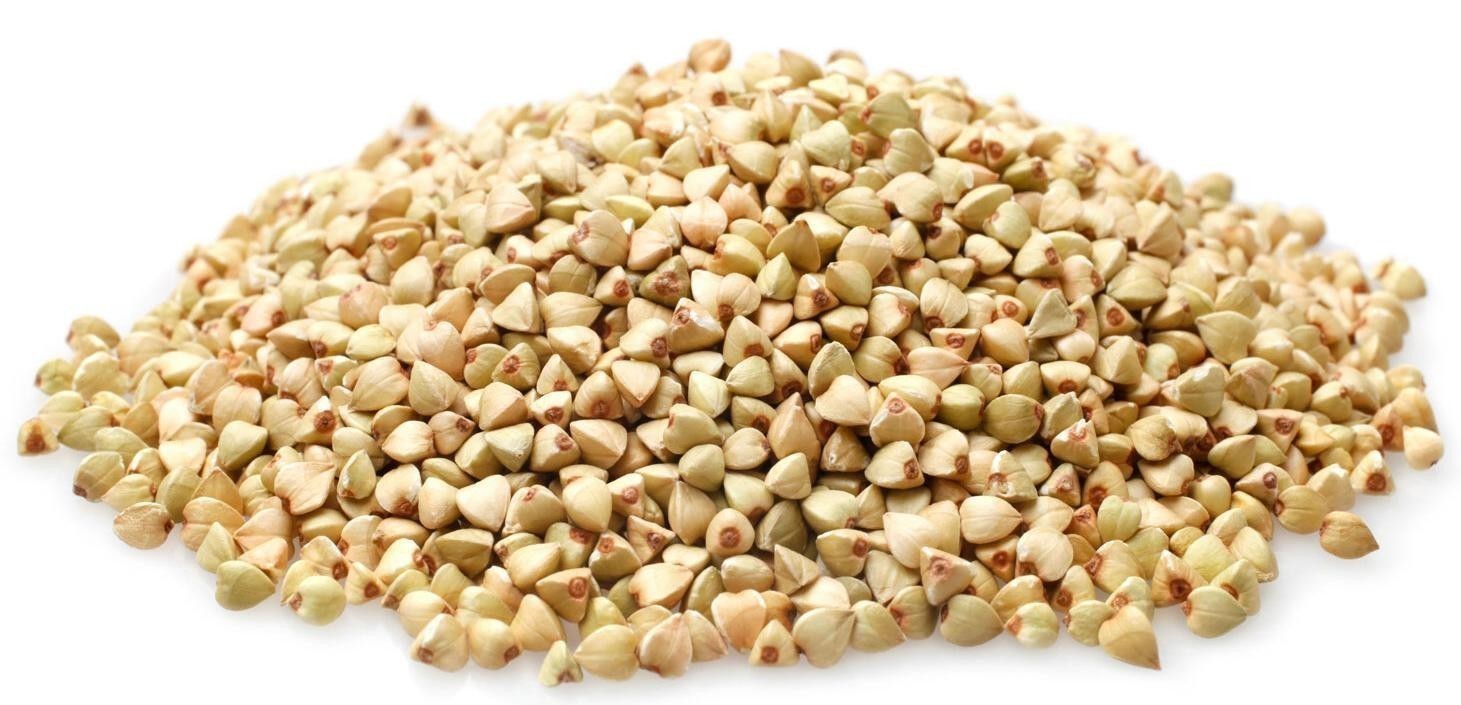
Buckwheat (Fagopyrum esculentum) is a plant cultivated for its grain-like seeds and as a cover crop. To distinguish it from a related species, Fagopyrum tataricum, it is also known as Japanese buckwheat[2] and silverhull buckwheat.
Buckwheat (Fagopyrum esculentum) is a plant cultivated for its grain-like seeds and as a cover crop. To distinguish it from a related species, Fagopyrum tataricum, it is also known as Japanese buckwheat[2] and silverhull buckwheat.
Despite the name, buckwheat is not related to wheat, as it is not a grass. Instead, buckwheat is related to sorrel, knotweed, and rhubarb. Because its seeds are eaten and rich in complex carbohydrates, it is referred to as a pseudocereal. The cultivation of buckwheat grain declined sharply in the 20th century with the adoption of nitrogen fertilizer that increased the productivity of other staples.
The name 'buckwheat' or 'beech wheat' comes from its triangular seeds, which resemble the much larger seeds of the beech nut from the beech tree, and the fact that it is used like wheat. The word may be a translation of Middle Dutch boecweite: boec (Modern Dutch beuk), "beech" (see PIE *bhago-) and weite (Mod. Dut. weit), wheat, or may be a native formation on the same model as the Dutch word.
History
The wild ancestor of common buckwheat is F. esculentum ssp.ancestrale. F. homotropicum is interfertile with F. esculentum and the wild forms have a common distribution, in Yunnan, a southwestern province of China. The wild ancestor of tartary buckwheat is F. tataricum ssp. potanini.
Common buckwheat was domesticated and first cultivated in inland Southeast Asia, possibly around 6000 BCE, and from there spread to Central Asia and Tibet, and then to the Middle East and Europe. Domestication most likely took place in the western Yunnan region of China.[5] Buckwheat is documented in Europe in Finland by at least 5300 BCE[6] as a first sign of agriculture, and in the Balkans by circa 4000 BCE in the Middle Neolithic. Russian-speakers call buckwheat гречка (grechka) meaning "little Greek", due to its introduction in the seventh century by the Byzantine Greeks; the same is the case in Ukrainian.
The oldest remains found in China so far date to circa 2600 BCE, while buckwheat pollen found in Japan dates from as early as 4000 BCE. It is the world's highest-elevation domesticate, being cultivated in Yunnan on the edge of the Tibetan Plateau or on the plateau itself. Buckwheat was one of the earliest crops introduced by Europeans to North America. Dispersal around the globe was complete by 2006, when a variety developed in Canada was widely planted in China. In India, buckwheat flour is known as kuttu ka atta and is culturally associated with Navratri festival. On the day of this festival, food items made only from buckwheat are consumed.
Cultivation
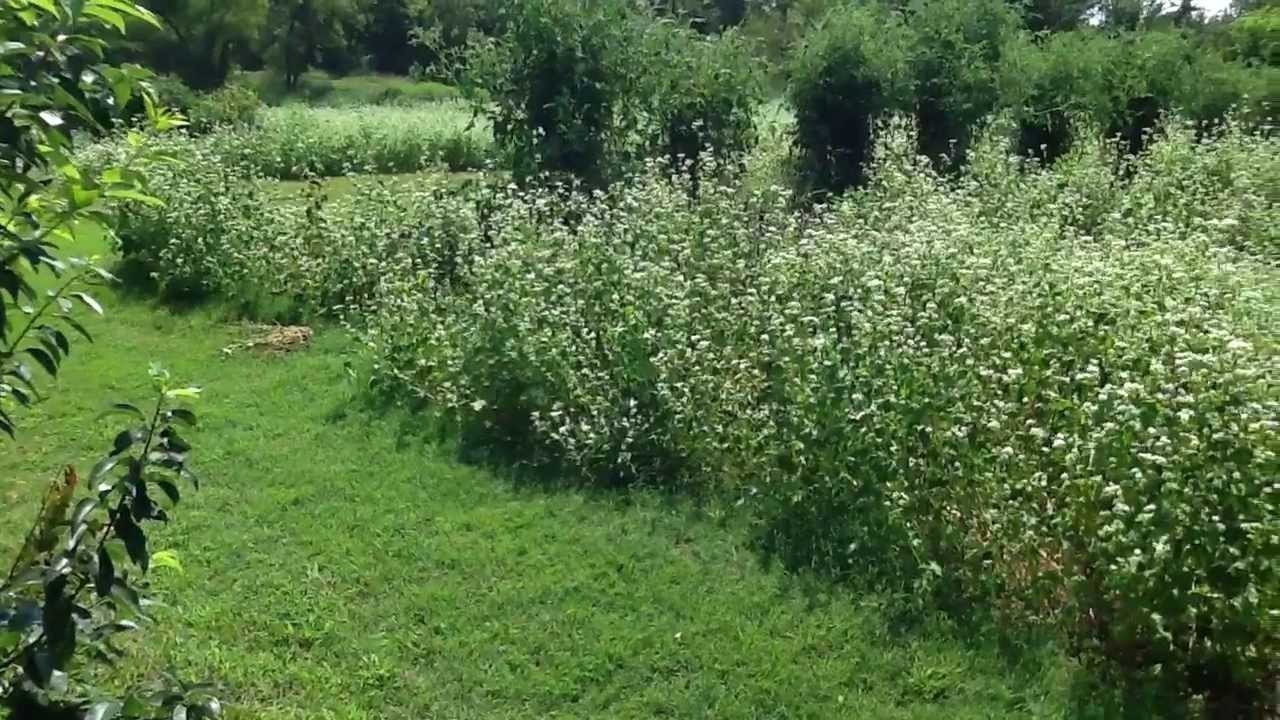
Buckwheat, a short-season crop, does well on low-fertility or acidic soils, but the soil must be well drained. Too much fertilizer, especially nitrogen, reduces yields. In hot climates it can only be grown by sowing late in the season, so that it blooms in cooler weather. The presence of pollinators greatly increases the yield. The nectar from buckwheat flower makes a dark-colored honey. It is sometimes used as a green manure, as a plant for erosion control, or as wildlife cover and feed.
Agricultural production
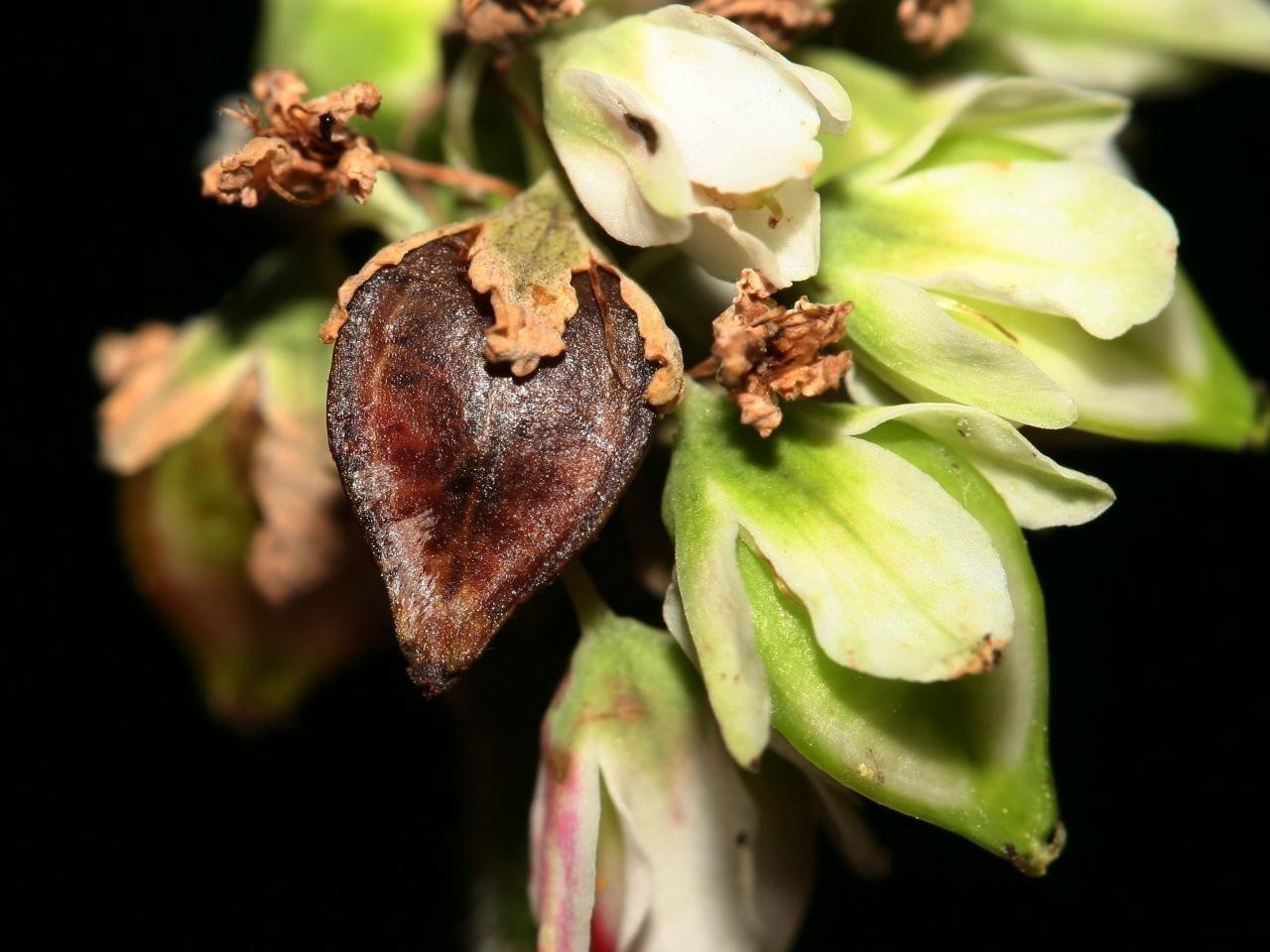
The plant has a branching root system with one primary root that reaches deeply into the moist soil.[8] Buckwheat has triangular seeds and produces a flower that is usually white, although can also be pink or yellow.[9] Buckwheat branches freely, as opposed to tillering or producing suckers, causing a more complete adaption to its environment than other cereal crops.[8] The seed hull density is less than that of water, making the hull easy to remove.
Buckwheat is raised for grain where a short season is available, either because it is used as a second crop in the season, or because the climate is limiting. Buckwheat can be a reliable cover crop in summer to fit a small slot of warm season. It establishes quickly, which suppresses summer weeds.[10] Buckwheat has a growing period of only 10–12 weeks[11] and it can be grown in high latitude or northern areas.[12] It grows 30 to 50 inches (75 to 125 cm) tall.
Historical data
A century ago, the Russian Empire was the world leader in buckwheat production.[13] Growing areas in the Russian Empire were estimated at 6.5 million acres (2,600,000 ha), followed by those of France at 0.9 million acres (360,000 ha).[14] In 1970, the Soviet Union grew an estimated 4.5 million acres (1,800,000 ha) of buckwheat. It remains in 2014 a key cereal.[15] Production in China expanded greatly during the 2000s, to rival Russia's output.
In the northeastern United States, buckwheat was a common crop in the 18th and 19th centuries. Cultivation declined sharply in the 20th century due to the use of nitrogen fertilizer, to which maize and wheat respond strongly. Over 1,000,000 acres (400,000 ha) were harvested in the United States in 1918. By 1954, that had declined to 150,000 acres (61,000 ha), and by 1964, the last year annual production statistics were gathered by USDA, only 50,000 acres (20,000 ha) were grown. However it may benefit from an "explosion in popularity of so-called ancient grains" reported in the years 2009-2014.
Uses
Food
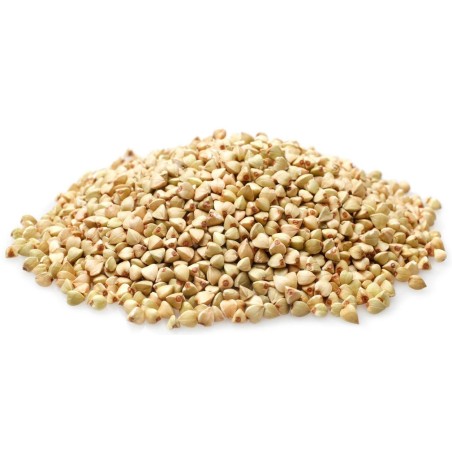
The fruit is an achene, similar to sunflower seed, with a single seed inside a hard outer hull. The starchy endosperm is white and makes up most or all of buckwheat flour. The seed coat is green or tan, which darkens buckwheat flour. The hull is dark brown or black, and some may be included in buckwheat flour as dark specks. The dark flour is known as blé noir (black wheat) in French, along with the name sarrasin (saracen).
Buckwheat noodles have been eaten by people from Tibet and northern China for centuries, as wheat can not be grown in the mountain regions. A special press made of wood is used to press the dough into hot boiling water when making buckwheat noodles. Old presses found in Tibet and Shanxi share the same basic design features. The Japanese and Koreans may have learned the making of buckwheat noodles from them.
In India, on Hindu fasting days (Navaratri, Ekadashi, Janmashtami, Maha Shivaratri etc.), fasting people in northern states of India eat items made of buckwheat flour. Eating cereals such as wheat or rice is prohibited during such fasting days. However, since buckwheat is not a cereal, it is considered acceptable for consumption during Hindu fasting days. While strict Hindus do not even drink water during their fast (observing Nirjal Upwas), others just give up cereals and salt and take a meal prepared from non-cereal ingredients such as buckwheat (kuttu). The preparation of buckwheat flour varies across India. The famous ones are kuttu ki puri (buckwheat pancakes) and kuttu pakoras (potato slices dipped in buckwheat flour and deep-fried in oil). In most of northern and western states, buckwheat flour is called kuttu ka atta.
Buckwheat noodles play a major role in the cuisines of Japan (soba),[40] Korea (naengmyeon, makguksu and memil guksu) and the Valtellina region of Northern Italy (pizzoccheri). Soba noodles are the subject of deep cultural importance in Japan. In Korea, guksu (noodles) were widely made from buckwheat before it was replaced by wheat.[citation needed] The difficulty of making noodles from flour with no gluten has resulted in a traditional art developed around their manufacture by hand.
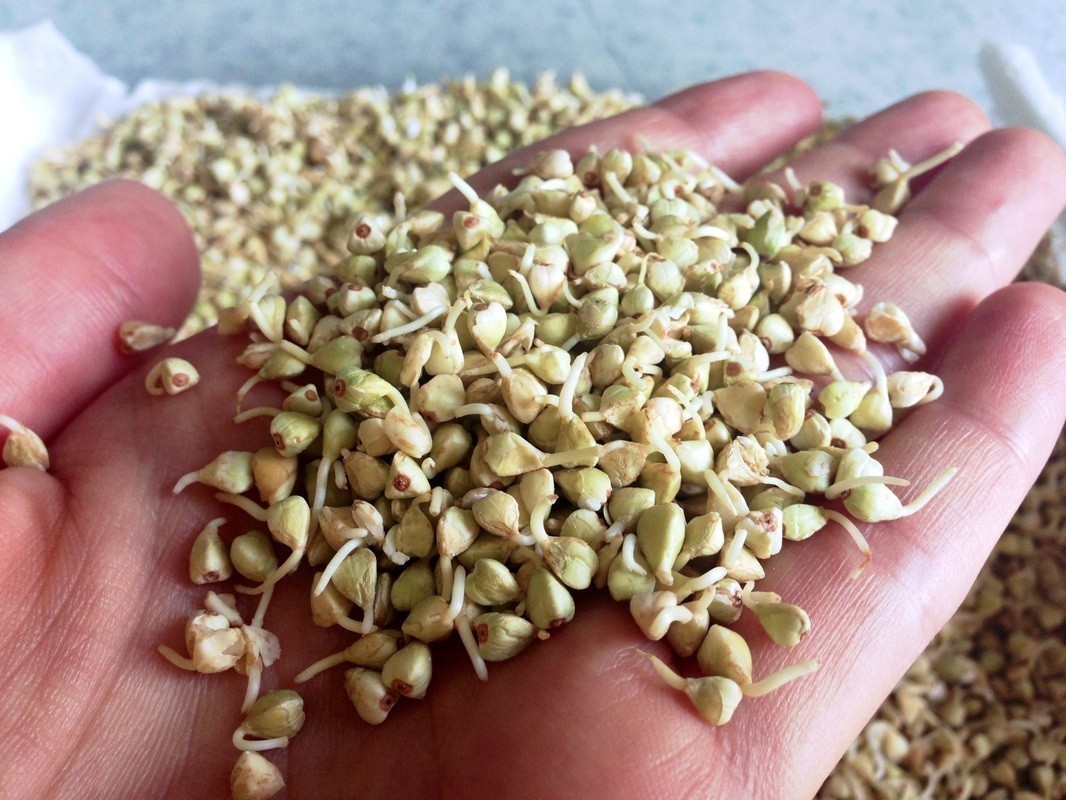
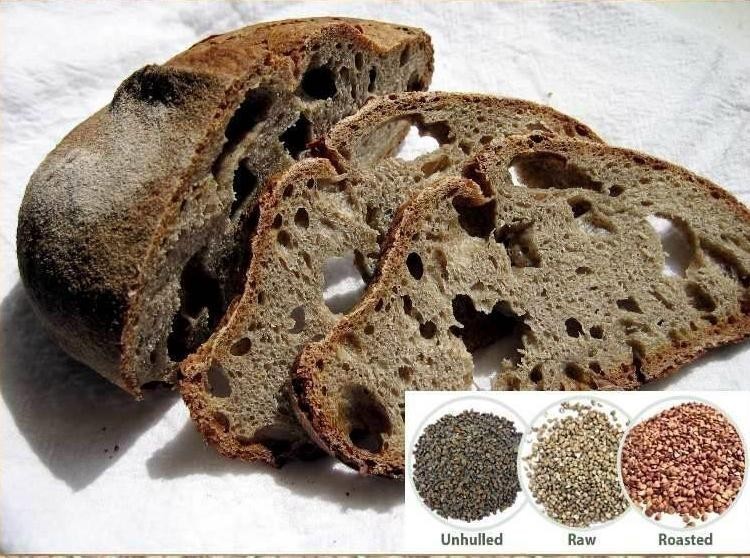
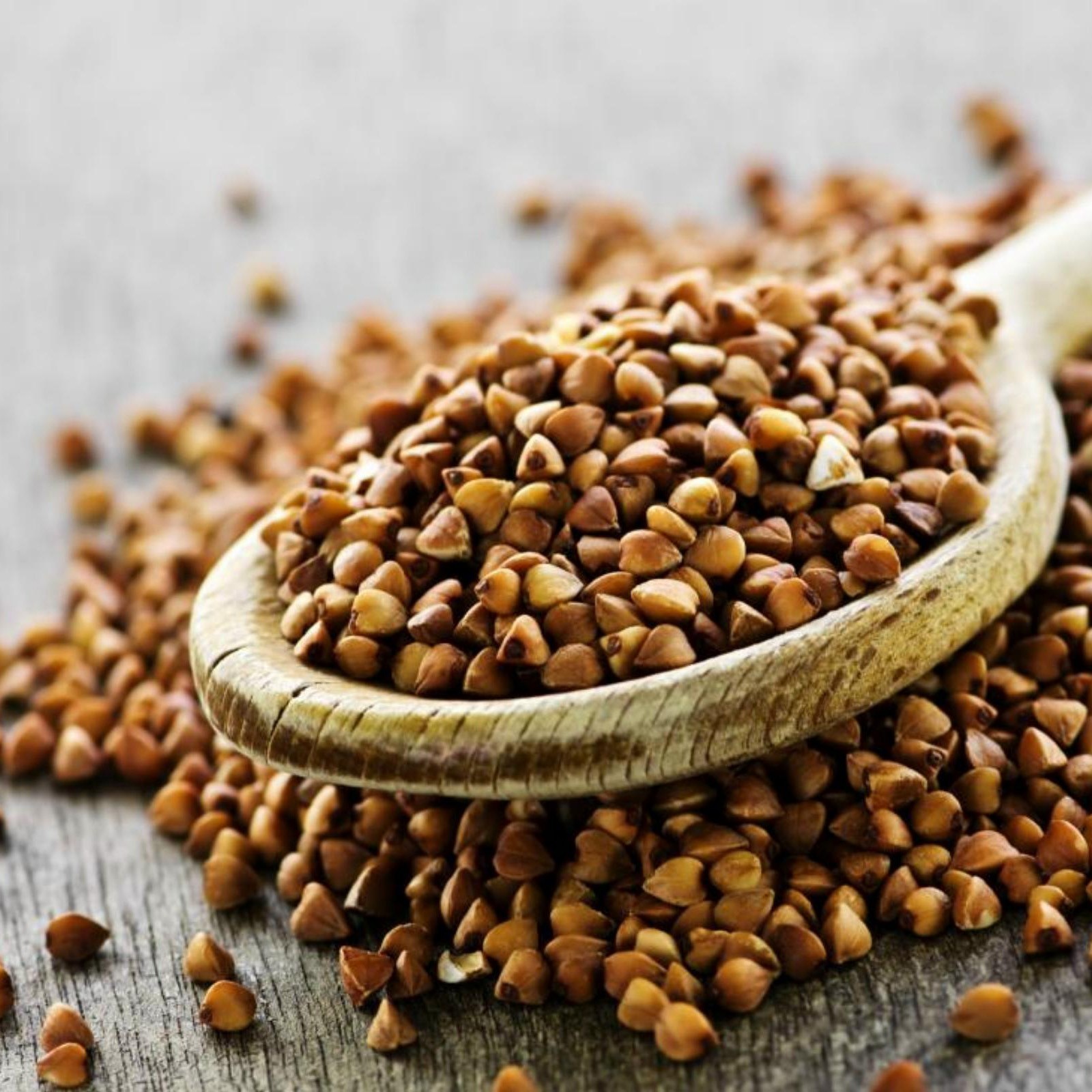
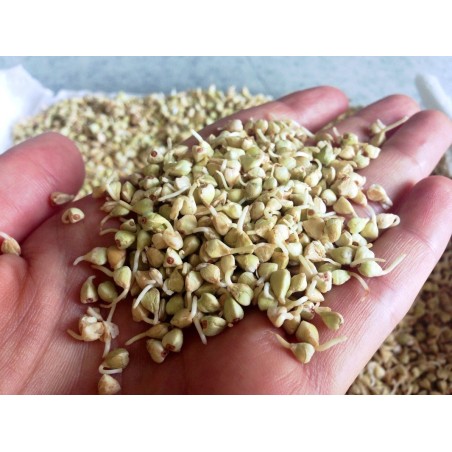
Buckwheat groats are commonly used in western Asia and eastern Europe. The porridge was common, and is often considered the definitive peasant dish. It is made from roasted groats that are cooked with broth to a texture similar to rice or bulgur. The dish was brought to America by Ukrainian, Russian, and Polish immigrants who called it kasha, and they mixed it with pasta or used it as a filling for cabbage rolls, knishes, and blintzes, hence buckwheat prepared in this fashion is most commonly called kasha in America. Groats were the most widely used form of buckwheat worldwide during the 20th century, eaten primarily in Estonia, Russia, Ukraine, and Poland, called grechka in Ukrainian or Russian. The groats can also be sprouted and then eaten raw or cooked.
Buckwheat pancakes, sometimes raised with yeast, are eaten in several countries. They are known as buckwheat blinis in Russia, galettes in France (savoury crêpes made with buckwheat flour, water, and eggs are associated with Lower Brittany, whilst savoury galettes made without eggs are from Higher Brittany), ployes in Acadia, and boûketes (which are named after the buckwheat plant) in the Wallonia region of Belgium. Similar pancakes were a common food in American pioneer days.[41] They are light and foamy. The buckwheat flour gives them an earthy, mildly mushroom-like taste. In Ukraine, yeast rolls called hrechanyky are made from buckwheat. Buckwheat flour is also used to make Nepali dishes such as dhedo and kachhyamba.
Farina made from groats are used for breakfast food, porridge, and thickening materials in soups, gravies, and dressings. In Korea, buckwheat starch is used to make a jelly called memilmuk. It is also used with wheat, maize (polenta taragna in northern Italy) or rice in bread and pasta] products.
Buckwheat is a good honey plant, producing a dark, strong monofloral honey.
Beverages
Beer
In recent years, buckwheat has been used as a substitute for other grains in gluten-free beer. Although it is not an actual cereal (being a pseudocereal), buckwheat can be used in the same way as barley to produce a malt that can form the basis of a mash that will brew a beer without gliadin or hordein (together gluten) and therefore can be suitable for coeliacs or others sensitive to certain glycoproteins.
Whisky
Shōchū
Buckwheat shōchū is a Japanese distilled beverage produced since the 16th Century. The taste is milder than barley shōchū.
Tea
Upholstery filling
Buckwheat hulls are used as filling for a variety of upholstered goods, including pillows and zafu. The hulls are durable and do not conduct or reflect heat as much as synthetic fills. They are sometimes marketed as an alternative natural fill to feathers for those with allergies. However, medical studies to measure the health effects of buckwheat hull pillows manufactured with unprocessed and uncleaned hulls, concluded such buckwheat pillows do contain higher levels of a potential allergen that may trigger asthma in susceptible individuals than do new synthetic-filled pillows.
Biological control
Buckwheat is currently being studied and used as a pollen and nectar source to increase natural predator numbers to control crop pests in New Zealand.
Cultural
The buckwheat plant is celebrated in Kingwood, West Virginia, at the Preston County Buckwheat Festival, where people can participate in swine-, cattle-, and sheep-judging contests, vegetable contests, and craft fairs. The area fire departments also play an important role in the series of parades that occur there. Each year, a King Buckwheat and Queen Ceres are elected. Also, many rides are available, and homemade, homegrown buckwheat cakes and sausage are served.
We verzenden wereldwijd vanuit de Europese Unie per aangetekende luchtpost met handtekeningbevestiging bij bezorging.
📦Uw bestelling volgen Log in op je account en navigeer naarBestelgeschiedenis > Details om uw trackingnummer te vinden.
Je ontvangt e-mailmeldingen voor elke fase van je bestelling. Als je deze berichten niet ziet, controleer dan je map Spam/Ongewenste e-mail of neem contact op met je e-mailprovider. Als alternatief kun je online zoeken naar hoe je e-mails van een afzender kunt deblokkeren.
ONZE E-MAILDIENST WERKT
U ontvangt e-mailmeldingen voor elke fase van uw bestelling. Als u deze berichten niet ziet, controleer dan uw map Spam/Ongewenste e-mail of neem contact op met uw e-mailprovider.
📧Hoe u ervoor zorgt dat e-mails van onze webshop altijd in uw Gmail terechtkomenof een andere e-mailvan de providerIn de inbox en niet als spam gemarkeerd of geblokkeerd:
Voeg de Afzender toe aan de contacten van uw Google-account of van een andere e-mailprovider. We kunnen u niet helpen als uw instellingen er niet zo uitzien. Neem contact op met uw e-mailprovider voor hulp.
Stap 1: Open Gmail en zoek een e-mail van ons xxxxxxxxxxxx@xxx.com Probeer ons niet rechtstreeks een e-mail naar dit adres te sturen; we zullen die niet ontvangen. Elk contact verloopt uitsluitend via het contactformulier in onze online shop! Als je onze e-mail niet kunt vinden, is deze mogelijk geblokkeerd. Ga in dat geval verder met Stap 4 hieronder.
Stap 2: Beweeg de muisaanwijzer over de naam van de afzender of het e-mailadres bovenaan de e-mail.
Stap 3Klik op het pictogram "Toevoegen aan contacten" (het pictogram van een klein persoonnetje).
Dit helpt Gmail ons te herkennen als een vertrouwde afzender, zodat onze e-mails rechtstreeks in je inbox terechtkomen en niet in de spam.
Maak een filter om te voorkomen dat e-mails als spam worden gemarkeerd of geblokkeerd
Stap 1: Open Gmail en klik op het tandwielpictogram rechtsboven, selecteer vervolgens "Alle instellingen bekijken".
Stap 2: Ga naar het tabblad "Filters en geblokkeerde adressen".
Stap 3: Klik op "Maak een nieuw filter aan".
Stap 4: Voer in het veld "From" het e-mailadres in dat u op de witte lijst wilt zetten (e.g., het e-mailadres van onze winkel).
Stap 5: Klik op "Filter maken".
Stap 6: Vink in het volgende venster het vakje met het label "Nooit naar Spam sturen" aan.
Stap 7: Klik op "Filter maken" om op te slaan.
Dit zorgt ervoor dat onze e-mails altijd in uw inbox terechtkomen en niet per ongeluk als spam worden gemarkeerd of geblokkeerd.
Volg uw pakket via:
Aftership
17Track
Posta.hr (voor trackingnummers zoals RGxxxxxxHR)
⚠️Belangrijke mededelingen
Contant bij aflevering isNIETBeschikbaar.
Geef bij het bestellen altijd een geldig mobiel nummer met landcode op (e.g., +365 456 7686 576).
Beveel niet om P.O. Dozen, of als u niet thuis kunt zijn om voor het pakket te tekenen, mogen pakketten niet bij buren worden achtergelaten.
Als een pakket gestuurd naar een P.O. Als de doos verloren is gegaan of niet is afgeleverd, wordt er geen terugbetaling verleend.
⚖️Verantwoordelijkheid van de klant voor naleving van wet- en regelgeving De klant is verantwoordelijk ervoor te zorgen dat het product legaal in hun land kan worden geïmporteerd, inclusief het naleven van alle importvoorschriften, het verkrijgen van de benodigde vergunningen en het betalen van toepasselijke douaneheffingen, belastingen en andere kosten. Controleer alstublieft uw lokale wetgeving voordat u bestelt om eventuele problemen met de douane of levering te voorkomen.
📦Verloren, Geretourneerde & Opnieuw Verzonden Pakketten
Brazilië & Mexico Klanten:We kunnen geen restitutie geven voor pakketten die door de douane verloren zijn gegaan of vernietigd zijn.
Als uw pakket wordt geretourneerd, zullen wij alleen de productkosten terugbetalen — verzendkosten zijn niet restitueerbaar.
Retourporto (€2) en eventuele kosten voor herverzending moeten door de klant worden betaald.
Als een pakket om welke reden dan ook naar ons wordt teruggestuurd, bent u verantwoordelijk voor het betalen van de retourverzendkosten (€2) plus de kosten om het pakket opnieuw te verzenden.
🚚Levering van zending Aangetekende zendingen vereisen een handtekening.
Als uw tracking aangeeft dat het pakket nog bij het postkantoor van vertrek is, is het onderweg — neem contact op met uw plaatselijke postkantoor voor updates.
Helaas kunnen noch wij, noch het postkantoor waarmee je bestelling is verzonden, je helpen met de vraag waar je bestelling is. Wanneer je ziet dat je pakket in je land is,je MOET contact opnemen met je postkantoor met het track & trace-nummerEn bespreek de zaak met hen. Wij verzenden alle bestellingen per officiële staatspost.
Wij zijn niet verantwoordelijk voor levertijden en kunnen zendingen niet voor u volgen.
📅Bezorgopties & Geschatte Tijden
Bezorgoptie
Verwerkingstijd
Notities
Prioritaire levering
Wordt verzonden binnen 1–7 werkdagen
Prioriteert orderverwerking (geen gegarandeerd snellere levering); vertragingen mogelijk tijdens feestdagen (3–10 dagen)
Beveiligde Levering
Wordt verzonden binnen 1–7 werkdagen
Beschikbaar voor bestellingen tot €150; terugbetaling bij verlies
Standaard levering
Verzending binnen 7–10 werkdagen
Goedkoper; tijdens feestdagen kunnen vertragingen optreden (7–14 dagen)
Geschatte levertijd:
Binnen de EU: 3–20 dagen
Wereldwijd: 5–30 dagen
Voorbeelden uit de VS:Geleverd in 13, 17, 19, 22, of 27 dagen.
Opmerking:De levertijden zijn afhankelijk van uw locatie en de lokale postdienst. COVID-19 of de feestdagen kunnen extra vertragingen veroorzaken.
💰Verzendkosten Verzend- en afhandelingskosten worden automatisch berekend bij het afrekenen op basis van het gewicht van het pakket en de bestemming.
⏰Verwerkingstijden voor bestellingen We verwerken of verzenden geen bestellingen op zaterdag of zondag.
💳 Betaalopties
Bankoverschrijving (SEPA / IBAN / SWIFT-BIC) Vermeld uw bestelreferentie in de betalingsomschrijving (e.g., "SGS-19811702"). Bestellingen zonder betaling binnen 7 dagen worden automatisch geannuleerd.
PayPal Betalingen worden alleen in euro's geaccepteerd. Selecteer alstublieft euro's tijdens het afrekenen.
Kaartbetaling We accepteren Visa, MasterCard, American Express, CB, Diners Club, Discover, China UnionPay, JCB, en Discover.
⚠️Transactiekosten Klanten zijn verantwoordelijk voor eventuele bank- of PayPal-transactiekosten. Zorg alstublieft dat de betalingsgegevens correct zijn voor een snellere verwerking van uw bestelling.
📢Slotopmerkingen Controleer voor het plaatsen van uw bestelling altijd onze website op speciale mededelingen, bezorgschema's tijdens feestdagen of specifieke verzendvoorwaarden die uw aankoop kunnen beïnvloeden.
Belangrijke mededeling: Digitale facturen
Om papierafval te verminderen voegen we geen papieren factuur bij je bestelling. Je kunt je factuur op elk gewenst moment eenvoudig downloaden en afdrukken door je Bestelgeschiedenis in je accountprofiel