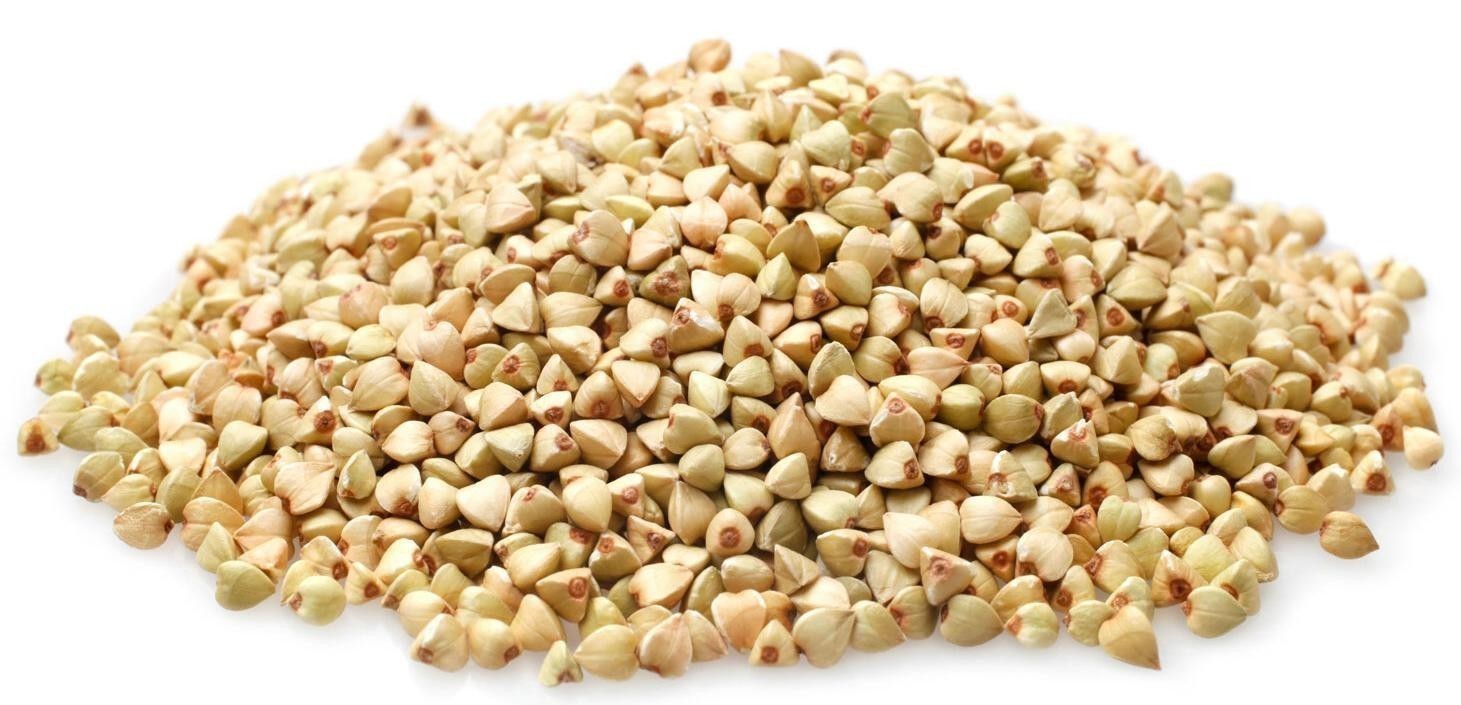
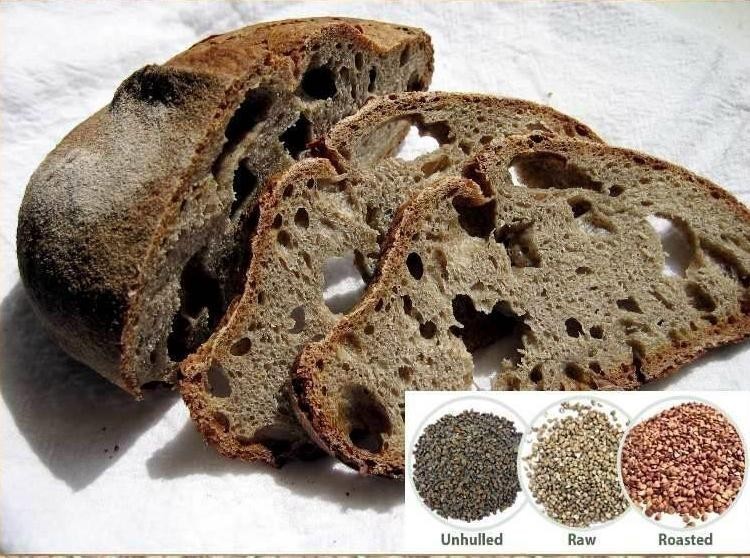
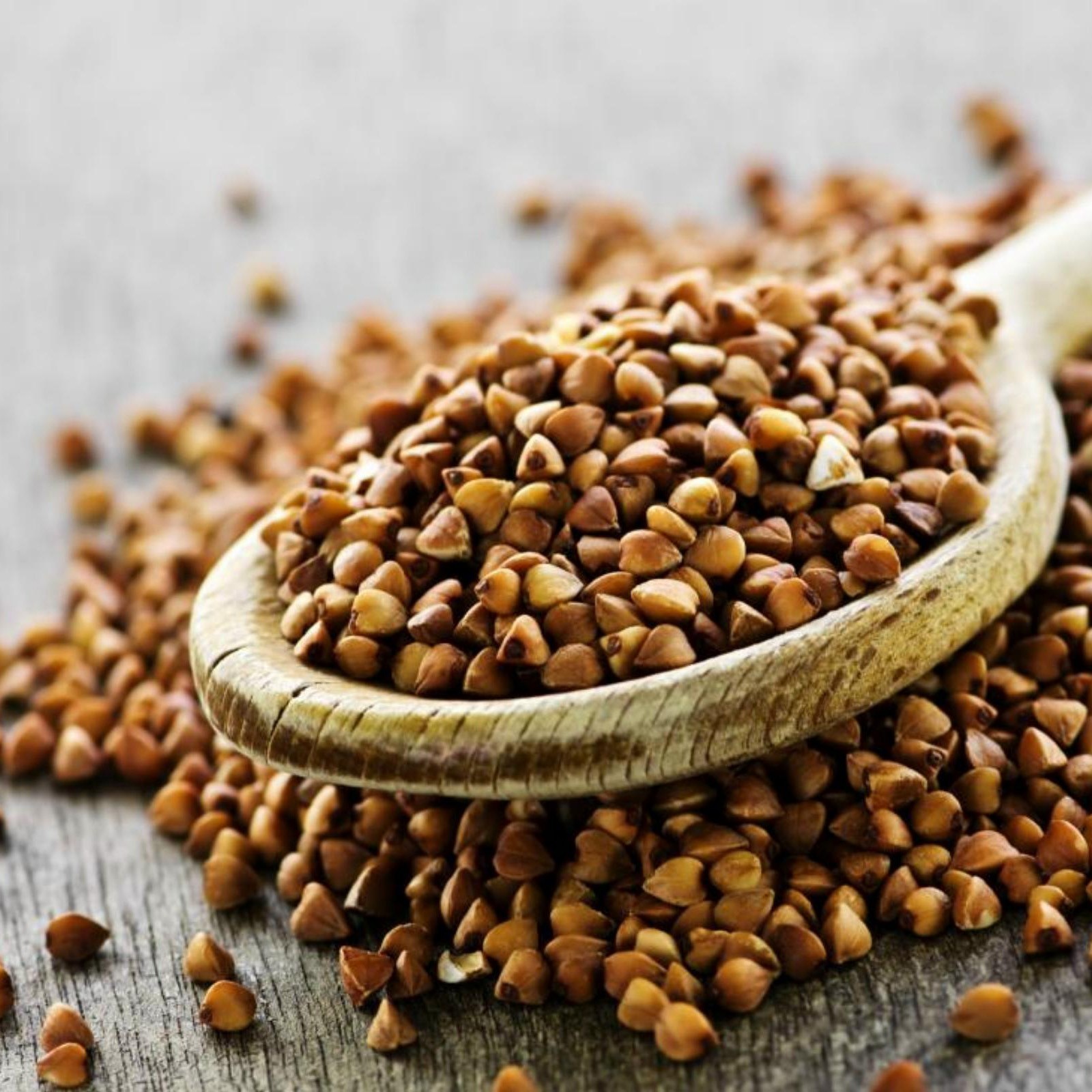
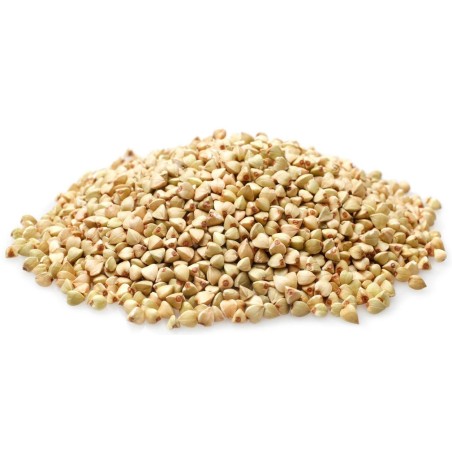
Buckwheat (Fagopyrum esculentum) is a plant cultivated for its grain-like seeds and as a cover crop. To distinguish it from a related species, Fagopyrum tataricum, it is also known as Japanese buckwheat[2] and silverhull buckwheat.
Buckwheat (Fagopyrum esculentum) is a plant cultivated for its grain-like seeds and as a cover crop. To distinguish it from a related species, Fagopyrum tataricum, it is also known as Japanese buckwheat[2] and silverhull buckwheat.
Despite the name, buckwheat is not related to wheat, as it is not a grass. Instead, buckwheat is related to sorrel, knotweed, and rhubarb. Because its seeds are eaten and rich in complex carbohydrates, it is referred to as a pseudocereal. The cultivation of buckwheat grain declined sharply in the 20th century with the adoption of nitrogen fertilizer that increased the productivity of other staples.
The name 'buckwheat' or 'beech wheat' comes from its triangular seeds, which resemble the much larger seeds of the beech nut from the beech tree, and the fact that it is used like wheat. The word may be a translation of Middle Dutch boecweite: boec (Modern Dutch beuk), "beech" (see PIE *bhago-) and weite (Mod. Dut. weit), wheat, or may be a native formation on the same model as the Dutch word.
History
The wild ancestor of common buckwheat is F. esculentum ssp.ancestrale. F. homotropicum is interfertile with F. esculentum and the wild forms have a common distribution, in Yunnan, a southwestern province of China. The wild ancestor of tartary buckwheat is F. tataricum ssp. potanini.
Common buckwheat was domesticated and first cultivated in inland Southeast Asia, possibly around 6000 BCE, and from there spread to Central Asia and Tibet, and then to the Middle East and Europe. Domestication most likely took place in the western Yunnan region of China.[5] Buckwheat is documented in Europe in Finland by at least 5300 BCE[6] as a first sign of agriculture, and in the Balkans by circa 4000 BCE in the Middle Neolithic. Russian-speakers call buckwheat гречка (grechka) meaning "little Greek", due to its introduction in the seventh century by the Byzantine Greeks; the same is the case in Ukrainian.
The oldest remains found in China so far date to circa 2600 BCE, while buckwheat pollen found in Japan dates from as early as 4000 BCE. It is the world's highest-elevation domesticate, being cultivated in Yunnan on the edge of the Tibetan Plateau or on the plateau itself. Buckwheat was one of the earliest crops introduced by Europeans to North America. Dispersal around the globe was complete by 2006, when a variety developed in Canada was widely planted in China. In India, buckwheat flour is known as kuttu ka atta and is culturally associated with Navratri festival. On the day of this festival, food items made only from buckwheat are consumed.
Cultivation
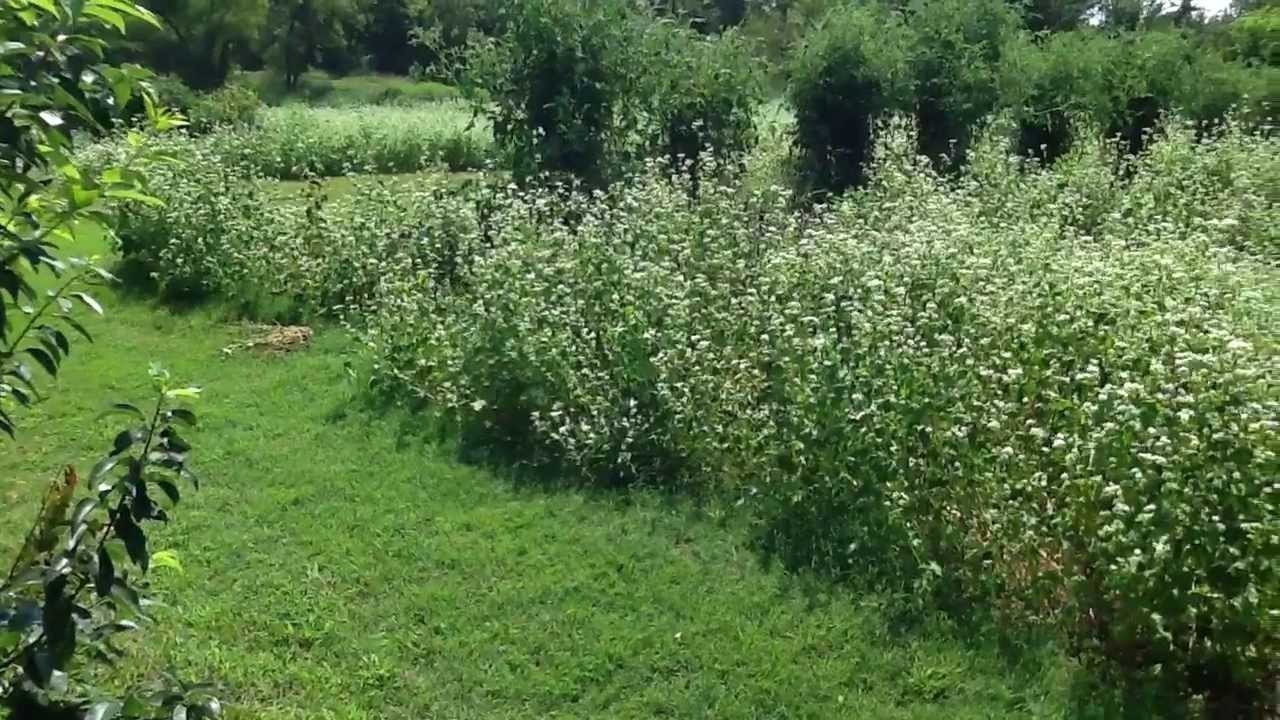
Buckwheat, a short-season crop, does well on low-fertility or acidic soils, but the soil must be well drained. Too much fertilizer, especially nitrogen, reduces yields. In hot climates it can only be grown by sowing late in the season, so that it blooms in cooler weather. The presence of pollinators greatly increases the yield. The nectar from buckwheat flower makes a dark-colored honey. It is sometimes used as a green manure, as a plant for erosion control, or as wildlife cover and feed.
Agricultural production
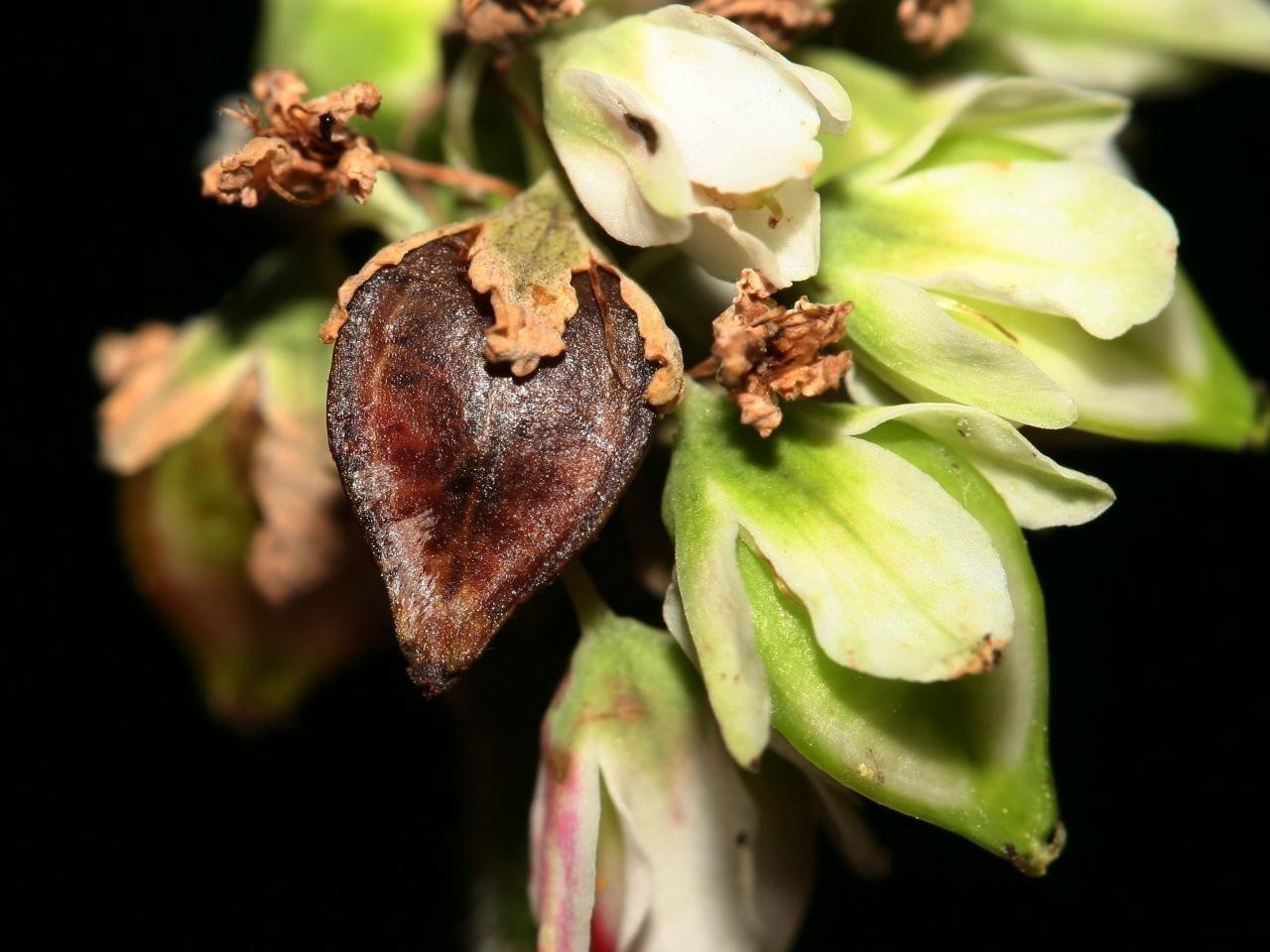
The plant has a branching root system with one primary root that reaches deeply into the moist soil.[8] Buckwheat has triangular seeds and produces a flower that is usually white, although can also be pink or yellow.[9] Buckwheat branches freely, as opposed to tillering or producing suckers, causing a more complete adaption to its environment than other cereal crops.[8] The seed hull density is less than that of water, making the hull easy to remove.
Buckwheat is raised for grain where a short season is available, either because it is used as a second crop in the season, or because the climate is limiting. Buckwheat can be a reliable cover crop in summer to fit a small slot of warm season. It establishes quickly, which suppresses summer weeds.[10] Buckwheat has a growing period of only 10–12 weeks[11] and it can be grown in high latitude or northern areas.[12] It grows 30 to 50 inches (75 to 125 cm) tall.
Historical data
A century ago, the Russian Empire was the world leader in buckwheat production.[13] Growing areas in the Russian Empire were estimated at 6.5 million acres (2,600,000 ha), followed by those of France at 0.9 million acres (360,000 ha).[14] In 1970, the Soviet Union grew an estimated 4.5 million acres (1,800,000 ha) of buckwheat. It remains in 2014 a key cereal.[15] Production in China expanded greatly during the 2000s, to rival Russia's output.
In the northeastern United States, buckwheat was a common crop in the 18th and 19th centuries. Cultivation declined sharply in the 20th century due to the use of nitrogen fertilizer, to which maize and wheat respond strongly. Over 1,000,000 acres (400,000 ha) were harvested in the United States in 1918. By 1954, that had declined to 150,000 acres (61,000 ha), and by 1964, the last year annual production statistics were gathered by USDA, only 50,000 acres (20,000 ha) were grown. However it may benefit from an "explosion in popularity of so-called ancient grains" reported in the years 2009-2014.
Uses
Food
The fruit is an achene, similar to sunflower seed, with a single seed inside a hard outer hull. The starchy endosperm is white and makes up most or all of buckwheat flour. The seed coat is green or tan, which darkens buckwheat flour. The hull is dark brown or black, and some may be included in buckwheat flour as dark specks. The dark flour is known as blé noir (black wheat) in French, along with the name sarrasin (saracen).
Buckwheat noodles have been eaten by people from Tibet and northern China for centuries, as wheat can not be grown in the mountain regions. A special press made of wood is used to press the dough into hot boiling water when making buckwheat noodles. Old presses found in Tibet and Shanxi share the same basic design features. The Japanese and Koreans may have learned the making of buckwheat noodles from them.
In India, on Hindu fasting days (Navaratri, Ekadashi, Janmashtami, Maha Shivaratri etc.), fasting people in northern states of India eat items made of buckwheat flour. Eating cereals such as wheat or rice is prohibited during such fasting days. However, since buckwheat is not a cereal, it is considered acceptable for consumption during Hindu fasting days. While strict Hindus do not even drink water during their fast (observing Nirjal Upwas), others just give up cereals and salt and take a meal prepared from non-cereal ingredients such as buckwheat (kuttu). The preparation of buckwheat flour varies across India. The famous ones are kuttu ki puri (buckwheat pancakes) and kuttu pakoras (potato slices dipped in buckwheat flour and deep-fried in oil). In most of northern and western states, buckwheat flour is called kuttu ka atta.
Buckwheat noodles play a major role in the cuisines of Japan (soba),[40] Korea (naengmyeon, makguksu and memil guksu) and the Valtellina region of Northern Italy (pizzoccheri). Soba noodles are the subject of deep cultural importance in Japan. In Korea, guksu (noodles) were widely made from buckwheat before it was replaced by wheat.[citation needed] The difficulty of making noodles from flour with no gluten has resulted in a traditional art developed around their manufacture by hand.
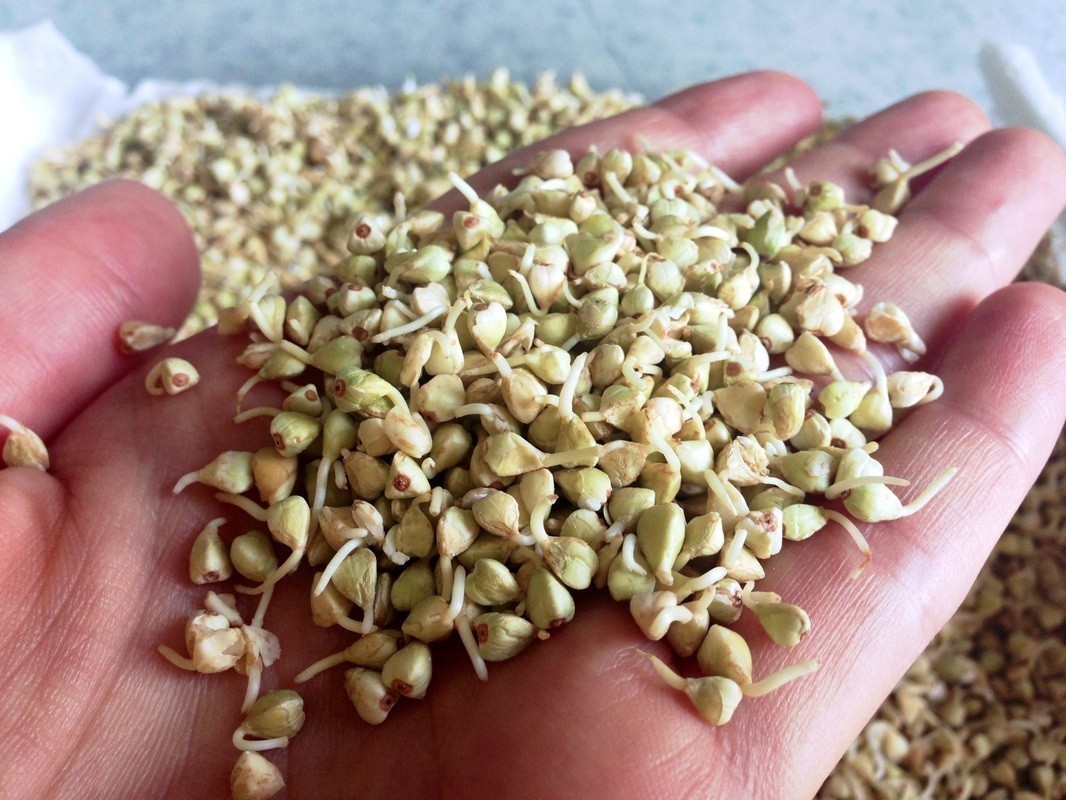
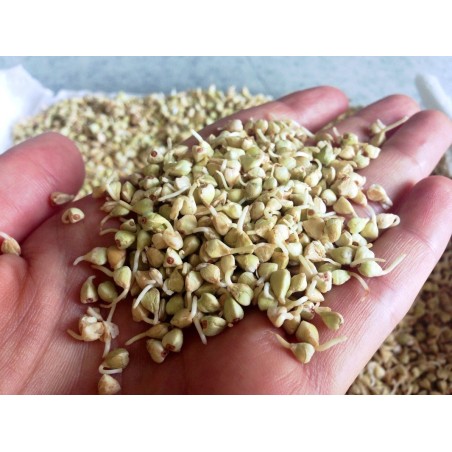
Buckwheat groats are commonly used in western Asia and eastern Europe. The porridge was common, and is often considered the definitive peasant dish. It is made from roasted groats that are cooked with broth to a texture similar to rice or bulgur. The dish was brought to America by Ukrainian, Russian, and Polish immigrants who called it kasha, and they mixed it with pasta or used it as a filling for cabbage rolls, knishes, and blintzes, hence buckwheat prepared in this fashion is most commonly called kasha in America. Groats were the most widely used form of buckwheat worldwide during the 20th century, eaten primarily in Estonia, Russia, Ukraine, and Poland, called grechka in Ukrainian or Russian. The groats can also be sprouted and then eaten raw or cooked.
Buckwheat pancakes, sometimes raised with yeast, are eaten in several countries. They are known as buckwheat blinis in Russia, galettes in France (savoury crêpes made with buckwheat flour, water, and eggs are associated with Lower Brittany, whilst savoury galettes made without eggs are from Higher Brittany), ployes in Acadia, and boûketes (which are named after the buckwheat plant) in the Wallonia region of Belgium. Similar pancakes were a common food in American pioneer days.[41] They are light and foamy. The buckwheat flour gives them an earthy, mildly mushroom-like taste. In Ukraine, yeast rolls called hrechanyky are made from buckwheat. Buckwheat flour is also used to make Nepali dishes such as dhedo and kachhyamba.
Farina made from groats are used for breakfast food, porridge, and thickening materials in soups, gravies, and dressings. In Korea, buckwheat starch is used to make a jelly called memilmuk. It is also used with wheat, maize (polenta taragna in northern Italy) or rice in bread and pasta] products.
Buckwheat is a good honey plant, producing a dark, strong monofloral honey.
Beverages
Beer
In recent years, buckwheat has been used as a substitute for other grains in gluten-free beer. Although it is not an actual cereal (being a pseudocereal), buckwheat can be used in the same way as barley to produce a malt that can form the basis of a mash that will brew a beer without gliadin or hordein (together gluten) and therefore can be suitable for coeliacs or others sensitive to certain glycoproteins.
Whisky
Shōchū
Buckwheat shōchū is a Japanese distilled beverage produced since the 16th Century. The taste is milder than barley shōchū.
Tea
Upholstery filling
Buckwheat hulls are used as filling for a variety of upholstered goods, including pillows and zafu. The hulls are durable and do not conduct or reflect heat as much as synthetic fills. They are sometimes marketed as an alternative natural fill to feathers for those with allergies. However, medical studies to measure the health effects of buckwheat hull pillows manufactured with unprocessed and uncleaned hulls, concluded such buckwheat pillows do contain higher levels of a potential allergen that may trigger asthma in susceptible individuals than do new synthetic-filled pillows.
Biological control
Buckwheat is currently being studied and used as a pollen and nectar source to increase natural predator numbers to control crop pests in New Zealand.
Cultural
The buckwheat plant is celebrated in Kingwood, West Virginia, at the Preston County Buckwheat Festival, where people can participate in swine-, cattle-, and sheep-judging contests, vegetable contests, and craft fairs. The area fire departments also play an important role in the series of parades that occur there. Each year, a King Buckwheat and Queen Ceres are elected. Also, many rides are available, and homemade, homegrown buckwheat cakes and sausage are served.
CategorieAcasaReferințăVE-75-(3g)În stoc1068 Produse
Expediem in intreaga lume din Uniunea Europeana, folosind posta aeriana recomandata, cu confirmare prin semnatura la livrare.
📦Urmarirea comenzii tale Conectati-va la contul dvs. si navigati laIstoricul comenzilor > Detalii pentru a gasi numarul dvs. de urmarire.
Veti primi notificari prin e-mail pentru fiecare etapa a comenzii dumneavoastra. Daca nu vedeti aceste mesaje, verificati folderul Spam/mesaje nedorite sau contactati furnizorul dvs. de e-mail. Alternativ, cautati online cum sa deblocati e-mailurile expeditorilor.
SERVICIUL NOSTRU DE EMAIL FUNCTIONEAZA
Veti primi notificari prin e-mail pentru fiecare etapa a comenzii dvs. Daca nu vedeti aceste mesaje, verificati folderul Spam/mesaje nedorite sau contactati furnizorul dvs. de e-mail.
📧Cum sa te asiguri ca e-mailurile de la magazinul nostru online ajung intotdeauna in contul tau Gmailsau orice alt e-mailal furnizoruluiIn Inbox si nu sunt marcate ca spam sau blocate:
Adauga expeditorul in contactele Google sau ale oricarui alt furnizor de e-mail. Nu te putem ajuta daca setarile tale nu sunt astfel. Contacteaza furnizorul tau de e-mail pentru asistenta.
Pasul 1: Deschide Gmail si gaseste un e-mail de la noi xxxxxxxxxxxx@xxx.com Nu incercati sa ne trimiteti un e-mail direct la aceasta adresa; nu il vom primi. Orice contact se face exclusiv prin formularul de contact din magazinul nostru online! Daca nu gasiti e-mailul nostru, este posibil sa fi fost blocat. In acest caz, continuati cu Pasul 4 de mai jos.
Pasul 2: Puneti cursorul peste numele expeditorului sau adresa de e-mail din partea de sus a e-mailului.
Pasul 3: Faceti clic pe pictograma "Adauga la contacte" (mica pictograma cu o persoana).
Acest lucru va ajuta Gmail sa ne recunoasca ca expeditor de incredere, asigurandu-se ca e-mailurile noastre ajung direct in inboxul tau si nu in folderul de spam.
Creati un filtru pentru a preveni ca e-mailurile sa fie marcate ca spam sau blocate
Pasul 1: Deschide Gmail si da clic pe pictograma rotita din coltul din dreapta sus, apoi selecteaza "Vezi toate setarile".
Pasul 2: Accesati fila "Filtre si adrese blocate".
Pasul 3: Faceti clic pe "Creati un filtru nou".
Pasul 4: In campul "From", introduceti adresa de e-mail pe care doriti sa o adaugati pe lista alba (e.g., e-mailul magazinului nostru).
Pasul 5: Faceti clic pe "Creeaza filtru".
Pasul 6: In fereastra urmatoare, bifati caseta etichetata "Nu-l trimite niciodata in Spam".
Pasul 7: Faceti clic pe "Creeaza filtru" pentru a salva.
Acest lucru va asigura ca e-mailurile noastre ajung intotdeauna in inbox-ul tau si nu vor fi marcate ca spam sau blocate din greseala.
Urmareste-ti coletul prin:
Aftership
17Track
Posta.hr (pentru numere de urmarire precum RGxxxxxxHR)
⚠️Notificari importante
Plata la livrare esteNUDisponibil.
Furnizati intotdeauna un numar de telefon mobil valid cu codul tarii cand comandati (e.g., +365 456 7686 576).
Nu ordona sa P.O. Cutii, sau daca nu puteti fi acasa pentru a semna pentru colet, coletele nu pot fi lasate la vecini.
Daca un pachet trimis la P.O. Daca cutia este pierduta sau nedistribuita, nu se va emite nicio rambursare.
⚖️Responsabilitatea clientului privind conformitatea legala Clientul este responsabil sa se asigure ca produsul poate fi importat legal in tara sa, inclusiv prin respectarea tuturor reglementarilor de import, obtinerea permiselor necesare si plata taxelor vamale, impozitelor si a altor taxe aplicabile. Va rugam sa verificati legislatia locala inainte de a comanda pentru a evita orice probleme cu vama sau livrarea.
📦Pachete Pierdute, Returnate & Reexpediate
Clienti din Brazilia si Mexic:Nu putem rambursa coletele pierdute sau distruse de catre autoritatile vamale.
Daca coletul dumneavoastra este returnat, va vom rambursa doar costul produsului — costurile de livrare nu sunt rambursabile.
Costul expedierii de retur (2 €) si orice costuri de reexpediere trebuie acoperite de client.
Daca un pachet ne este returnat din orice motiv, sunteti responsabil pentru plata transportului de retur (€2) plus costul reexpedierii pachetului.
🚚Livrare colet Trimiterile inregistrate necesita o semnatura.
Daca urmarirea arata ca pachetul este inca la oficiul postal de expediere, acesta este in tranzit — contactati oficiul postal local pentru actualizari.
Din pacate, nici noi, nici serviciul postal prin care a fost expediata comanda dumneavoastra nu va putem ajuta sa aflati unde se afla aceasta. Cand vedeti ca pachetul este in tara dumneavoastra,TREBUIE sa contactati oficiul postal cu numarul de urmarire.si discutati problema cu ei. Trimitem toate comenzile prin posta oficiala de stat.
Nu suntem responsabili pentru termenele de livrare si nu putem urmari expedierile in numele dumneavoastra.
📅Optiuni de livrare & timpi estimati
Optiune de livrare
Timp de procesare
Notite
Livrare Prioritara
Se expediaza in 1–7 zile lucratoare
Acorda prioritate procesarii comenzilor (nu garanteaza o livrare mai rapida); pot aparea intarzieri in timpul sarbatorilor (3–10 zile)
Livrare securizata
Se expediaza in 1–7 zile lucratoare
Disponibil pentru comenzi de pana la 150 €; rambursare in caz de pierdere
Livrare standard
Se expediaza in 7–10 zile lucratoare
Mai economic; pot aparea intarzieri in perioada sarbatorilor (7–14 zile)
Timp estimat de livrare:
In UE:3–20 zile
La nivel mondial:5–30 zile
Exemple din SUA:Livrat in 13, 17, 19, 22, sau 27 de zile.
Nota:Timpul de livrare depinde de locatia dvs. si de sistemul postal local. COVID-19 sau perioadele de sarbatori pot provoca intarzieri suplimentare.
💰Costuri de livrare Taxele de expediere si manipulare sunt calculate automat la finalizarea comenzii, in functie de greutatea coletului si de destinatie.
⏰Ore de procesare a comenzilor Nu procesam si nu expediem comenzile in zilele de sambata si duminica.
💳Optiuni de plata
Transfer bancar (SEPA / IBAN / SWIFT-BIC) Includeti referinta comenzii dvs. in descrierea platii (e.g., "SGS-19811702"). Comenzile care nu sunt platite in termen de 7 zile vor fi anulate automat.
PayPal Platile sunt acceptate numai in euro. Va rugam sa selectati euro la finalizarea comenzii.
Plata cu cardul Acceptam Visa, MasterCard, American Express, CB, Diners Club, Discover, China UnionPay, JCB, si Discover.
⚠️Taxe de tranzactie Clientii sunt responsabili pentru orice comisioane de tranzactie bancare sau PayPal. Va rugam sa va asigurati ca detaliile de plata sunt corecte pentru o procesare mai rapida a comenzii.
📢Note finale Inainte de a plasa comanda, verificati intotdeauna site-ul nostru pentru anunturi speciale, programul din perioada sarbatorilor sau conditii specifice de livrare care ar putea afecta achizitia dumneavoastra.
Notificare importanta: Facturi digitale
Pentru a contribui la reducerea risipei de hartie, nu includem o factura tiparita impreuna cu comanda dvs. Puteti descarca si imprima cu usurinta factura dvs. in orice moment accesand contul dvs.Istoric comenzi in profilul contului tau