The blackcurrant (Ribes nigrum) is a woody shrub in the family Grossulariaceae grown for its piquant berries. It is native to temperate parts of central and northern Europe and northern Asia where it prefers damp fertile soils and is widely
The blackcurrant (Ribes nigrum) is a woody shrub in the family Grossulariaceae grown for its piquant berries. It is native to temperate parts of central and northern Europe and northern Asia where it prefers damp fertile soils and is widely cultivated both commercially and domestically. It is winter hardy but cold weather at a flowering time during the spring reduces the size of the crop. Bunches of small, glossy black fruit develop along the stems in the summer and can be harvested by hand or by machine. The fruit is rich in vitamin C, various other nutrients, phytochemicals and antioxidants. Blackcurrants can be eaten raw but are usually cooked in a variety of sweet or savoury dishes. They are used to make jams, jellies and syrups and are grown commercially for the juice market. The fruit is also used in the preparation of alcoholic beverages and both fruit and foliage have used in traditional medicine and the preparation of dyes.
As a crop, the blackcurrant suffers from several pests and diseases. The most serious disease is a reversion, caused by a virus transmitted by the blackcurrant gall mite. Another is white pine blister rust which requires two alternating hosts, the blackcurrant and certain coniferous trees. This fungus caused damage to forests when the fruit was first introduced into North America. As a result, the blackcurrant has been subject to restrictions in the United States as a disease vector for most of the 20th century. Breeding is being undertaken in Europe and New Zealand to produce fruit with better eating qualities and bushes with greater hardiness and disease resistance.
Ribes nigrum, the blackcurrant, is a medium-sized shrub, growing to 1.5 metres (4.9 ft) by 1.5 metres (4.9 ft). The leaves are alternate, simple, 3 to 5 cm (1.2 to 2.0 in) broad and long with five palmate lobes and a serrated margin. All parts of the plant are strongly aromatic. The flowers are produced in racemes known as "strig"s up to 8 cm (3 in) long containing ten to twenty flowers, each about 8 mm (0.3 in) in diameter. Each flower has a hairy calyx with yellow glands, the five lobes of which are longer than the inconspicuous petals. There are five stamens surrounding the stigma and style and two fused carpels.[2] The flowers open in succession from the base of the strig and are mostly insect pollinated, but some pollen is distributed by the wind. A pollen grain landing on a stigma will germinate and send a slender pollen tube down the style to the ovule. In warm weather, this takes about 48 hours but in cold weather, it may take a week, and by that time, the ovule may have passed the stage where it is receptive. If fewer than about 35 ovules are fertilised, the fruit may not be able to develop and will fall prematurely. Frost can damage both unopened and open flowers when the temperature falls below -1.9°C (28.5°F). The flowers at the base of the strig are more protected by the foliage and are less likely to be damaged.
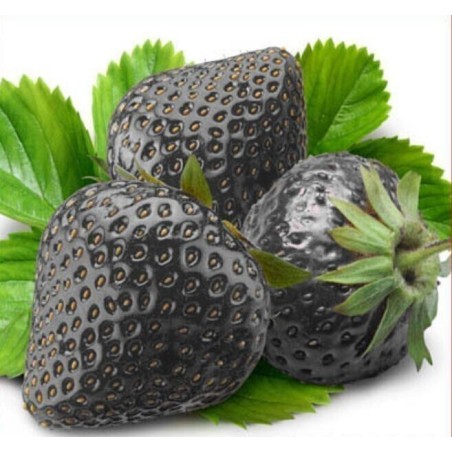
In midsummer, the green fruit ripens to an edible berry up to 1 cm in diameter, very dark purple in colour, almost black, with a glossy skin and a persistent calyx at the apex, and containing several seeds dense in nutrients (notably Vitamin C). An established bush can produce about 4.5 kilograms (10 pounds) of fruit each year.
Plants from Northern Asia are sometimes distinguished as a separate variety, Ribes nigrum var. sibiricum, of which Ribes cyathiforme is considered a synonym.
Cultivation
Site selection and planting
Blackcurrants can grow well on sandy or heavy loams, or forest soils, as long as their nutrient requirements are met. They prefer damp, fertile but not waterlogged ground and are intolerant of drought. Although the bushes are winter hardy, frosts during the flowering period may adversely affect the yield[6] and cold winds may restrict the number of flying insects visiting and pollinating the flowers. A pH of about 6 is ideal for blackcurrants and the ground can be limed if the soil is too acid. Planting is usually done in the autumn or winter to allow the plants to become established before growth starts in the spring,[7] but container-grown stock can be planted at any time of year.
Two-year-old bushes are usually planted but strong one-year-old stock can also be used. Planting certified stock avoids the risk of introducing viruses. On a garden scale the plants can be set at intervals of 1.5 to 1.8 metres (5 to 6 ft) or they can be set in rows with planting intervals of 1.2 metres (4 ft) and row separations of 2.5 metres (8 ft) or more. In the UK, young bushes are generally planted deeper than their initial growing level to encourage new stems to grow from the base.
Manures and fertilizers
The blackcurrant requires a number of essential nutrients to be present to enable it to thrive; nitrogen provides strong plant growth and stimulates the production of flower sprigs; phosphorus aids growth, the setting of fruit and crop yield; potassium promotes growth of individual shoots and increases the weight of individual fruits; magnesium is a constituent of chlorophyll and helps increase yields through interaction with potassium; calcium is required for cell division and enlargement and is particularly important for young plants and buds.
An annual spring mulch of well-rotted manure is ideal and poultry manure can also be used but needs prior composting with straw or other waste vegetable material. Spent mushroom compost can be used but care should be taken as it often contains lime and blackcurrants prefer slightly acidic soils. The blackcurrant is a gross feeder and benefits from additional nitrogen, and phosphatic and potash fertilisers should also be applied annually.[7] A balanced artificial fertilizer can be used and a 10-10-10 granular product can be spread around the bushes at the rate of .10 to .24 kg (0.2 to 0.5 lb) per plant.[9] Weed growth can be suppressed with an organic mulch such as sawdust, bark, mushroom compost or straw, heavy plastic topped with an organic mulch cover or landscape fabric.
Pruning
Fruit in blackcurrants is borne primarily on one-year-old shoots. Newly planted bushes should be pruned severely, cutting all shoots back to two buds above ground level. This gives the plant a chance to get properly established before needing to put its energy into producing fruit. The general rule when pruning is to remove all weak shoots and those growing out sideways which may get weighed down when fruiting. The remaining branches should be thinned so as to remove old unproductive wood and encourage new shoots. An established bush should not be allowed to become overcrowded and should have about one-third of its main branches or stems removed each year.[7] When harvesting by machine, plants with an upright growth habit are encouraged.
Harvesting
On a garden scale, the berries should be picked when dry and ripe.[7] Commercially, most harvesting is done mechanically by straddle harvesters. These move continually down the rows, straddling a row of bushes, shaking the branches and stripping off the fruit. The blackcurrants are placed into half tonne bins and to minimise stoppage time, some machines have cross conveyors which direct the fruit into continuously moving trailers in the adjoining row. A modern machine can pick up to fifty tonnes of blackcurrants in a day using only one operator and two tractor drivers.[10] The bins should be stored in a cool place. Some fruit is still picked by hand for use in the fresh fruit market.
Research and breeding
There are many cultivars of blackcurrant. Baldwin was the mainstay of the industry for many years but it has now largely been superseded by more productive and disease-resistant varieties.[14][15] During the 20th century in Europe, much hybridisation work has been carried out in order to reduce the plant's susceptibility to disease and frost and also to increase yields. This effort centred especially on Russia, Sweden and Scotland.
In Britain, the Scottish Crop Research Institute was tasked with developing new varieties suitable for growing in the north of the country. They produced new cultivars that had greater cold tolerance, especially in the spring, ripened earlier and more evenly and had greater fungal disease resistance. Frost tolerance was improved by selecting for late flowering and genetic research identified genes involved in resistance to gall mite and the blackcurrant reversion virus. 'Ben Lomond' was the first of the 'Ben' varieties and was released in 1975. This was followed by several other cultivars for the juicing industry such as 'Ben Alder' and 'Ben Tirran'. The cultivar 'Ben Hope' was released in 1998 with resistance to gall mite, and in the same year, 'Ben Gairn' became available. It shows resistance to the reversion virus.[17] For gardeners and the pick-your-own market, 'Ben Sarek', 'Ben Connan' and 'Big Ben' were introduced and have large, sweet berries.[15] The cultivars 'Ben Connan', 'Ben Lomond' and 'Ben Sarek' have gained the Royal Horticultural Society's Award of Garden Merit.[4] and new varieties are being developed continually to improve frost tolerance, disease resistance, machine harvesting, fruit quality, nutritional content and fruit flavour.
Varieties producing green fruit, less strongly flavoured and sweeter than typical blackcurrants, are cultivated in Finland, where they are called "greencurrants" (viherherukka).[18] In Poland, the Research Institute of Horticulture has done work on improving the blackcurrant with regard to disease and pest resistance, fruit quality, adaptations to local conditions and mechanical harvesting. Researchers have crossed various varieties and introduced inter-specific genetic material from the gooseberry (Ribes grossularia), the red currant (Ribes rubrum) and the flowering currant (Ribes sanguineum). The resulting offspring were further back-crossed to R. nigrum. Cultivars produced include "Tisel" and "Tiben" in 2000 and "Ores", "Ruben" and "Tines" in 2005. Further cultivars "Polares" and "Tihope" are being tested.[19] Since 1991, New Zealand has become an important centre for research and development, as its temperate climate is particularly suitable for cultivation of the crop. Breeding programmes are concentrating on yield, large fruit size, consistency of cropping and upright habit.
In North America, there is a need for this fruit to have resistance to white pine blister rust. New cultivars such as "Crusader", "Coronet" and "Consort" have been developed there by crossing R nigrum with R. ussurienses and these show resistance to the disease. However the quality and yield of these varieties are poor as compared to non-resistant strains and only Consort is reliably self-fertile. Back-crossing these varieties to a parent have produced new strains such as "Titania" that have a higher yield, better disease resistance, are more tolerant of adverse weather conditions and are suitable for machine harvesting.[21] Two new releases from a black currant breeding program in British Columbia, Canada, 'Blackcomb' and 'Tahsis', were selected for their immunity to white pine blister rust and their frost tolerance.
History
The blackcurrant is native to northern Europe and Asia. It was in cultivation in Russia by the 11th century when it was present in monastery gardens and also grown in towns and settlements. Cultivation in Europe is thought to have started around the last decades of the 17th century.[6] The medicinal properties of the plant have been noted in various herbals and traditional names included quinsy berry and squinancy berry. The juice boiled with sugar forms a syrup that was said to soothe sore throats while the raw juice was used to help reduce fevers. Decoctions of the leaves, bark and roots were also used as traditional remedies.
During World War II, most fruits rich in vitamin C, such as oranges, became almost impossible to obtain in the United Kingdom. Since blackcurrant berries are a rich source of the vitamin and blackcurrant plants are suitable for growing in the UK climate, the British Government encouraged their cultivation and soon the yield of the nation's crop increased significantly. From 1942 onwards, blackcurrant syrup was distributed free of charge to children under the age of two, and this may have given rise to the lasting popularity of blackcurrant as a flavouring in Britain.[24] In Britain the commercial crop is completely mechanised and about 1,400 hectares of the fruit are grown, mostly under contract to the juicing industry.[17] Commercially, most large-scale cultivation of blackcurrants is done in eastern Europe for the juice and juice concentrate market.
Blackcurrants were once popular in the United States as well but became less common in the 20th century after currant farming was banned in the early 1900s, when blackcurrants, as a vector of white pine blister rust, were considered a threat to the U.S. logging industry.[25] The federal ban on growing currants was shifted to the jurisdiction of individual states in 1966 and was lifted in New York State in 2003 through the efforts of horticulturist Greg Quinn. As a result, currant growing is making a comeback in New York, Vermont, Connecticut and Oregon.[26][27] However, several statewide bans still exist including Maine,[28] New Hampshire,[29] Virginia[21] and Massachusetts.[30] Since the American federal ban curtailed currant production nationally for nearly a century, the fruit remains largely unknown in the United States, and has yet to regain its previous popularity to levels enjoyed in Europe or New Zealand. Owing to its unique flavour and richness in polyphenols, dietary fibre and essential nutrients, awareness and popularity of blackcurrant is once again growing, with a number of consumer products entering the U.S. market.
Uses
Culinary uses
The fruit of blackcurrants can be eaten raw, but its strong, tart flavour requires sweetening to be palatable. It can be made into jams and jellies which set readily because of the fruit's high content of pectin and acid.[32] For culinary use, the fruit is usually cooked with sugar to produce a purée, which can then be passed through muslin to separate the juice. The purée can be used to make blackcurrant preserves and be included in cheesecakes, yoghurt, ice cream, desserts, sorbets and many other sweet dishes. The exceptionally strong flavour can be moderated by combining it with other fruits, such as raspberries and strawberries in summer pudding, or apples in crumbles and pies.[33] The juice can be used in syrups and cordials. Blackcurrants are a common ingredient of Rødgrød, a popular kissel-like dessert in North German and Danish cuisines.
Blackcurrants are also used in savoury cooking because their astringency creates added flavour in many sauces, meat and other dishes and they are included in some unusual combinations of foods. They can be added to tomato and mint to make a salad, used to accompany roast or grilled lamb, used to accompany seafood and shellfish, used as a dipping sauce at barbecues, blended with mayonnaise, used to invigorate bananas and other tropical fruits, combined with dark chocolate or added to mincemeat in traditional mince pies at Christmas.
Japan imports $3.6 million of New Zealand blackcurrants for uses as dietary supplements, snacks, functional food products and as quick-frozen (IQF) produce for culinary production as jams, jellies or preserves.
Beverages
The juice forms the basis for various popular cordials, juice drinks, juices and smoothies. Typically blended with apple or other red fruits, it is also mixed with pomegranate and grape juice. Also used in alcoholic beverages, blackcurrant liqueur mixed with white wine is called Kir or Kir Royale when mixed with champagne. Macerated blackcurrants are also the primary ingredient in the apéritif crème de cassis.
In the United Kingdom, blackcurrant cordial is often mixed with cider (hard cider) to make a drink called "Cider and Black".[38] If made with any common British lager beer, it is known as a "Lager and Black". The addition of blackcurrant to a mix of cider and lager results in "Diesel"[39] or "Snakebite and Black" available at pubs.[40] A "Black’n’Black" can be made by adding a small amount of blackcurrant juice to a pint of stout. The head is purple if the shot of juice is placed in the glass first.[41] Blackcurrant juice is sometimes combined with whey in an endurance/energy-type drink.
In Russia, blackcurrant leaves may be used for flavouring tea or preserves, such as salted cucumbers, and berries for home winemaking. Sweetened vodka may also be infused with blackcurrant leaves making a deep greenish-yellow beverage with a tart flavour and astringent taste. The berries may be infused in a similar manner.[43] In Britain, 95% of the blackcurrants grown end up in Ribena and similar fruit syrups and juices.
Phytochemicals and nutritional value
The fruit has very high vitamin C content (several times the recommended daily dietary reference intake per 100 g), good levels of potassium, phosphorus, iron, manganese and vitamin B5, and a broad range of other essential nutrients (see nutrient table, right).
Other phytochemicals in the fruit (polyphenols/anthocyanins) have been demonstrated in laboratory experiments with potential to inhibit inflammation mechanisms suspected to be at the origin of heart disease, cancer, microbial infections or neurological disorders like Alzheimer's disease.[45][46] Major anthocyanins in blackcurrant pomace are delphinidin-3-O-glucoside, delphinidin-3-O-rutinoside, cyanidin-3-O-glucoside, and cyanidin-3-O-rutinoside[47] which are retained in the juice concentrate among other yet unidentified polyphenols.
Blackcurrant seed oil is also rich in many nutrients, especially vitamin E and several unsaturated fatty acids including alpha-linolenic acid and gamma-linolenic acid.[50] There is some evidence that gamma-linolenic acid may boost the effectiveness of the immune system and that use of the oil can reduce total cholesterol and triglycerides while increasing beneficial high-density cholesterol.[51] In a human pilot study, ingestion of blackcurrant seed oil by mothers reduced atopic dermatitis in their breastfed newborns who were supplemented with the oil over a period of two years.[52] In vitro, blackcurrant juice was found to have high antioxidant content and a potent free radical scavenger.
Use in traditional medicine
In Europe, the leaves have traditionally been used for arthritis, spasmodic cough, diarrhoea, as a diuretic and for treating a sore throat. The berries were made into a drink thought to be beneficial for the treatment of colds and flu, for other fevers, for diaphoresis and as a diuretic.[54] In traditional Austrian medicine, Ribes nigrum fruits have been used internally (consumed whole or as a syrup) for treatment of infections and disorders of the gastrointestinal tract, the locomotor system, the respiratory tract and the cardiovascular system.
Other uses
The plant has various other uses. Blackcurrant seed oil is an ingredient in cosmetics and skin preparations, often in combination with vitamin E. The leaves can be extracted to yield a yellow dye and the fruit is a source for a blue or violet dye. The leaves have been used to assist in keeping vegetables fresh.
CategorieAcasaReferințăV-129-B-(10-S)În stoc47 Produse
Expediem in intreaga lume din Uniunea Europeana, folosind posta aeriana recomandata, cu confirmare prin semnatura la livrare.
📦Urmarirea comenzii tale Conectati-va la contul dvs. si navigati laIstoricul comenzilor > Detalii pentru a gasi numarul dvs. de urmarire.
Veti primi notificari prin e-mail pentru fiecare etapa a comenzii dumneavoastra. Daca nu vedeti aceste mesaje, verificati folderul Spam/mesaje nedorite sau contactati furnizorul dvs. de e-mail. Alternativ, cautati online cum sa deblocati e-mailurile expeditorilor.
SERVICIUL NOSTRU DE EMAIL FUNCTIONEAZA
Veti primi notificari prin e-mail pentru fiecare etapa a comenzii dvs. Daca nu vedeti aceste mesaje, verificati folderul Spam/mesaje nedorite sau contactati furnizorul dvs. de e-mail.
📧Cum sa te asiguri ca e-mailurile de la magazinul nostru online ajung intotdeauna in contul tau Gmailsau orice alt e-mailal furnizoruluiIn Inbox si nu sunt marcate ca spam sau blocate:
Adauga expeditorul in contactele Google sau ale oricarui alt furnizor de e-mail. Nu te putem ajuta daca setarile tale nu sunt astfel. Contacteaza furnizorul tau de e-mail pentru asistenta.
Pasul 1: Deschide Gmail si gaseste un e-mail de la noi xxxxxxxxxxxx@xxx.com Nu incercati sa ne trimiteti un e-mail direct la aceasta adresa; nu il vom primi. Orice contact se face exclusiv prin formularul de contact din magazinul nostru online! Daca nu gasiti e-mailul nostru, este posibil sa fi fost blocat. In acest caz, continuati cu Pasul 4 de mai jos.
Pasul 2: Puneti cursorul peste numele expeditorului sau adresa de e-mail din partea de sus a e-mailului.
Pasul 3: Faceti clic pe pictograma "Adauga la contacte" (mica pictograma cu o persoana).
Acest lucru va ajuta Gmail sa ne recunoasca ca expeditor de incredere, asigurandu-se ca e-mailurile noastre ajung direct in inboxul tau si nu in folderul de spam.
Creati un filtru pentru a preveni ca e-mailurile sa fie marcate ca spam sau blocate
Pasul 1: Deschide Gmail si da clic pe pictograma rotita din coltul din dreapta sus, apoi selecteaza "Vezi toate setarile".
Pasul 2: Accesati fila "Filtre si adrese blocate".
Pasul 3: Faceti clic pe "Creati un filtru nou".
Pasul 4: In campul "From", introduceti adresa de e-mail pe care doriti sa o adaugati pe lista alba (e.g., e-mailul magazinului nostru).
Pasul 5: Faceti clic pe "Creeaza filtru".
Pasul 6: In fereastra urmatoare, bifati caseta etichetata "Nu-l trimite niciodata in Spam".
Pasul 7: Faceti clic pe "Creeaza filtru" pentru a salva.
Acest lucru va asigura ca e-mailurile noastre ajung intotdeauna in inbox-ul tau si nu vor fi marcate ca spam sau blocate din greseala.
Urmareste-ti coletul prin:
Aftership
17Track
Posta.hr (pentru numere de urmarire precum RGxxxxxxHR)
⚠️Notificari importante
Plata la livrare esteNUDisponibil.
Furnizati intotdeauna un numar de telefon mobil valid cu codul tarii cand comandati (e.g., +365 456 7686 576).
Nu ordona sa P.O. Cutii, sau daca nu puteti fi acasa pentru a semna pentru colet, coletele nu pot fi lasate la vecini.
Daca un pachet trimis la P.O. Daca cutia este pierduta sau nedistribuita, nu se va emite nicio rambursare.
⚖️Responsabilitatea clientului privind conformitatea legala Clientul este responsabil sa se asigure ca produsul poate fi importat legal in tara sa, inclusiv prin respectarea tuturor reglementarilor de import, obtinerea permiselor necesare si plata taxelor vamale, impozitelor si a altor taxe aplicabile. Va rugam sa verificati legislatia locala inainte de a comanda pentru a evita orice probleme cu vama sau livrarea.
📦Pachete Pierdute, Returnate & Reexpediate
Clienti din Brazilia si Mexic:Nu putem rambursa coletele pierdute sau distruse de catre autoritatile vamale.
Daca coletul dumneavoastra este returnat, va vom rambursa doar costul produsului — costurile de livrare nu sunt rambursabile.
Costul expedierii de retur (2 €) si orice costuri de reexpediere trebuie acoperite de client.
Daca un pachet ne este returnat din orice motiv, sunteti responsabil pentru plata transportului de retur (€2) plus costul reexpedierii pachetului.
🚚Livrare colet Trimiterile inregistrate necesita o semnatura.
Daca urmarirea arata ca pachetul este inca la oficiul postal de expediere, acesta este in tranzit — contactati oficiul postal local pentru actualizari.
Din pacate, nici noi, nici serviciul postal prin care a fost expediata comanda dumneavoastra nu va putem ajuta sa aflati unde se afla aceasta. Cand vedeti ca pachetul este in tara dumneavoastra,TREBUIE sa contactati oficiul postal cu numarul de urmarire.si discutati problema cu ei. Trimitem toate comenzile prin posta oficiala de stat.
Nu suntem responsabili pentru termenele de livrare si nu putem urmari expedierile in numele dumneavoastra.
📅Optiuni de livrare & timpi estimati
Optiune de livrare
Timp de procesare
Notite
Livrare Prioritara
Se expediaza in 1–7 zile lucratoare
Acorda prioritate procesarii comenzilor (nu garanteaza o livrare mai rapida); pot aparea intarzieri in timpul sarbatorilor (3–10 zile)
Livrare securizata
Se expediaza in 1–7 zile lucratoare
Disponibil pentru comenzi de pana la 150 €; rambursare in caz de pierdere
Livrare standard
Se expediaza in 7–10 zile lucratoare
Mai economic; pot aparea intarzieri in perioada sarbatorilor (7–14 zile)
Timp estimat de livrare:
In UE:3–20 zile
La nivel mondial:5–30 zile
Exemple din SUA:Livrat in 13, 17, 19, 22, sau 27 de zile.
Nota:Timpul de livrare depinde de locatia dvs. si de sistemul postal local. COVID-19 sau perioadele de sarbatori pot provoca intarzieri suplimentare.
💰Costuri de livrare Taxele de expediere si manipulare sunt calculate automat la finalizarea comenzii, in functie de greutatea coletului si de destinatie.
⏰Ore de procesare a comenzilor Nu procesam si nu expediem comenzile in zilele de sambata si duminica.
💳Optiuni de plata
Transfer bancar (SEPA / IBAN / SWIFT-BIC) Includeti referinta comenzii dvs. in descrierea platii (e.g., "SGS-19811702"). Comenzile care nu sunt platite in termen de 7 zile vor fi anulate automat.
PayPal Platile sunt acceptate numai in euro. Va rugam sa selectati euro la finalizarea comenzii.
Plata cu cardul Acceptam Visa, MasterCard, American Express, CB, Diners Club, Discover, China UnionPay, JCB, si Discover.
⚠️Taxe de tranzactie Clientii sunt responsabili pentru orice comisioane de tranzactie bancare sau PayPal. Va rugam sa va asigurati ca detaliile de plata sunt corecte pentru o procesare mai rapida a comenzii.
📢Note finale Inainte de a plasa comanda, verificati intotdeauna site-ul nostru pentru anunturi speciale, programul din perioada sarbatorilor sau conditii specifice de livrare care ar putea afecta achizitia dumneavoastra.
Notificare importanta: Facturi digitale
Pentru a contribui la reducerea risipei de hartie, nu includem o factura tiparita impreuna cu comanda dvs. Puteti descarca si imprima cu usurinta factura dvs. in orice moment accesand contul dvs.Istoric comenzi in profilul contului tau