Zoethout zaden (Glycyrrhiza glabra)

SKU MHS-46 Categorie Home
Prijs: € 1,95
Inclusief belasting
4 ( 37 reviews)

Liquorice or Licorice Seeds (Glycyrrhiza glabra)

Price for Package of 10 seeds.

The liquorice plant is a legume (related to beans and peas) and is native to the Mediterranean and cultivated in countries such as Greece, Spain and Italy. It is one of the most commonly
Zaden in verpakking:
https://lasercraftlab.com/nl/
Delen op

Liquorice or Licorice Seeds (Glycyrrhiza glabra)

Price for Package of 10 seeds.

The liquorice plant is a legume (related to beans and peas) and is native to the Mediterranean and cultivated in countries such as Greece, Spain and Italy. It is one of the most commonly used herbs in Western herbal medicine and has a very long history of use as both a medicine and as flavouring. Extracts of the root are used to flavour tobacco, beer, soft drinks and pharmaceutical products, often to disguise unpleasant flavours.
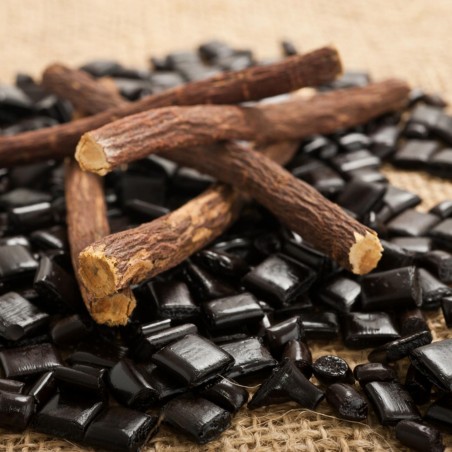
Fresh English liquorice is bright yellowish brown; the root being soft and pliable. The root is harvested in the autumn and is dried for later use. The aroma is strongly reminiscent of anise or fennel. The taste is dominantly sweet, warm and medical.
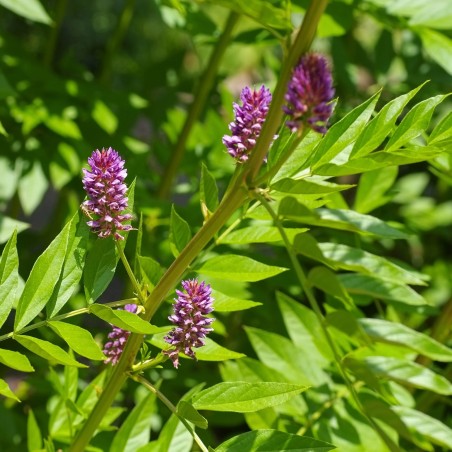
Liquorice plants are not particularly ornamental, with a disquieting habit of folding up their leaves at the end of the day. This perennial plant grows 90 to 180cm (36 to 72in) tall, it an extensive branching root system. The roots are straight pieces of wrinkled, fibrous wood, which are long and cylindrical and grow horizontally underground. Licorice roots are brown on the outside and yellow on the inside.
In our northerly climate the plant rarely flowers, this benefits it's sweet flavour, as once the plant flowers the sweetness of the root is reduced. They are suitable plants to continue to be grown in large pots. This will control their root system and make it simple to access the roots to utilise if desired.
Liquorice requires a deep well cultivated fertile moisture-retentive soil for good root production. Prefers a sandy soil with abundant moisture and does not flourish in clay. Slightly alkaline conditions produce the best plants. The plant thrives in a maritime climate and are hardy to about -15°C (5°F)

Edible Uses:
The root can be used raw or used as flavouring. The dried root is often used for chewing; it is excellent for teething children and also as a tooth cleaner. A tea made from the roots is an excellent thirst quencher. The powdered root is also used as a sweetener in other herb teas. Glycyrrhizin is said to be up to fifty times sweeter than sugar. In todays confectionery it is often mixed with sugar and treacle.

Medicinal Uses:
Liquorice supplements are made from the roots and underground stems of the plant. The health properties associated with Liquorice are well documented - it contains a natural expectorant so it can help soothe coughs and colds; it offers digestive relief by decreasing the amount of stomach acid and can help reduce stress and anxiety. Excessive consumption is known to be toxic to the liver, cause water retention and raised blood pressure.

Sowing: Sow in spring or autumn under glass
Pre-soak the seed for 24 hours in warm water and sow spring or autumn at around 20°C (68°F) in a greenhouse or cold frame. Seed germination is low and irregular.
Prick out the seedlings into individual pots when they are large enough to handle, and grow them on for their first winter in a greenhouse.
Plant out in well-fertilised soil after last frost in deeply dug fertile moist soil in full sun.

Cultivation:
Plants are slow to settle in and do not produce much growth in their first two years after being moved. The young growth is susceptible to damage by slugs and so the plant will require some protection for its first few years.
Each root if unrestricted can reach a depth of 90 to 120cm (3 to 4 ft) and can extend to 10m (25 ft). For good root development and harvest prevent plant from flowering.
One acre of land can produce 4 to 5 tons every 3 to 4 years.

Propagation:
Divide the plant in spring or autumn. Each division must have at least one growth bud. Autumn divisions can either be replanted immediately or stored in clamps until the spring and then be planted out. Pot up the smaller divisions and grow them on in a cold frame until they are established before planting them out in the spring or summer.

Harvesting:
Dig up the plant in early autumn, cut part of the roots off and replant the plant, it will continue to grow. Cut the root into 20cm (8in) pieces and dry for later use.

Origin:
Glycyrrhiza glabra, commonly known as Liquorice grows wild around the Mediterranean and Asia. It is cultivated in countries such as Greece, Spain and Italy.

Nomenclature:
Dioscorides gave the plant its botanical name Glycyrrhiza. It is taken from the Greek glukos meaning 'sweet' (from which we also get the word glucose) and riza meaning 'root'. Its 13th century English name was Lycorys, a corruption of glycyrrhiza.
The species name glabra means 'smooth' or 'hairless'
In many parts of the world including the U.S. the alternative spelling of Licorice is used.
The root of Glycyrrhiza glabra, the plant from the Mediterranean, including Spain, is sweet enough to be sucked in its raw state. In northern counties of England it is colloquially known as Spanish, supposedly because Spanish monks grew liquorice root at Rievaulx Abbey near Thirsk in Yorkshire.
The dried root of Liquorice were sold as sweets, and commonly called Spanish Wood Stick or Liquorice Wood. They were one of the few sweets sold during the WW2 and during rationing.

History:
European liquorice is a plant with a rich historical tradition. The use of liquorice dates to ancient times; liquorice roots were found in the tomb of Pharaoh Tutankhamen (1358 BC). The ancient Romans and Greeks used liquorice for medicinal uses, such as in coughing syrups or against stomach ulcers. In 1305 Edward the First placed a tax on liquorice imports to finance the repair of the London Bridge.

Liquorice has been grown in England since the Dark Ages and records from the early 16th century show liquorice being grown in fields around Pontefract in Yorkshire. It was brought from the Mediterranean by Dominican monks who settled in the area around Pontefract Castle. The plants didn't flower in the cold climate, but what really mattered were the roots. The Dominicans used the liquorice juice extracted from the roots of the plant primarily as a medicine, for easing coughs and stomach complaints.

The famous Pontefract cakes, also known as pomfrets, were born in 1614 when Sir George Saville first applied a stamp to the small, round liquorice cakes.
Initially, these cakes were consumed as a medicine, then, in 1760, an enterprising apothecary named George Dunhill hit upon the idea of adding sugar to the already famous Pontefract Cakes, turning a primarily medicinal product into an immensely popular sweet. Mr Dunhill then set up his famous firm, and in the following years it became one of the most renowned English manufacturers of liquorice.
Cultivation continued until well into the 19th century, when it finally petered out because of the competition from cheaper imported raw liquorice.

How to make Pontefract Cakes:
The real Pontefract Cakes are made to a special recipe, but here is the basic process.
• The liquorice roots are cleaned, ground and then boiled.
• Sugar is added, along with a thickening agent (usually starch, although Gum Arabic was used originally).
• This raw mass is allowed to dry and cool for about a week, then cut into blocks weighing around seven kg each.
• These blocks are pulled out into a long strand, which is chopped into small rounds by a machine. The rounds are then placed in a press where they are flattened in a mould that applies the traditional Pontefract Cake stamp.

Sowing Instructions

Propagation:

Seeds

Pretreat:

Soak in water for about 24 hrs

Stratification:

0

Sowing Time:

all year round

Sowing Depth:

Just lightly cover with substrate

Sowing Mix:

Coir or sowing mix + sand or perlite

Germination temperature:

min. 20 ° C

Location:

bright + keep constantly moist not wet

Germination Time:

until it germinates 

Watering:

Water regularly during the growing season


Copyright © 2012 Seeds Gallery - Saatgut Galerie - Galerija semena. 

All Rights Reserved.

Categorie Home Referentie MHS-46 Op voorraad 397 Items
Liquorice or Licorice Seeds (Glycyrrhiza glabra) - 228.714671

🌍Wereldwijde verzending vanuit de EU

We verzenden wereldwijd vanuit de Europese Unie per aangetekende luchtpost met handtekeningbevestiging bij bezorging.

📦Uw bestelling volgen
Log in op je account en navigeer naarBestelgeschiedenis > Details om uw trackingnummer te vinden.

Je ontvangt e-mailmeldingen voor elke fase van je bestelling.
Als je deze berichten niet ziet, controleer dan je map Spam/Ongewenste e-mail of neem contact op met je e-mailprovider. Als alternatief kun je online zoeken naar hoe je e-mails van een afzender kunt deblokkeren.

ONZE E-MAILDIENST WERKT

  • U ontvangt e-mailmeldingen voor elke fase van uw bestelling. Als u deze berichten niet ziet, controleer dan uw map Spam/Ongewenste e-mail of neem contact op met uw e-mailprovider.


📧Hoe u ervoor zorgt dat e-mails van onze webshop altijd in uw Gmail terechtkomenof een andere e-mailvan de provider In de inbox en niet als spam gemarkeerd of geblokkeerd:

  1. Voeg de Afzender toe aan de contacten van uw Google-account of van een andere e-mailprovider. We kunnen u niet helpen als uw instellingen er niet zo uitzien. Neem contact op met uw e-mailprovider voor hulp.

    • Stap 1: Open Gmail en zoek een e-mail van ons xxxxxxxxxxxx@xxx.com
      Probeer ons niet rechtstreeks een e-mail naar dit adres te sturen; we zullen die niet ontvangen. Elk contact verloopt uitsluitend via het contactformulier in onze online shop!
      Als je onze e-mail niet kunt vinden, is deze mogelijk geblokkeerd. Ga in dat geval verder met Stap 4 hieronder.

    • Stap 2: Beweeg de muisaanwijzer over de naam van de afzender of het e-mailadres bovenaan de e-mail.

    • Stap 3Klik op het pictogram "Toevoegen aan contacten" (het pictogram van een klein persoonnetje).

    Dit helpt Gmail ons te herkennen als een vertrouwde afzender, zodat onze e-mails rechtstreeks in je inbox terechtkomen en niet in de spam.

  2. Maak een filter om te voorkomen dat e-mails als spam worden gemarkeerd of geblokkeerd

    • Stap 1: Open Gmail en klik op het tandwielpictogram rechtsboven, selecteer vervolgens "Alle instellingen bekijken".

    • Stap 2: Ga naar het tabblad "Filters en geblokkeerde adressen".

    • Stap 3: Klik op "Maak een nieuw filter aan".

    • Stap 4: Voer in het veld "From" het e-mailadres in dat u op de witte lijst wilt zetten (e.g., het e-mailadres van onze winkel).

    • Stap 5: Klik op "Filter maken".

    • Stap 6: Vink in het volgende venster het vakje met het label "Nooit naar Spam sturen" aan.

    • Stap 7: Klik op "Filter maken" om op te slaan.

    Dit zorgt ervoor dat onze e-mails altijd in uw inbox terechtkomen en niet per ongeluk als spam worden gemarkeerd of geblokkeerd.

Volg uw pakket via:

  • Aftership

  • 17Track

  • Posta.hr (voor trackingnummers zoals RGxxxxxxHR)

⚠️Belangrijke mededelingen

  • Contant bij aflevering isNIETBeschikbaar.

  • Geef bij het bestellen altijd een geldig mobiel nummer met landcode op (e.g., +365 456 7686 576).

  • Beveel niet om P.O. Dozen, of als u niet thuis kunt zijn om voor het pakket te tekenen, mogen pakketten niet bij buren worden achtergelaten.

  • Als een pakket gestuurd naar een P.O. Als de doos verloren is gegaan of niet is afgeleverd, wordt er geen terugbetaling verleend.

⚖️Verantwoordelijkheid van de klant voor naleving van wet- en regelgeving
De klant is verantwoordelijk ervoor te zorgen dat het product legaal in hun land kan worden geïmporteerd, inclusief het naleven van alle importvoorschriften, het verkrijgen van de benodigde vergunningen en het betalen van toepasselijke douaneheffingen, belastingen en andere kosten. Controleer alstublieft uw lokale wetgeving voordat u bestelt om eventuele problemen met de douane of levering te voorkomen.

📦Verloren, Geretourneerde & Opnieuw Verzonden Pakketten

  • Brazilië & Mexico Klanten:We kunnen geen restitutie geven voor pakketten die door de douane verloren zijn gegaan of vernietigd zijn.

  • Als uw pakket wordt geretourneerd, zullen wij alleen de productkosten terugbetalen — verzendkosten zijn niet restitueerbaar.

  • Retourporto (€2) en eventuele kosten voor herverzending moeten door de klant worden betaald.

  • Als een pakket om welke reden dan ook naar ons wordt teruggestuurd, bent u verantwoordelijk voor het betalen van de retourverzendkosten (€2) plus de kosten om het pakket opnieuw te verzenden.

🚚Levering van zending
Aangetekende zendingen vereisen een handtekening.

Als uw tracking aangeeft dat het pakket nog bij het postkantoor van vertrek is, is het onderweg — neem contact op met uw plaatselijke postkantoor voor updates.

Helaas kunnen noch wij, noch het postkantoor waarmee je bestelling is verzonden, je helpen met de vraag waar je bestelling is. Wanneer je ziet dat je pakket in je land is,je MOET contact opnemen met je postkantoor met het track & trace-nummerEn bespreek de zaak met hen. Wij verzenden alle bestellingen per officiële staatspost.

Wij zijn niet verantwoordelijk voor levertijden en kunnen zendingen niet voor u volgen.

📅Bezorgopties & Geschatte Tijden

BezorgoptieVerwerkingstijdNotities
Prioritaire leveringWordt verzonden binnen 1–7 werkdagenPrioriteert orderverwerking (geen gegarandeerd snellere levering); vertragingen mogelijk tijdens feestdagen (3–10 dagen)
Beveiligde LeveringWordt verzonden binnen 1–7 werkdagenBeschikbaar voor bestellingen tot €150; terugbetaling bij verlies
Standaard leveringVerzending binnen 7–10 werkdagenGoedkoper; tijdens feestdagen kunnen vertragingen optreden (7–14 dagen)

Geschatte levertijd:

  • Binnen de EU: 3–20 dagen

  • Wereldwijd: 5–30 dagen

  • Voorbeelden uit de VS:Geleverd in 13, 17, 19, 22, of 27 dagen.

  • Opmerking:De levertijden zijn afhankelijk van uw locatie en de lokale postdienst. COVID-19 of de feestdagen kunnen extra vertragingen veroorzaken.

💰Verzendkosten
Verzend- en afhandelingskosten worden automatisch berekend bij het afrekenen op basis van het gewicht van het pakket en de bestemming.

Verwerkingstijden voor bestellingen
We verwerken of verzenden geen bestellingen op zaterdag of zondag.

💳 Betaalopties

  • Bankoverschrijving (SEPA / IBAN / SWIFT-BIC)
    Vermeld uw bestelreferentie in de betalingsomschrijving (e.g., "SGS-19811702").
    Bestellingen zonder betaling binnen 7 dagen worden automatisch geannuleerd.

  • PayPal
    Betalingen worden alleen in euro's geaccepteerd.
    Selecteer alstublieft euro's tijdens het afrekenen.

  • Kaartbetaling
    We accepteren Visa, MasterCard, American Express, CB, Diners Club, Discover, China UnionPay, JCB, en Discover.

⚠️Transactiekosten
Klanten zijn verantwoordelijk voor eventuele bank- of PayPal-transactiekosten.
Zorg alstublieft dat de betalingsgegevens correct zijn voor een snellere verwerking van uw bestelling.

📢Slotopmerkingen
Controleer voor het plaatsen van uw bestelling altijd onze website op speciale mededelingen, bezorgschema's tijdens feestdagen of specifieke verzendvoorwaarden die uw aankoop kunnen beïnvloeden.

Belangrijke mededeling: Digitale facturen

Om papierafval te verminderen voegen we geen papieren factuur bij je bestelling. Je kunt je factuur op elk gewenst moment eenvoudig downloaden en afdrukken door je Bestelgeschiedenis in je accountprofiel

Binnenkort

Gerelateerde producten