Turkey Berry - Pea Eggplant Seeds (Solanum torvum)
Price for Package of 5 оr 10 seeds.
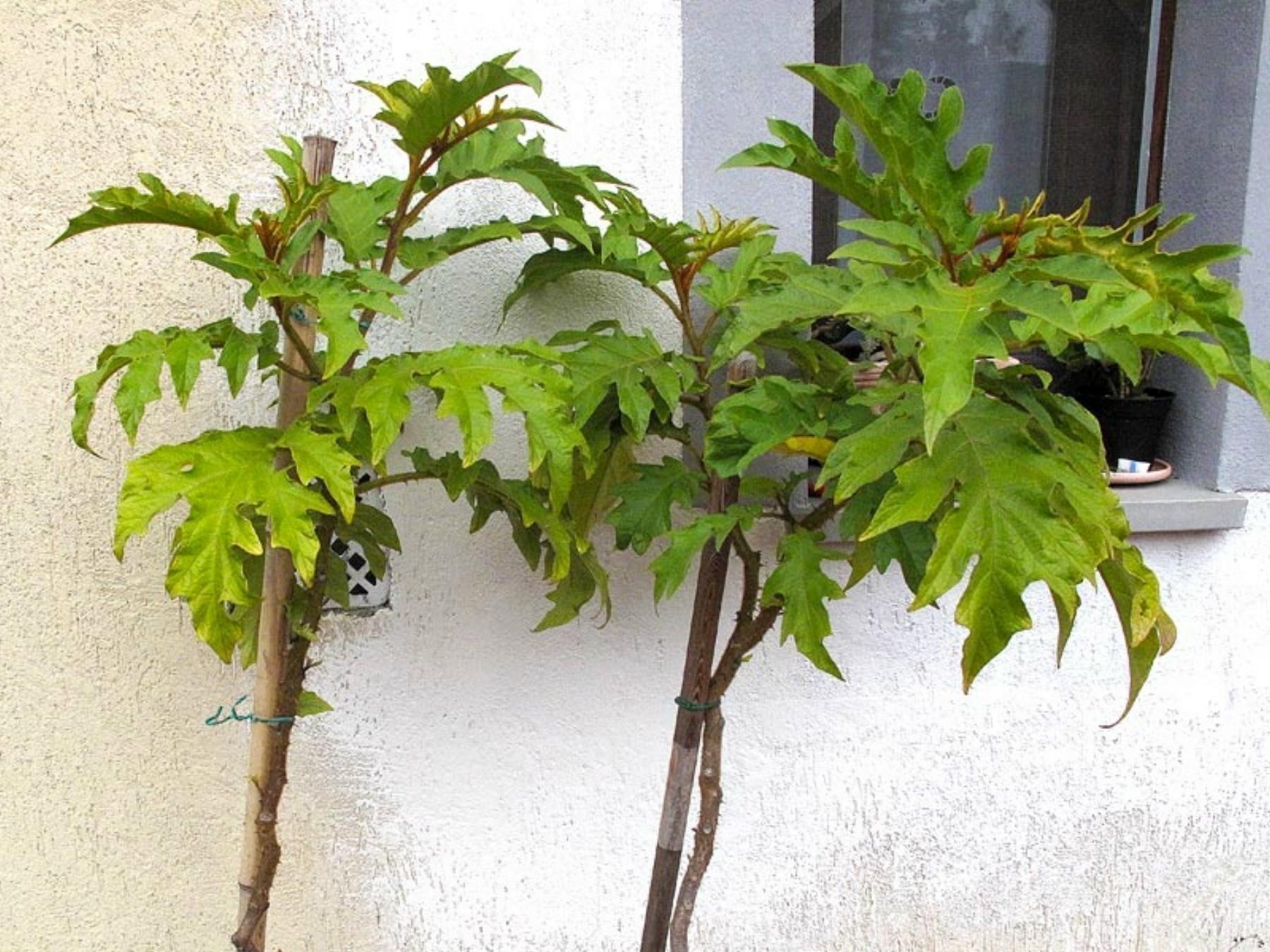
Solanum torvum is a bushy, erect and spiny perennial plant used horticulturally as a rootstock for eggplant. Grafted plants are very vigorous and tolerate diseases affecting the root system, thus allowing the crop to
Turkey Berry - Pea Eggplant Seeds (Solanum torvum)
Price for Package of 5 оr 10 seeds.
Solanum torvum is a bushy, erect and spiny perennial plant used horticulturally as a rootstock for eggplant. Grafted plants are very vigorous and tolerate diseases affecting the root system, thus allowing the crop to continue for a second year.
It is also known as turkey berry, prickly nightshade, shoo-shoo bush, wild eggplant, pea eggplant, pea aubergine, susumber ( Jamaica), boo, terongan, tekokak, berenjena cimarrona, berenjena de gallina, berenjena silvestre, tabacón, pendejera, tomatillo, bâtard balengène, zamorette, friega-platos, kudanekayi (Kannada: ಕುದನೆಕಾಯಿ), sundaikkai (Tamil: சுண்டைக்காய்),[3] (Malayalam: ചുണ്ട ), thibbatu (Sinhala), makhuea phuang (Thai: มะเขือพวง), suzume nasu (Japan: 雀茄子), jurubeba (Brazilian Portuguese), and many other names (Howard 1989, Little and others 1974, Pacific Island Ecosystems at Risk 2001).
The plant is usually 2 or 3 m in height and 2 cm in basal diameter, but may reach 5m in height and 8 cm in basal diameter. The shrub usually has a single stem at ground level, but it may branch on the lower stem. The stem bark is gray and nearly smooth with raised lenticels. The inner bark has a green layer over an ivory color (Little and others 1974). The plants examined by the author, growing on firm soil, had weak taproots and well-developed laterals. The roots are white. Foliage is confined to the growing twigs.
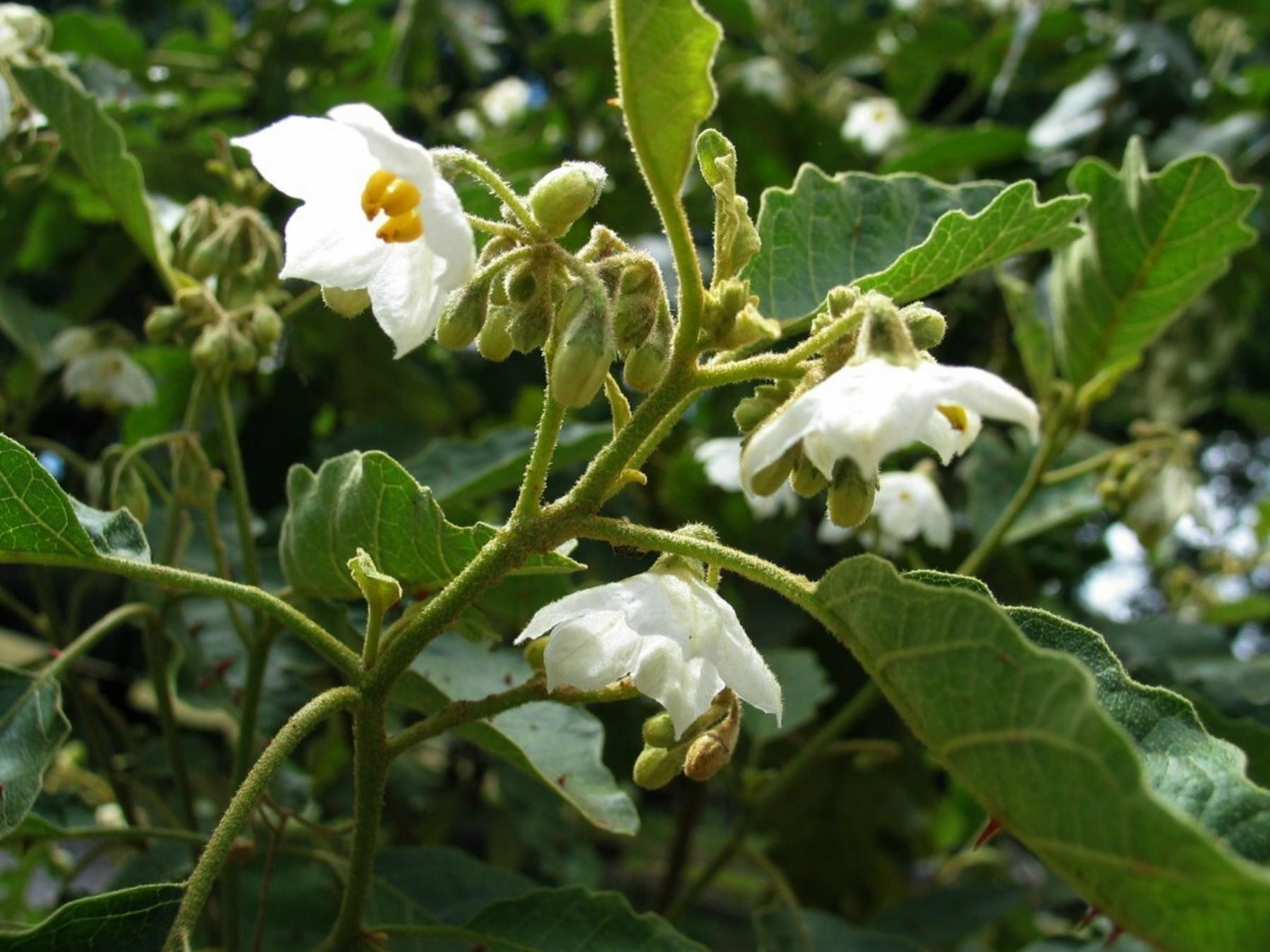
The twigs are gray-green and covered with star-shaped hairs. The spines are short and slightly curved and vary from thick throughout the plant, including the leaf midrib, to entirely absent. The leaves are opposite or one per node, broadly ovate with the border entire or deeply lobed. The petioles are 1 to 6 cm long and the blades are 7 to 23 by 5 to 18 cm and covered with short hairs. The flowers are white, tubular with 5 pointed lobes, and grouped in corymbiform cymes. They are shed soon after opening.
The fruits are berries that grow in clusters of tiny green spheres (ca. 1 cm in diameter) that look like green peas. They become yellow when fully ripe. They are thin-fleshed and contain numerous flat, round, brown seeds (Howard 1989, Liogier 1995, Little and others 1974).
Range
Turkey berry apparently is native from Florida and southern Alabama through the West Indies and from Mexico through Central America and South America through Brazil (Little and others 1974). Because of its rapid spread as a weed in disturbed lands, it is difficult to tell which populations are native and which are introduced. Turkey berry has been introduced and naturalized throughout tropical Africa, Asia, Australia, and the Pacific Islands including Hawaii, Guam, and American Samoa (Pacific Island Ecosystems at Risk 2001). In Jamaica this berry is called susumba, or gully beans, and is usually cooked in a dish along with saltfish and ackee. It is believed to be full of iron (it does have a strong iron like taste when eaten) and is consumed when one is low in iron.
Ecology
In Puerto Rico, turkey berry grows in upland sites that receive from about 1000 to 4000 mm of annual precipitation. It also grows in riparian zones in drier areas. Turkey berry grows on all types of moist, fertile soil at elevations from near sea level to almost 1,000 m in Puerto Rico (Little and others 1974) and 2,000 m in Papua New Guinea (Pacific Island Ecosystems at Risk 2001). Given an equal start after disturbance, turkey berry quickly overtops most herbs, grasses, and other shrubs. It grows best in full sunlight and does well in light shade or shade for part of the day, but cannot survive under a closed forest canopy. Turkey berry single plants, groups, and thickets are most frequently seen on roadsides, vacant lots, brushy pastures, recently abandoned farmland, landslides, and river banks.
Reproduction
Flowering and fruiting is continuous after the shrubs reach about 1 to 1.5 m in height. Ripe fruits collected in Puerto Rico averaged 1.308 + 0.052 g. Air dry seeds from these fruits weighed an average of 0.00935 g or 1,070,000 seeds/kg. These seeds were sown on commercial potting mix and 60 percent germinated between 13 and 106 days following sowing. The seedlings are common in recently disturbed ground. Frugivorous birds eat the fruits and spread the seeds (Pacific Island Ecosystems at Risk 2001). Turkey berry can be propagated vegetatively by placing branch cuttings, with or without leaves, in a mist chamber for one month (Badola and others 1993).
Growth and management
Turkey berry grows about 0.75 to 1.5 m in height per year. The species is not long-lived; most plants live about 2 years. Physical control of the shrub may be done by grubbing out the plants; lopping will not kill them. They can be killed by translocated herbicides applied to the leaves or the cut stumps (Pacific Island Ecosystems at Risk 2001).
Cuisine
The green fresh fruits are edible and used in Thai cuisine, as an ingredient in certain Thai curries or raw in certain Thai chili pastes (nam phrik).[4][5] They are also used in Lao cuisine (Royal Horticultural Society 2001) and Jamaican cuisine.[6] The fruits are incorporated into soups and sauces in the Côte d'Ivoire (Herzog and Gautier-Béguin 2001).
In Tamil Nadu, India, the fruit is consumed directly, or as cooked food like Sundaikkai Sambar, Sundaikkai Poriyal, Sundaikkai Aviyal & Sundaikkai Pulikulambu. After soaking in curd and drying, the final product is fried in oil as Sundaikkai vattral (available in all Tamil Nadu supermarkets), it is famous all around in Tamil Nadu. In siddha medicine one of the traditional systems of India Sundaivattral Choornam is used to improve digestion.
Haitian Mythology
This fruit is reportedly used in Haitian voodoo rituals.
Chemistry
Turkey berry contains a number of potentially pharmacologically active chemicals including the sapogenin steroid chlorogenin.
Aqueous extracts of turkey berry are lethal to mice by depressing the number of erythrocytes, leukocytes and platelets in their blood (Tapia and others 1996). A related chemical, cholecalciferol, is the active ingredient in a number of commercial rodenticides.
Extracts of the plant are reported to be useful in the treatment of hyperactivity, colds and cough, pimples, skin diseases, and leprosy.
Methyl caffeate, extracted from the fruit of S. torvum, shows an antidiabetic effect in streptozotocin-induced diabetic rats.
Cholinergic poisoning has been reported as a result of the consumption of Solanum torvum berries prepared in Jamaican dishes.


Your review appreciation cannot be sent
Report comment
Report sent
Your report cannot be sent
اكتب تعليقك
Review sent
Your review cannot be sent
🌍 الشحن العالمي من داخل الاتحاد الأوروبي
نحن نقوم بالشحن عالميًا من داخل الاتحاد الأوروبي عبر البريد المسجل مع تأكيد الاستلام.
📦 تتبع الشحنة
لتجد رقم تتبع شحنتك، قم بتسجيل الدخول إلى حسابك ثم انتقل إلى سجل الطلبات > التفاصيل.
تتبع الشحنات عالميًا: 17Track
لتتبع الشحنات التي تبدأ بـ RGxxxxxxHR: Posta.hr Tracking
🕒 ملاحظة: قد تحتاج معلومات التتبع إلى 24 ساعة لتظهر بعد الشحن.
⚠️ ملاحظات مهمة
الدفع عند الاستلام غير متاح.
تأكد من مراجعة مجلد البريد العشوائي / الرسائل غير المرغوب بها في بريدك الإلكتروني للحصول على أي إشعارات.
لطرح أي استفسارات، يُرجى استخدام نموذج الاتصال الموجود على موقعنا فقط.
لن يتم الرد على الرسائل المرسلة عبر البريد الإلكتروني مباشرة.
📱 معلومات مطلوبة عند الطلب
يرجى إدخال رقم هاتفك المحمول مع رمز البلد.
مثال: +966 55 123 4567
🚚 سياسة التوصيل
يتطلب تسليم الشحنات المسجلة توقيعًا من المستلم.
لا نقوم بالتوصيل إلى:
صناديق البريد
الجيران
في حال عدم تواجدك في المنزل للاستلام
📬 إذا قمت بإدخال عنوان صندوق بريد وتم فقدان الطرد، فلن تكون مؤهلاً لاسترداد المبلغ.
↩️ إرجاع الطرود وإعادة الشحن
إذا تم إرجاع الطرد لأي سبب:
يتحمل العميل تكلفة الإرجاع (2 يورو)
بالإضافة إلى تكلفة إعادة الشحن
⏱ تأخير الشحن وتتبع الطلبات
إذا أظهر التتبع أن الطرد لا يزال مع المرسل، فهذا يعني أنه لا يزال قيد النقل.
اتصل بمكتب البريد المحلي باستخدام رقم التتبع.
لسنا خدمة بريدية ولا يمكننا تتبع الشحنات بدلاً منك.
لسنا مسؤولين عن أوقات التسليم.
🔍 يمكننا بدء تحقيق بشأن الشحنات المفقودة بعد 30 يومًا فقط من تاريخ الشحن.
✈️ خيارات الشحن
| نوع الشحن | وقت المعالجة | مشمول بالتأمين | التأخير المحتمل | ملاحظات |
|---|---|---|---|---|
| الشحن العادي | 7–10 أيام عمل | ❌ | 7–14 يومًا | شحن أساسي |
| الشحن ذو الأولوية | 1–7 أيام عمل | ❌ | 3–10 أيام | يتم معالجة الطلب بشكل أسرع، لكن ليس بالضرورة التسليم |
| شحن مؤمن | 1–7 أيام عمل | ✅ | 3–10 أيام | في حالة فقدان الطرد، يتم رد المبلغ (حتى 150 يورو) |
🕒 تقدير وقت التسليم:
داخل الاتحاد الأوروبي: 3–20 يومًا
عالميًا: 5–30 يومًا
أمثلة للمدة إلى الولايات المتحدة: 27، 22، 19، 17، 13 يومًا
💳 خيارات الدفع
💶 التحويل البنكي (SEPA / IBAN / SWIFT)
يجب كتابة رقم الطلب في خانة الملاحظات (مثال: SGS-19811702).
عدم كتابة المرجع قد يؤدي إلى تأخير أو إلغاء الطلب.
يتم إلغاء الطلب تلقائيًا إذا لم نستلم الدفع خلال 7 أيام.
🅿️ PayPal
نقبل الدفع عبر PayPal باليورو فقط.
يرجى تحويل العملة إلى اليورو أثناء الدفع.
💳 الدفع عبر البطاقة
نقبل: Visa، MasterCard، American Express، CB، Diners Club، Discover، China UnionPay، JCB وغيرهم.
💡 جميع رسوم التحويل البنكي يتحملها العميل.
يرجى إرسال معلومات التحويل لضمان معالجة طلبك بسرعة.
📅 معلومات إضافية
لا نقوم بالمعالجة أو الشحن أيام السبت والأحد.
تأكد من قراءة التنبيهات المهمة على موقعنا قبل الطلب (مثل فترات الأعياد أو الشروط الخاصة).
📫 يرجى عدم إرسال استفسارات إلى بريدنا الإلكتروني مباشرة.
استخدم دائمًا نموذج الاتصال المتاح على موقعنا
Related Products