Syringa vulgaris originates from Europe. Great bonsai tree potential. If left to grow naturally, it reaches 8 to 10 feet tall. A small tree that with age develops deeply furrowed bark. This species of Lilac produces
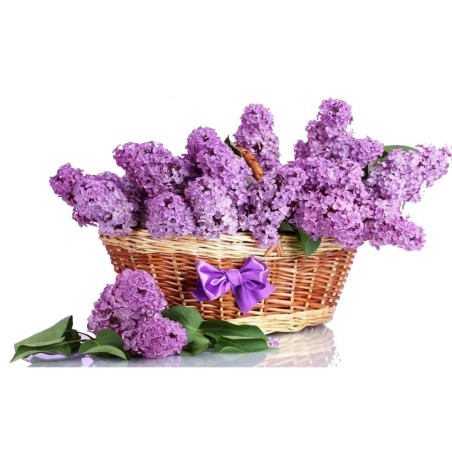
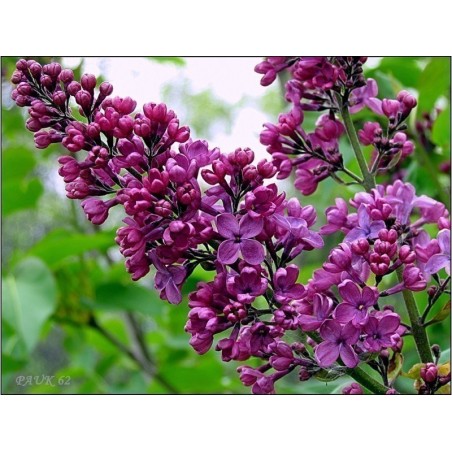
Syringa vulgaris originates from Europe. Great bonsai tree potential. If left to grow naturally, it reaches 8 to 10 feet tall. A small tree that with age develops deeply furrowed bark. This species of Lilac produces suckers new shoots that sprout from the base of the shrub, or from the roots. Is very tolerant of hard pruning necessary for bonsai cultivation. Green heart-shaped leaves are smooth and appear before the flowers bloom. At Fall, the leaves turn yellow-green. The light purple flowers grow in large clusters, from May to June and have one of the most powerful fragrances emitted by a plant. Hardiness zones 3-7, (-15ºC/5ºF, -37ºC/-35ºF) in Winter. Adptable to a wide range of soils. Lilacs prefer well-drained, slightly alkaline soil and plenty of sunshine for optimum growth and blooming. Although Lilacs love water, they don't enjoy soggy soil. Without proper drainage, Lilacs will do little growing and produce fewer blossoms.
Germination
For faster germination, soak the seeds in slightly hot water for 24-48 hours, followed by one month of cold stratification before sowing at 1/4" deep in sterile gardening soil. Keep damp soil, not soaking wet. Keep pot in warm situation 68-75ºF. Germination usually occurs in 2-4 weeks. It can be a lot more depending on their degree of unbroken dormancy, don't give up.
Scarification / Stratification
This will break their dormancy. It creates a cold and moist environment for the seeds. Mixed in seeds with slightly moistened vermiculite or peat, only damp in a ziplock bag. Close zip bag shut and store it in the salad crisper compartment of your refrigerator. If any seeds begin to sprout during the cold stratification, simply remove the seed and plant.
WIKIPEDIA:
Syringa vulgaris (lilac or common lilac) is a species of flowering plant in the olive family Oleaceae, native to the Balkan Peninsula, where it grows on rocky hills. This species is widely cultivated as an ornamental and has been naturalized in other parts of Europe (UK, France, Germany, Italy, etc.), as well as much of North America. It is not regarded as an aggressive species, found in the wild in widely scattered sites, usually in the vicinity of past or present human habitations.
S. vulgaris is a large deciduous shrub or multistemmed small tree, growing to 6–7 m (20–23 ft) high, producing secondary shoots ("suckers") from the base or roots, with stem diameters up to 20 cm (8 in), which in the course of decades may produce a small clonal thicket.[7] The bark is grey to grey-brown, smooth on young stems, longitudinally furrowed, and flaking on older stems. The leaves are simple, 4–12 cm (2–5 in) and 3–8 cm broad, light green to glaucous, oval to cordate, with pinnate leaf venation, a mucronate apex, and an entire margin. They are arranged in opposite pairs or occasionally in whorls of three. The flowers have a tubular base to the corolla 6–10 mm long with an open four-lobed apex 5–8 mm across, usually lilac to mauve, occasionally white. They are arranged in dense, terminal panicles 8–18 cm (3–7 in) long. The fruit is a dry, smooth, brown capsule, 1–2 cm long, splitting in two to release the two-winged seeds.
Garden history
Lilacs — both S. vulgaris and S. × persica the finer, smaller "Persian lilac", now considered a natural hybrid — were introduced into European gardens at the end of the 16th century, from Ottoman gardens, not through botanists exploring the Balkan habitats of S. vulgaris.[12] The Holy Roman Emperor's ambassador, Ogier Ghiselin de Busbecq, is generally credited with supplying lilac slips to Carolus Clusius, about 1562. Well-connected botanists, such as the great herbalist John Gerard, soon had the rarity in their gardens: Gerard noted that he had lilacs growing “in very great plenty” in 1597, but lilacs were not mentioned by Shakespeare,[13] and John Loudon was of the opinion that the Persian lilac had been introduced into English gardens by John Tradescant the elder.[14] Tradescant's Continental source for information on the lilac, and perhaps ultimately for the plants, was Pietro Andrea Mattioli, as one can tell from a unique copy of Tradescant's plant list in his Lambeth garden, an adjunct of his Musaeum Tradescantianum; it was printed, though probably not published, in 1634: it lists Lilac Matthioli. That Tradescant's "lilac of Mattioli's" was a white one is shown by Elias Ashmole's manuscript list, Trees found in Mrs Tredescants Ground when it came into my possession (1662):[15] "Syringa alba".
In the American colonies, lilacs were introduced in the 18th century. Peter Collinson, F.R.S., wrote to the Pennsylvania gardener and botanist John Bartram, proposing to send him some, and remarked that John Custis of Virginia had a fine "collection", which Ann Leighton interpreted as signifying common and Persian lilacs, in both purple and white, "the entire range of lilacs possible" at the time.
Cultivation
The lilac is a very popular ornamental plant in gardens and parks, because of its attractive, sweet-smelling flowers, which appear in early summer just before many of the roses and other summer flowers come into bloom.
In late summer, lilacs can be attacked by powdery mildew, specifically Erysiphe syringae, one of the Erysiphaceae.[18] No fall color is seen and the seed clusters have no aesthetic appeal.
Common lilac tends to flower profusely in alternate years, a habit that can be improved by deadheading the flower clusters after the color has faded and before seeds, few of which are fertile, form. At the same time, twiggy growth on shoots that have flowered more than once or twice can be cut to a strong, outward-growing side shoot.
It is widely naturalised in western and northern Europe.[8] In a sign of its complete naturalization in North America, it has been selected as the state flower of the state of New Hampshire, because it "is symbolic of that hardy character of the men and women of the Granite State".[19] Additional hardiness, for Canadian gardens, was bred for in a series of S. vulgaris hybrids by Isabella Preston, who introduced many of the later-blooming varieties, whose later-developing flower buds are better protected from late spring frosts; the Syringa x prestoniae hybrids range primarily in the pink and lavender shades
Expediem in intreaga lume din Uniunea Europeana, folosind posta aeriana recomandata, cu confirmare prin semnatura la livrare.
📦Urmarirea comenzii tale Conectati-va la contul dvs. si navigati laIstoricul comenzilor > Detalii pentru a gasi numarul dvs. de urmarire.
Veti primi notificari prin e-mail pentru fiecare etapa a comenzii dumneavoastra. Daca nu vedeti aceste mesaje, verificati folderul Spam/mesaje nedorite sau contactati furnizorul dvs. de e-mail. Alternativ, cautati online cum sa deblocati e-mailurile expeditorilor.
SERVICIUL NOSTRU DE EMAIL FUNCTIONEAZA
Veti primi notificari prin e-mail pentru fiecare etapa a comenzii dvs. Daca nu vedeti aceste mesaje, verificati folderul Spam/mesaje nedorite sau contactati furnizorul dvs. de e-mail.
📧Cum sa te asiguri ca e-mailurile de la magazinul nostru online ajung intotdeauna in contul tau Gmailsau orice alt e-mailal furnizoruluiIn Inbox si nu sunt marcate ca spam sau blocate:
Adauga expeditorul in contactele Google sau ale oricarui alt furnizor de e-mail. Nu te putem ajuta daca setarile tale nu sunt astfel. Contacteaza furnizorul tau de e-mail pentru asistenta.
Pasul 1: Deschide Gmail si gaseste un e-mail de la noi xxxxxxxxxxxx@xxx.com Nu incercati sa ne trimiteti un e-mail direct la aceasta adresa; nu il vom primi. Orice contact se face exclusiv prin formularul de contact din magazinul nostru online! Daca nu gasiti e-mailul nostru, este posibil sa fi fost blocat. In acest caz, continuati cu Pasul 4 de mai jos.
Pasul 2: Puneti cursorul peste numele expeditorului sau adresa de e-mail din partea de sus a e-mailului.
Pasul 3: Faceti clic pe pictograma "Adauga la contacte" (mica pictograma cu o persoana).
Acest lucru va ajuta Gmail sa ne recunoasca ca expeditor de incredere, asigurandu-se ca e-mailurile noastre ajung direct in inboxul tau si nu in folderul de spam.
Creati un filtru pentru a preveni ca e-mailurile sa fie marcate ca spam sau blocate
Pasul 1: Deschide Gmail si da clic pe pictograma rotita din coltul din dreapta sus, apoi selecteaza "Vezi toate setarile".
Pasul 2: Accesati fila "Filtre si adrese blocate".
Pasul 3: Faceti clic pe "Creati un filtru nou".
Pasul 4: In campul "From", introduceti adresa de e-mail pe care doriti sa o adaugati pe lista alba (e.g., e-mailul magazinului nostru).
Pasul 5: Faceti clic pe "Creeaza filtru".
Pasul 6: In fereastra urmatoare, bifati caseta etichetata "Nu-l trimite niciodata in Spam".
Pasul 7: Faceti clic pe "Creeaza filtru" pentru a salva.
Acest lucru va asigura ca e-mailurile noastre ajung intotdeauna in inbox-ul tau si nu vor fi marcate ca spam sau blocate din greseala.
Urmareste-ti coletul prin:
Aftership
17Track
Posta.hr (pentru numere de urmarire precum RGxxxxxxHR)
⚠️Notificari importante
Plata la livrare esteNUDisponibil.
Furnizati intotdeauna un numar de telefon mobil valid cu codul tarii cand comandati (e.g., +365 456 7686 576).
Nu ordona sa P.O. Cutii, sau daca nu puteti fi acasa pentru a semna pentru colet, coletele nu pot fi lasate la vecini.
Daca un pachet trimis la P.O. Daca cutia este pierduta sau nedistribuita, nu se va emite nicio rambursare.
⚖️Responsabilitatea clientului privind conformitatea legala Clientul este responsabil sa se asigure ca produsul poate fi importat legal in tara sa, inclusiv prin respectarea tuturor reglementarilor de import, obtinerea permiselor necesare si plata taxelor vamale, impozitelor si a altor taxe aplicabile. Va rugam sa verificati legislatia locala inainte de a comanda pentru a evita orice probleme cu vama sau livrarea.
📦Pachete Pierdute, Returnate & Reexpediate
Clienti din Brazilia si Mexic:Nu putem rambursa coletele pierdute sau distruse de catre autoritatile vamale.
Daca coletul dumneavoastra este returnat, va vom rambursa doar costul produsului — costurile de livrare nu sunt rambursabile.
Costul expedierii de retur (2 €) si orice costuri de reexpediere trebuie acoperite de client.
Daca un pachet ne este returnat din orice motiv, sunteti responsabil pentru plata transportului de retur (€2) plus costul reexpedierii pachetului.
🚚Livrare colet Trimiterile inregistrate necesita o semnatura.
Daca urmarirea arata ca pachetul este inca la oficiul postal de expediere, acesta este in tranzit — contactati oficiul postal local pentru actualizari.
Din pacate, nici noi, nici serviciul postal prin care a fost expediata comanda dumneavoastra nu va putem ajuta sa aflati unde se afla aceasta. Cand vedeti ca pachetul este in tara dumneavoastra,TREBUIE sa contactati oficiul postal cu numarul de urmarire.si discutati problema cu ei. Trimitem toate comenzile prin posta oficiala de stat.
Nu suntem responsabili pentru termenele de livrare si nu putem urmari expedierile in numele dumneavoastra.
📅Optiuni de livrare & timpi estimati
Optiune de livrare
Timp de procesare
Notite
Livrare Prioritara
Se expediaza in 1–7 zile lucratoare
Acorda prioritate procesarii comenzilor (nu garanteaza o livrare mai rapida); pot aparea intarzieri in timpul sarbatorilor (3–10 zile)
Livrare securizata
Se expediaza in 1–7 zile lucratoare
Disponibil pentru comenzi de pana la 150 €; rambursare in caz de pierdere
Livrare standard
Se expediaza in 7–10 zile lucratoare
Mai economic; pot aparea intarzieri in perioada sarbatorilor (7–14 zile)
Timp estimat de livrare:
In UE:3–20 zile
La nivel mondial:5–30 zile
Exemple din SUA:Livrat in 13, 17, 19, 22, sau 27 de zile.
Nota:Timpul de livrare depinde de locatia dvs. si de sistemul postal local. COVID-19 sau perioadele de sarbatori pot provoca intarzieri suplimentare.
💰Costuri de livrare Taxele de expediere si manipulare sunt calculate automat la finalizarea comenzii, in functie de greutatea coletului si de destinatie.
⏰Ore de procesare a comenzilor Nu procesam si nu expediem comenzile in zilele de sambata si duminica.
💳Optiuni de plata
Transfer bancar (SEPA / IBAN / SWIFT-BIC) Includeti referinta comenzii dvs. in descrierea platii (e.g., "SGS-19811702"). Comenzile care nu sunt platite in termen de 7 zile vor fi anulate automat.
PayPal Platile sunt acceptate numai in euro. Va rugam sa selectati euro la finalizarea comenzii.
Plata cu cardul Acceptam Visa, MasterCard, American Express, CB, Diners Club, Discover, China UnionPay, JCB, si Discover.
⚠️Taxe de tranzactie Clientii sunt responsabili pentru orice comisioane de tranzactie bancare sau PayPal. Va rugam sa va asigurati ca detaliile de plata sunt corecte pentru o procesare mai rapida a comenzii.
📢Note finale Inainte de a plasa comanda, verificati intotdeauna site-ul nostru pentru anunturi speciale, programul din perioada sarbatorilor sau conditii specifice de livrare care ar putea afecta achizitia dumneavoastra.
Notificare importanta: Facturi digitale
Pentru a contribui la reducerea risipei de hartie, nu includem o factura tiparita impreuna cu comanda dvs. Puteti descarca si imprima cu usurinta factura dvs. in orice moment accesand contul dvs.Istoric comenzi in profilul contului tau