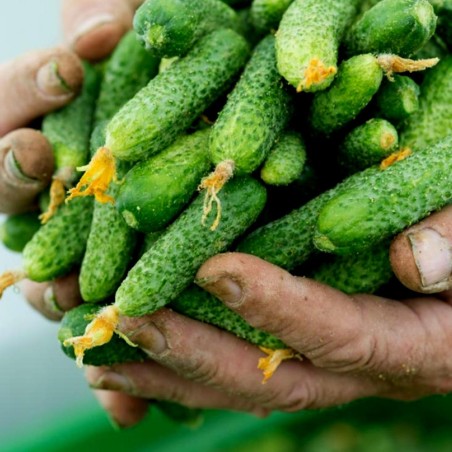
Cucumber Shosha F1 Russian High Quality Seeds
€1.65


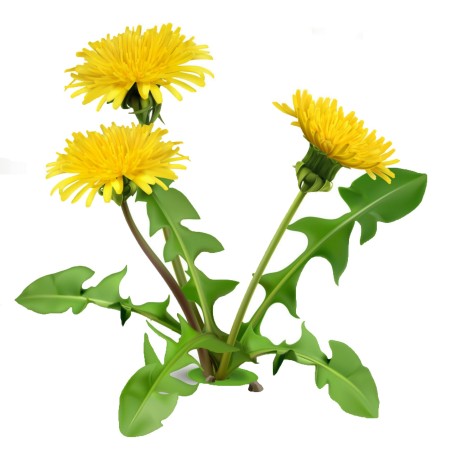
Taraxacum officinale, the common dandelion (often simply called "dandelion"), is a flowering herbaceous perennial plant of the family Asteraceae (Compositae). It can be found growing in temperate regions
Taraxacum officinale, the common dandelion (often simply called "dandelion"), is a flowering herbaceous perennial plant of the family Asteraceae (Compositae).
It can be found growing in temperate regions of the world, in lawns, on roadsides, on disturbed banks and shores of water ways, and other areas with moist soils. T. officinale is considered a weed, especially in lawns and along roadsides, but it is sometimes used as a medical herb and in food preparation. Common dandelion is well known for its yellow flower heads that turn into round balls of silver tufted fruits that disperse in the wind called "blowballs" or "clocks" (in both British and American English).
Description
Taraxacum officinale grows from generally unbranched taproots and produces one to more than ten stems that are typically 5–40 cm (2.0–15.7 in) tall, but sometimes up to 70 cm (28 in) tall. The stems can be tinted purplish, they are upright or lax, and produce flower heads that are held as tall or taller than the foliage. The foliage may be upright-growing or horizontally spreading; the leaves have petioles that are either unwinged or narrowly winged. The stems can be glabrous or sparsely covered with short hairs. Plants have milky latex and the leaves are all basal; each flowering stem lacks bracts and has one single flower head. The yellow flower heads lack receptacle bracts and all the flowers, which are called florets, are ligulate and bisexual. In many lineages, fruits are mostly produced by apomixis, notwithstanding the flowers are visited by many types of insects.
The leaves are 5–45 cm (2.0–17.7 in) long and 1–10 cm (0.39–3.94 in) wide, and are oblanceolate, oblong, or obovate in shape, with the bases gradually narrowing to the petiole. The leaf margins are typically shallowly lobed to deeply lobed and often lacerate or toothed with sharp or dull teeth.
The calyculi (the cuplike bracts that hold the florets) are composed of 12 to 18 segments: each segment is reflexed and sometimes glaucous. The lanceolate shaped bractlets are in two series, with the apices acuminate in shape. The 14–25 mm (0.55–0.98 in) wide involucres are green to dark green or brownish-green, with the tips dark gray or purplish. The florets number 40 to over 100 per head, having corollas that are yellow or orange-yellow in color.
The fruits, called cypselae, range in color from olive-green or olive-brown to straw-colored to grayish, they are oblanceoloid in shape and 2–3 mm (0.079–0.118 in) long with slender beaks. The fruits have 4 to 12 ribs that have sharp edges. The silky pappi, which form the parachutes, are white to silver-white in color and around 6 mm wide. Plants typically have 24 or 40 pairs of chromosomes, while some have 16 or 32 pairs.
Uses
While the dandelion is considered a weed by many gardeners and lawn owners, the plant has several culinary uses. The specific name officinalis refers to its value as a medicinal herb, and is derived from the word opificina, later officina, meaning a workshop or pharmacy.[37] The flowers are used to make dandelion wine,[38] the greens are used in salads, the roots have been used to make a coffee substitute (when baked and ground into powder) and the plant was used by Native Americans as a food and medicine.
Culinary
Dandelions are harvested from the wild or grown on a small scale as a leaf vegetable. The leaves (called dandelion greens) can be eaten cooked or raw in various forms, such as in soup or salad. They are probably closest in character to mustard greens. Usually the young leaves and unopened buds are eaten raw in salads, while older leaves are cooked. Raw leaves have a slightly bitter taste. Dandelion salad is often accompanied with hard boiled eggs. The leaves are high in beta-carotene, vitamin C and iron, carrying more iron and calcium than spinach.[40][unreliable medical source?]
Dandelion flowers can be used to make dandelion wine, for which there are many recipes.[41] Most of these are more accurately described as "dandelion-flavored wine," as some other sort of fermented juice or extract serves as the main ingredient.[42] It has also been used in a saison ale called Pissenlit (the French word for dandelion, literally meaning "wet the bed") made by Brasserie Fantôme in Belgium. Dandelion and burdock is a soft drink that has long been popular in the United Kingdom.
Another recipe using the plant is dandelion flower jam. In Silesia and also other parts of Poland and world, dandelion flowers are used to make a honey substitute syrup with added lemon (so-called May-honey). Ground roasted dandelion root can be used as a non-caffeinated coffee substitute.
Herbal medicine
Historically dandelion was prized for a variety of medicinal properties. It contains a wide number of pharmacologically active compounds.[44] Dandelion contains flavonoids including luteolin, apigenin, isoquercitrin (a quercetin-like compound), caffeic acid, and chlorogenic acid. Dandelion also contains terpenoids, triterpenes, and sesquiterpenes. Dandelion has been used as an herbal remedy in Europe, North America, and China.[44] "Empiric traditional application in humans of dandelion, in particular to treat digestive disorders, is supported by pharmacological investigations. ... Some results, e.g. concerning possible diuretic activity, are even contradictory and require a thorough reinvestigation."
Dandelion has been used in herbal medicine in an attempt to treat infections, bile and liver problems, and as a diuretic.[44] Dandelion is used in herbal medicine as a mild laxative, for increasing appetite, and as a plant bitter for improving digestion.[45] The milky latex has been used as a mosquito repellent[46] and as a folk remedy to treat warts.
European dandelions
Taraxacum officinale L. (dandelion) is a vigorous weed in Europe with diploid sexual populations in the southern regions and partially overlapping populations of diploid sexuals and triploid or tetraploid apomicts in the central and northern regions. These European dandelions can be divided into two groups. The first group reproduces sexually as do most seed plants. This group consists of dandelions that have a diploid set of chromosomes, and are sexually self-incompatible. Sexual reproduction involves a reduction of the somatic chromosome number by meiosis followed by a restoration of the somatic chromosome number by fertilization. Diploid dandelions have eight pairs of chromosomes, and meiosis is regular with normal pairing of homologous chromosomes at the metaphase I stage of meiosis.
The second group consists of polyploid (mostly triploid) apomicts, meaning that both a viable embryo as well as a functional endosperm is formed without prior fertilization. In contrast to the sexual diploids, the pairing of chromosomes at metaphase I in triploid apomicts is strongly reduced. However pairing is still sufficient to allow some recombination between homologous chromosomes.
Taraxacum officinale has many English common names (of which some are no longer in use), including blowball, lion's-tooth, cankerwort, milk-witch, yellow-gowan, Irish daisy, monks-head, priest's-crown and puff-ball;[25] other common names include, faceclock, pee-a-bed, wet-a-bed,[26] swine's snout,[27] white endive, and wild endive.
Carl Linnaeus named the species Leontodon taraxacum in 1753. The current genus name Taraxacum derives possibly from the Arabic Tharakhchakon,[10] or from the Greek Tarraxos.[29] The common name dandelion comes from the French dent de lion, or "lion's tooth", in reference to the plant's jagged-edged leaves.
Ecology
Taraxacum officinale is native to Europe and Asia,[30] and was originally imported to America as a food crop.[31] It is now naturalized throughout North America, southern Africa, South America, New Zealand, Australia, and India. It occurs in all 50 states of the USA and most Canadian provinces.[23] It is considered a noxious weed in some jurisdictions,[32] and is considered to be a nuisance in residential and recreational lawns in North America.[33] It is also an important weed in agriculture and causes significant economic damage because of its infestation in many crops worldwide.
The dandelion is a common colonizer of disturbed habitats, both from wind blown seeds and seed germination from the seed bank.[34] The seeds remain viable in the seed bank for many years, with one study showing germination after nine years. This species is a somewhat prolific seed producer, with 54 to 172 seeds produced per head, and a single plant can produce more than 5,000 seeds a year. It is estimated that more than 97,000,000 seeds/hectare could be produced yearly by a dense stand of dandelions.[citation needed] When released, the seeds can be spread by the wind up to several hundred meters from their source. The seeds are also a common contaminant in crop and forage seeds. The plants are adaptable to most soils and the seeds are not dependent on cold temperatures before they will germinate but they need to be within the top 2.5 cm (1 in) of soil.
While not in bloom, this species is sometimes confused with others, such as Chondrilla juncea, that have similar basal rosettes of foliage.[35] Another plant, sometimes referred to as fall dandelion, is very similar to dandelion, but produces "yellow fields" later.
Fossil record
T. officinale has a fossil record that goes back to glacial and interglacial times in Europe.

Your review appreciation cannot be sent
Report comment
Report sent
Your report cannot be sent
Review sent
Your review cannot be sent
We ship worldwide from the European Union using registered air mail with signature confirmation upon delivery.
📦 Tracking Your Order
Log in to your account and navigate to Order History > Details to find your tracking number.
You will receive email notifications for each stage of your order.
If you don’t see these messages, please check your Spam/Junk folder or contact your email provider. Alternatively, search online for how to unblock sender emails.
OUR EMAIL SERVICE IS WORKING
You will receive email notifications for each stage of your order. If you don’t see these messages, please check your Spam/Junk folder or contact your email provider.
📧 How to Ensure Emails from Our Online Shop Always Land in Your Gmail or any other email provider's Inbox and Aren't Marked as Spam or Blocked:
Add the Sender to your Google or any other email provider's contacts. We can't help you if your settings are not like this. Contact your email provider for help.
Step 1: Open Gmail and find an email from us [email protected]
Do not try to send us an email directly to this address; we will not receive it. Every contact is exclusively through the contact form in our online shop!
If you can’t find our email, it might have been blocked. In that case, proceed with Step 4 below.
Step 2: Hover over the sender’s name or email address at the top of the email.
Step 3: Click the "Add to Contacts" icon (the little person icon).
This will help Gmail recognize us as a trusted sender, ensuring our emails go straight to your inbox and not to spam.
Create a Filter to Prevent Emails from Being Marked as Spam or Blocked
Step 1: Open Gmail and click on the gear icon in the top-right corner, then select "See all settings".
Step 2: Go to the "Filters and Blocked Addresses" tab.
Step 3: Click "Create a new filter".
Step 4: In the "From" field, enter the email address you want to whitelist (e.g., our shop’s email).
Step 5: Click "Create filter".
Step 6: In the next window, check the box labeled "Never send it to Spam".
Step 7: Click "Create filter" to save.
This will ensure our emails always land in your inbox and won’t get marked as spam or blocked by mistake.
Track your package via:
Aftership
17Track
Posta.hr (for tracking numbers like RGxxxxxxHR)
⚠️ Important Notices
Cash on delivery is NOT available.
Always provide a valid mobile number with country code when ordering (e.g., +365 456 7686 576).
Do not order to P.O. Boxes, or if you cannot be home to sign for the package, parcels cannot be left with neighbors.
If a package sent to a P.O. Box is lost or undelivered, no refund will be issued.
⚖️ Customer Responsibility for Legal Compliance
The customer is responsible for ensuring that the product is legal to import into their country, including complying with all import regulations, obtaining necessary permits, and paying applicable customs duties, taxes, and other fees. Please check your local laws before ordering to avoid any issues with customs or delivery.
📦 Lost, Returned & Reshipping Packages
Brazil & Mexico Customers: We cannot refund packages lost or destroyed by customs.
If your package is returned, we will refund only the product cost — shipping costs are non-refundable.
Return postage (€2) and any reshipping costs must be covered by the customer.
If a package is returned to us for any reason, you are responsible for paying the return shipping (€2) plus the cost to resend the package.
🚚 Shipment Delivery
Registered shipments require a signature.
If your tracking shows that the package is still at the origin post office, it is in transit — contact your local post office for updates.
Unfortunately, neither we nor the post office through which your order was sent can help you with the question of where your order is. When you see that your package is in your country, you MUST contact your post office with the tracking number and discuss the matter with them. We send all orders by official state mail.
We are not responsible for delivery times and cannot track shipments on your behalf.
📅 Delivery Options & Estimated Times
| Delivery Option | Processing Time | Notes |
|---|---|---|
| Priority Delivery | Ships in 1–7 business days | Prioritizes order processing (not guaranteed faster delivery); delays possible during holidays (3–10 days) |
| Secured Delivery | Ships in 1–7 business days | Available for orders up to €150; refund if lost |
| Standard Delivery | Ships in 7–10 business days | More economical; delays possible during holidays (7–14 days) |
Estimated Delivery Time:
Within the EU: 3–20 days
Worldwide: 5–30 days
USA Examples: Delivered in 13, 17, 19, 22, or 27 days.
Note: Delivery times depend on your location and local postal system. COVID-19 or holiday seasons may cause additional delays.
💰 Shipping Costs
Shipping and handling fees are calculated automatically at checkout based on the parcel weight and destination.
⏰ Order Processing Hours
We do not process or ship orders on Saturdays or Sundays.
💳 Payment Options
Bank Transfer (SEPA / IBAN / SWIFT-BIC)
Include your order reference in the payment description (e.g., "SGS-19811702").
Orders without payment within 7 days will be automatically cancelled.
PayPal
Payments are accepted in Euros only.
Please select Euros during checkout.
Card Payment
We accept Visa, MasterCard, American Express, CB, Diners Club, Discover, China UnionPay, JCB, and Discover.
⚠️ Transaction Fees
Customers are responsible for any bank or PayPal transaction fees.
Please ensure accurate payment details for faster order processing.
📢 Final Notes
Before placing your order, always check our website for special notices, holiday schedules, or specific shipping conditions that might affect your purchase.
Important Notice: Digital Invoices
To help reduce paper waste, we do not include a printed invoice with your order. You can easily download and print your invoice at any time by visiting your Order History in your account profile